
Unlocking Industrial Real Estate Value in Webster, NY: A Strategic Opportunity in Shovel-Ready Infrastructure


 Aime Summary
The FAST NY Framework: Building Shovel-Ready Sites
The FAST NY program, administered by New York State's Empire State Development (ESD), targets infrastructure gaps that traditionally hinder industrial development. In Webster, the $9.8 million grant is earmarked for critical upgrades at the Xerox Wilson Campus, including road reconstruction, expanded sanitary sewer capacity, and electrical system modernization which has been detailed. These improvements are designed to transform a 300-acre brownfield site into a "shovel-ready" location, reducing the time and cost for developers to bring projects to fruition. By 2025, the site is projected to unlock over one million square feet of industrial space, positioning Webster as a competitive destination for industries such as semiconductor manufacturing, food processing, and advanced logistics according to Governor Hochul's announcement.
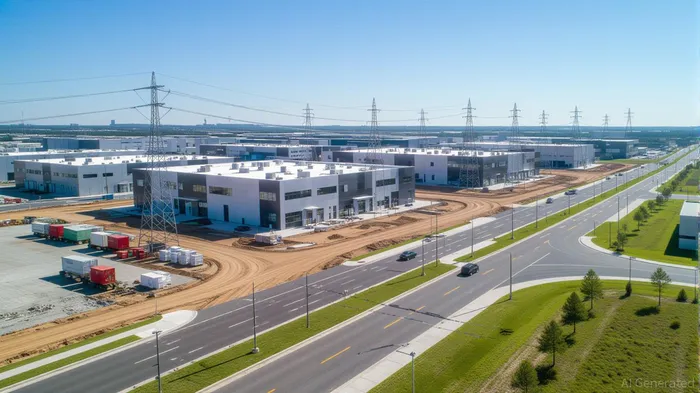 The strategic timing of these projects-infrastructure completion by 2025 and site readiness by 2026-creates a clear window for investment. As noted by a report from the Regional Councils of New York, this timeline aligns with broader state goals to attract high-tech industries and diversify the regional economy highlighting opportunities. For investors, the reduced development risk and pre-vetted infrastructure make Webster's industrial zones a low-hanging fruit in a market increasingly prioritizing efficiency and scalability.
Public-Private Partnerships: Leveraging Risk and Reward
While FAST NY grants provide the foundational infrastructure, P3s are instrumental in scaling Webster's industrial potential. These partnerships allow private entities to contribute capital, expertise, and operational agility, while public agencies mitigate regulatory and financial risks. A prime example is the collaboration between the Webster Economic Development Alliance (WEDA) and the Village of Webster to transfer 8.5 lane-miles of the Xerox campus's roadway network into public ownership according to the announcement. This move not only enhances access to the site but also ensures long-term maintenance and connectivity, critical for attracting large-scale manufacturers.
The fairlife® production facility, a $650 million private investment set to open in 2025, further illustrates the power of P3s. Supported by state incentives and infrastructure upgrades, the project is expected to create 250 permanent jobs and 500 construction jobs, with ripple effects across 850 regional dairy farming positions according to the company's press release. The involvement of entities like the Monroe County Industrial Development Agency (COMIDA) and ESD underscores how P3s can align public policy with private-sector innovation to deliver scalable economic outcomes as reported.
Strategic Location and Market Dynamics
Webster's geographic advantages amplify its appeal. Proximity to major transportation corridors, including I-390 and the Rochester International Airport, positions it as a logistics hub for regional and national distribution. Additionally, the Reimagine Webster Initiative has introduced zoning reforms to enable mixed-use development, blending industrial, residential, and commercial spaces to create a sustainable ecosystem as detailed. This approach mirrors national trends where developers prioritize sites with pre-developed infrastructure and clear regulatory frameworks, as highlighted in a 2025 analysis by Bitget which identifies this trend.
For investors, the combination of state-funded infrastructure, P3-driven risk mitigation, and strategic location creates a virtuous cycle. The Xerox campus, for instance, is projected to attract industries requiring high-capacity utilities and rapid deployment timelines, such as semiconductor manufacturing and renewable energy according to market analysis. These sectors are capital-intensive but offer long-term returns, particularly in a post-pandemic economy where supply chain resilience is paramount.
Risks and Considerations
While the outlook is optimistic, investors must remain cognizant of potential challenges. The success of P3s hinges on the alignment of public and private interests, which can be complex to manage. Additionally, the reliance on state funding means that future grant allocations could be subject to political or budgetary shifts. However, the current trajectory-bolstered by $38 million in combined state and federal support for Webster's infrastructure from 2023 to 2025-suggests a strong commitment to the region's development as reported.
Conclusion: A Blueprint for Industrial Investment
Webster, NY, exemplifies how strategic infrastructure investments and P3s can unlock value in underserved industrial zones. The FAST NY grants have laid the groundwork for a resilient industrial ecosystem, while P3s have introduced the flexibility and capital needed to scale projects rapidly. For investors, the key takeaway is clear: regions that combine state-backed infrastructure with private-sector innovation are poised to outperform in the next phase of industrial real estate growth. As Webster's Xerox campus and fairlife® facility demonstrate, the future of industrial development lies not in isolated projects but in integrated, collaborative ecosystems that prioritize both economic and environmental sustainability.

Blending traditional trading wisdom with cutting-edge cryptocurrency insights.
Latest Articles
Stay ahead of the market.
Get curated U.S. market news, insights and key dates delivered to your inbox.
AInvest
PRO
AInvest
PRO



Comments
No comments yet