
Unlocking Industrial Real Estate Value Through Strategic Municipal Infrastructure Grants


 Aime Summary
The Webster Case Study: A Model for Shovel-Ready Development
New York State's allocation of $9.8 million to the Webster Community Coalition for Economic Development, Inc., underscores the power of infrastructure grants to unlock latent economic potential. The funding targets a 300-acre former Xerox campus, earmarking resources for road construction, sanitary sewer upgrades, and electrical master planning. These improvements are designed to render the site "shovel-ready" for high-tech manufacturing and logistics operations by 2026. According to project plans, the project's significance extends beyond its immediate scope: it aligns with Governor Kathy Hochul's broader economic strategy to accelerate industrial development through infrastructure modernization.
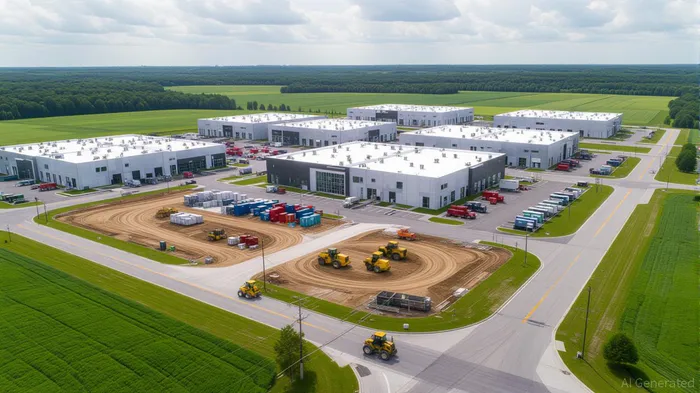
The ripple effects of this investment are already evident. Residential property values in Webster have surged by 10.1%, a direct consequence of the industrial site's revitalization. This trend mirrors a well-documented phenomenon: infrastructure upgrades enhance land desirability, driving both commercial and residential real estate appreciation. Moreover, the project complements the nearby $650 million fairlife® dairy facility, which is projected to create 250 new jobs by 2025. Together, these developments illustrate how coordinated public and private investments can create synergistic growth.
The Broader Implications: Infrastructure as a Multiplier
Webster's experience is not an isolated case. Across the United States and globally, infrastructure grants have proven instrumental in catalyzing large-scale industrial real estate projects. For instance, the Hudson Yards development in New York City-a $25 billion private venture-was enabled by strategic public infrastructure investments, demonstrating the scalability of such partnerships. Similarly, India's Kempegowda International Airport Bengaluru (KIAB), built under a public-private partnership (PPP) model, highlights how infrastructure grants can attract private capital to critical sectors.
The economic rationale for these interventions is compelling. According to a 2025 OECD report, blended finance-combining public grants with private capital-has become a cornerstone of sustainable infrastructure development, particularly in emerging markets. This approach addresses the $2.6 trillion infrastructure investment gap in the U.S. alone, as noted by industry analysts. By reducing upfront costs for developers, infrastructure grants lower barriers to entry for private investors, enabling projects that might otherwise be economically unviable.
Quantifying the Returns: Jobs, ROI, and Long-Term Value
The economic impact of infrastructure grants extends beyond immediate construction activity. Data from the U.S. Department of Transportation reveals that federal infrastructure projects between 2020 and 2025 have directly created over 1.7 million jobs, with construction employment reaching record highs. In Webster, the $9.8 million grant is expected to stimulate both short-term construction employment and long-term operational roles at the revitalized site. This aligns with broader trends: a 2025 NAIOP report found that commercial real estate development supported 14.2 million U.S. jobs in 2024, underscoring the sector's role as an employment engine.
From an investor perspective, the returns are equally attractive. Industrial real estate assets developed since 2010 have delivered total returns of 6.3% over the past year, outperforming older properties. This outperformance is driven by robust net operating income (NOI) growth and mark-to-market gains, particularly in logistics-focused markets. The Webster project, with its emphasis on high-tech manufacturing and logistics, positions itself at the intersection of these trends, offering investors exposure to sectors with strong demand resilience.
Strategic Considerations for Investors
For investors, the key lies in identifying regions where infrastructure grants are being deployed strategically. Such projects often signal long-term value creation by improving accessibility, reducing operational costs, and attracting anchor tenants. The Webster case, for example, leverages proximity to the fairlife® dairy facility to create a cluster effect, enhancing the site's appeal to logistics and manufacturing firms.
However, success depends on more than just capital. Effective governance frameworks and public-private collaboration are essential. As noted in a 2025 study on PPPs, successful projects require shared goals, urgent decision-making, and transparent accountability mechanisms. Investors must also consider the broader economic context, including regional labor markets and supply chain dynamics, to maximize returns.
Conclusion
The $9.8 million FAST NY grant in Webster, NY, is more than a local success story-it is a microcosm of a global shift in industrial real estate investment. By leveraging municipal infrastructure funding, developers and investors can transform underutilized assets into high-value hubs, driving job creation, property appreciation, and long-term economic growth. As the demand for logistics and manufacturing space continues to rise, the strategic deployment of infrastructure grants will remain a critical tool for unlocking industrial real estate's full potential.

Combina la sabiduría tradicional en el comercio con los conocimientos más avanzados sobre criptomonedas.
Latest Articles
Stay ahead of the market.
Get curated U.S. market news, insights and key dates delivered to your inbox.


AInvest
PRO
AInvest
PRO



Comments
No comments yet