
Unlocking Industrial Real Estate Value in Post-Tech Campus Markets


 Aime Summary
Strategic Infrastructure as a Catalyst
Webster's $9.8 million FAST NY grant has been pivotal in repositioning a 300-acre brownfield-once home to Xerox's corporate headquarters-into a shovel-ready industrial district. This grant, part of New York State's broader NY Forward Community Revitalization Program, funds critical infrastructure upgrades, including road realignment, sewer system modernization, and electrical master planning. These improvements not only address environmental remediation but also create a foundation for advanced manufacturing and logistics firms to thrive according to recent reports. According to a report by the Webster Economic Development Alliance (WEDA), such infrastructure investments have already driven a 10.1% annual increase in residential property values and reduced industrial vacancy rates to 2% in the region.
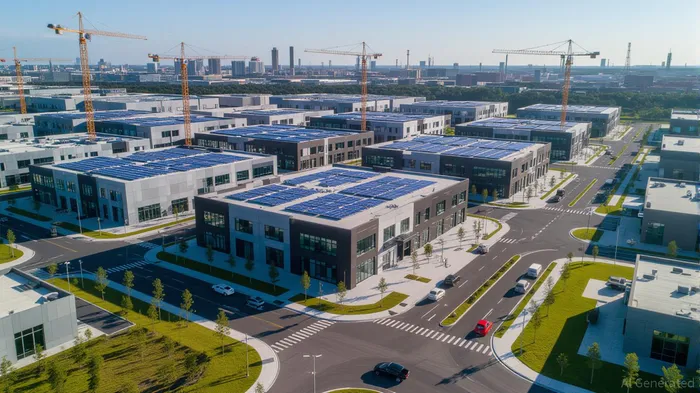
The success of this model lies in its alignment with private-sector ambitions. The $650 million fairlife® dairy facility, set to anchor the site, underscores how infrastructure readiness attracts capital-intensive industries. By 2025, this project alone is projected to generate 250 jobs, reinforcing the area's appeal to both investors and skilled labor according to industry analysis.
Municipal Realignment and Public-Private Synergy
Webster's municipal strategy extends beyond infrastructure. The town has leveraged its partnership with Xerox and the Webster Economic Development Alliance (WEDA) to implement equitable tax policies and wastewater modernization projects, ensuring long-term competitiveness for industrial tenants. These efforts align with Governor Kathy Hochul's vision for industrial site revitalization, which emphasizes creating "shovel-ready" locations to accelerate private investment according to state policy documents.
A key differentiator in Webster's approach is its focus on mixed-use development. The $4.5 million NY Forward Program, for instance, is revitalizing the Village Central Business District, blending commercial and residential spaces to foster a vibrant ecosystem around the industrial hub. This holistic strategy not only enhances land value but also mitigates the risks of over-reliance on single-industry cycles.
Broader Implications for Industrial Land Repositioning
The Webster case highlights a national trend: post-tech campuses are increasingly being repositioned as industrial assets, particularly in regions with underutilized brownfields. Data from the New York State Regional Councils indicates that such redevelopments can drive real estate appreciation by up to 15% annually when paired with infrastructure grants according to research findings. For investors, this signals an opportunity to target markets where municipal realignment and state funding intersect, creating a flywheel effect of value creation.
However, success hinges on timing and alignment. The $283 million state initiative targeting industrial site readiness by 2030 demonstrates that early-stage participation in these projects-before infrastructure upgrades are finalized-can yield outsized returns. Investors must also consider the role of tax incentives and zoning reforms, which Webster has integrated to maintain its competitive edge beyond 2025 according to municipal planning documents.
Conclusion
Webster, NY's redevelopment of the Xerox campus illustrates the transformative power of strategic infrastructure grants and municipal realignment. By prioritizing shovel-ready infrastructure, fostering public-private partnerships, and aligning with state-level initiatives, the town has positioned itself as a model for industrial land repositioning. For investors, the lesson is clear: post-tech campus markets, when strategically revitalized, offer a compelling pathway to long-term asset appreciation in an era of industrial resurgence.

Mezclando la sabiduría tradicional en el comercio con las perspectivas más avanzadas sobre criptomonedas.
Latest Articles
Stay ahead of the market.
Get curated U.S. market news, insights and key dates delivered to your inbox.




Comments
No comments yet