
Unlocking Hidden Value: FHA/VA Loan Assumptions as the Secret to Real Estate Profits in 2025
The U.S. housing market is in a precarious balancing act. Mortgage rates hover near 7.23%, stifling affordability and slowing sales. Yet, beneath this stagnation lies an overlooked opportunity: FHA and VA loan assumptions. These programs, designed to support veterans and first-time buyers, are now becoming a catalyst for investors seeking to capitalize on undervalued properties. By leveraging assumable loans with rates as low as 3.25%, investors can secure cash-flow-positive assets or flip homes at a fraction of the cost of traditional financing. This article explores how FHA/VA assumptions are reshaping real estate investing—and why now is the time to act.
The Mechanics of FHA/VA Loan Assumptions
VA loans, backed by the Department of Veterans Affairs, allow eligible buyers (including non-veterans in some cases) to assume existing mortgages with rates often far below current market rates. FHA loans, insured by the Federal Housing Administration, offer similar flexibility. Both programs require buyers to qualify financially—credit scores above 620, DTIDTI-- under 41%—but bypass the need for a down payment or private mortgage insurance.
The key advantage? Interest rate arbitrage. A buyer assuming a 3.25% VA loan in a 7.23% rate environment could save thousands annually. For instance, a $300,000 loan at 3.25% has a monthly principal-and-interest payment of $1,290, versus $2,050 at 7.23%. That's a $760 monthly savings—a windfall for investors or renters.
This spread widens further when considering the 0.5% VA funding fee or FHA assumption costs, which pale in comparison to the long-term savings.
The Investment Playbook: Where to Find Undervalued Inventory
- Target Military Hotspots:
States like Virginia (34.1% VA-backed mortgages), Nevada (32.8%), and Alaska (39.3%) are ripe for assumption deals. Military bases drive demand for VA loans, and sellers here often list homes with assumable financing.
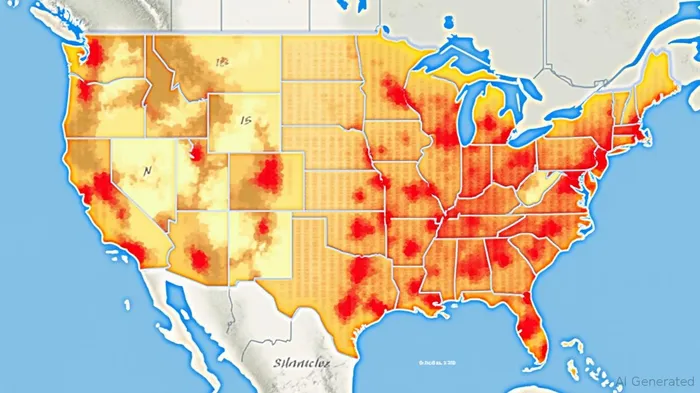
Leverage Platforms to Identify Deals:
Use tools like AssumeList or Realtor.com's “assumable loan” filter to pinpoint listings. As of Q2 2025, 11 million U.S. homes qualify, with over 85% offering rates below 6%.Navigate the Equity Gap:
Buyers must cover the difference between the sale price and the existing loan balance. For a $400,000 home with a $300,000 VA loan, that's a $100,000 gap. Investors should partner with lenders offering secondary financing or use cash reserves to close deals quickly.Focus on Gen Z Markets:
Younger buyers, particularly Gen Z, are driving a 38% surge in VA loan usage. Targeting neighborhoods with high rental demand or growth potential (e.g., Austin, Texas, or Nashville, Tennessee) amplifies returns.
Risks and Mitigation Strategies
- Equity Gaps: Require upfront capital. Investors should prioritize properties where the seller's equity is minimal or negotiate price reductions.
- Lender Inexperience: Many conventional lenders are unfamiliar with assumptions. Work with agents or title companies experienced in VA/FHA processes.
- Seller Liability: Veterans risk losing their VA entitlement if the assumee defaults. Insist on a release of liability clause in the contract.
Why Now? Market Dynamics Favor Aggressive Investors
- VA Loan Volume Growth: VA purchase lending rose nearly 10% in early 2025, with total loan volume up 45% year-over-year. This trend signals broader buyer demand.
- Falling Inventory: After a brief inventory bump in Q1, listings are tightening again. Assumable loans allow buyers to outbid cash offers by avoiding appraisal delays.
- Economic Tailwinds: While GDP growth is stagnant (projected at 1.8% in 2025), low interest rates on assumable loans insulate investors from rate volatility.
Conclusion: A Strategic Edge in a High-Rate World
FHA/VA loan assumptions aren't just a niche tactic—they're a blueprint for outperforming real estate markets. By targeting undervalued properties in military hubs and using platforms to identify assumable deals, investors can secure assets with decades of below-market-rate financing. While challenges like equity gaps exist, the long-term savings and first-mover advantage make this strategy a high-reward play.
For those willing to act, the question isn't whether to pursue FHA/VA assumptions—it's how quickly they can execute. The next wave of housing market outperformance will belong to those who unlock this hidden value first.
Investment Action Items:
1. Partner with a real estate agent specializing in VA/FHA assumptions.
2. Use AssumeList or Realtor.com to filter listings by assumable loans.
3. Focus on markets like Virginia, Texas, and Nevada for high concentrations of assumable inventory.
4. Secure secondary financing options to bridge equity gaps.
In a high-rate environment, FHA/VA assumptions are the ultimate underdog strategy—transforming yesterday's mortgages into tomorrow's profit engines.

Stay ahead of the market.
Get curated U.S. market news, insights and key dates delivered to your inbox.


AInvest
PRO
AInvest
PRO



Comments
No comments yet