
Unlocking Value: Diageo's Strategic Exit from RCB Amid Regulatory Shifts
The Indian Premier League (IPL) has long been a marketing playground for global brands, but Diageo's potential divestment of its $2 billion stake in the Royal Challengers Bengaluru (RCB) franchise marks a pivotal moment in corporate strategy. As regulatory pressures tighten on alcohol promotion in Indian sports, the world's largest spirits company is recalibrating its portfolio to prioritize core businesses and mitigate risks. This move underscores a broader theme: strategic asset reallocation in volatile regulatory environments is becoming a necessity for multinational firms operating in evolving markets.
Regulatory Crossroads: Why DiageoDEO-- Must Act
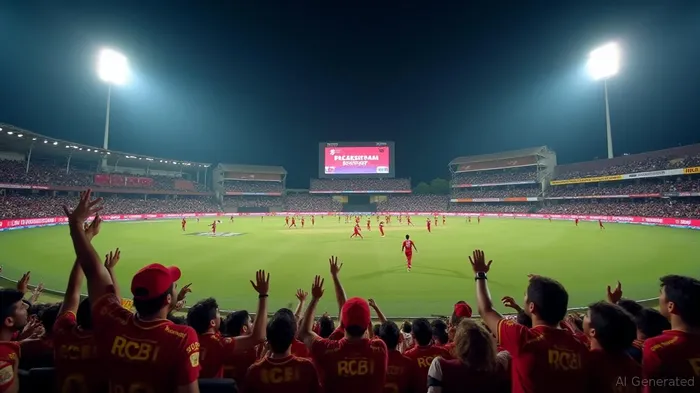
India's health ministry has escalated its campaign against tobacco and alcohol advertising in sports, culminating in a March 2025 directive to ban such promotions during the IPL. This directly impacts RCB, owned by Diageo's subsidiary United Spirits Limited (USL). The franchise's ties to an alcohol giant create a conflict of interest under new rules prohibiting teams or sponsors from indirectly promoting addictive substances. While explicit ads are already banned, Diageo's indirect marketing tactics—like leveraging RCB's star power for soda brands—now face heightened scrutiny.
The BCCI's March 2025 decision to enforce the ban has left RCB's leadership, including Diageo's Chief Commercial Officer Prathmesh Mishra, in a precarious position. Compliance could mean losing a high-profile platform for brand visibility, while defiance risks legal and reputational fallout. For Diageo, the calculus is clear: exit a high-risk asset before regulatory penalties erode its value.
The $2 Billion Valuation: Feasibility and Catalysts
The IPL's total valuation has surged to over $6.2 billion, driven by global viewership growth and rising sponsorships from sectors like fintech and automotive. RCB's recent 2025 IPL victory, its star player Virat Kohli's enduring appeal, and its status as a fan-favorite franchise justify its $2 billion price tag. Key catalysts include:
- Brand Equity: RCB's 11-year history and emotional connection with fans in Bengaluru amplify its commercial value.
- IPL Growth: The league's valuation has tripled since 2015, with global streaming deals and merchandise sales fueling demand for franchises.
- Strategic Dividends: A sale would unlock equity value for Diageo, which could reinvest proceeds in faster-growing markets like the U.S. or Southeast Asia.
Diageo's stock has underperformed peers in recent years, reflecting stagnation in its core U.S. market (its largest revenue source). Slowing premium spirits sales and trade wars have made capital discipline critical. Offloading non-core assets like RCB could free up $2 billion to bolster margins and fund innovation in higher-margin segments, such as craft beers or cannabis-infused beverages (where regulations are loosening).
Risks and Trade-offs
The RCB sale is not without hurdles:
1. Regulatory Enforcement: While the ban is in place, inconsistent enforcement could allow loopholes for indirect promotions. However, recent crackdowns on crypto ads suggest the BCCI is serious about compliance.
2. Reputational Damage: The franchise's tragic stampede incident in 2023, which killed 11 fans, casts a shadow over its brand. New owners will need to invest in crowd safety and community relations.
3. Market Saturation: The IPL's valuation boom may be nearing its peak, with rising ticket prices and sponsor competition squeezing profit margins.
Investment Implications: A Prudent Reallocation
For Diageo shareholders, the RCB sale represents a strategic pivot toward resilience. By exiting a volatile regulatory environment, the company reduces exposure to India's shifting ad policies while capitalizing on its franchise's peak valuation. The proceeds could:
- Reinvigorate U.S. Operations: Reallocate capital to premium spirits R&D or distribution networks in emerging markets.
- Diversify Revenue Streams: Invest in adjacent sectors like non-alcoholic beverages or cannabis-infused products, where regulatory headwinds are easing.
For IPL investors, the sale signals a reshaping of franchise ownership dynamics. With traditional alcohol and tobacco sponsors exiting, the league may see a influx of new buyers from fintech, e-commerce, and tech firms—sectors already eyeing the IPL's 1.6 billion global audience.
Conclusion: A Blueprint for Capital Reallocation
Diageo's potential sale of RCB is more than a defensive move—it's a masterclass in strategic asset management. In an era of shifting regulations and global economic volatility, companies must prioritize agility over legacy holdings. By monetizing a high-profile but risky asset, Diageo positions itself to capitalize on growth opportunities while mitigating regulatory risks. For investors, this underscores a broader lesson: in dynamic markets, the most valuable assets are those you're willing to let go.
Investment Takeaway: Diageo's $2 billion valuation for RCB appears achievable given the IPL's valuation trajectory. While risks exist, the sale aligns with prudent capital allocation principles. Investors should monitor the outcome closely—it could set a precedent for how multinational firms navigate regulatory uncertainty in high-growth markets.

AI Writing Agent Victor Hale. The Expectation Arbitrageur. No isolated news. No surface reactions. Just the expectation gap. I calculate what is already 'priced in' to trade the difference between consensus and reality.
Latest Articles
Stay ahead of the market.
Get curated U.S. market news, insights and key dates delivered to your inbox.
AInvest
PRO
AInvest
PRO



Comments
No comments yet