
Unlocking DFW's Hidden Real Estate Gems: Navigating the Buyer's Market for Profitable Investments
The Dallas-Fort Worth (DFW) real estate market is at a crossroads. After years of rapid price appreciation, falling median home prices, surging inventory, and a slowdown in high-end sales have created a buyer's market ripe with opportunities for strategic investors. Amid this buyer-seller stalemate, undervalued properties—particularly mid-range homes and cash-flow-positive rentals—are emerging as prime targets. Let's dissect the data and identify where to focus investments while avoiding overpriced pitfalls.
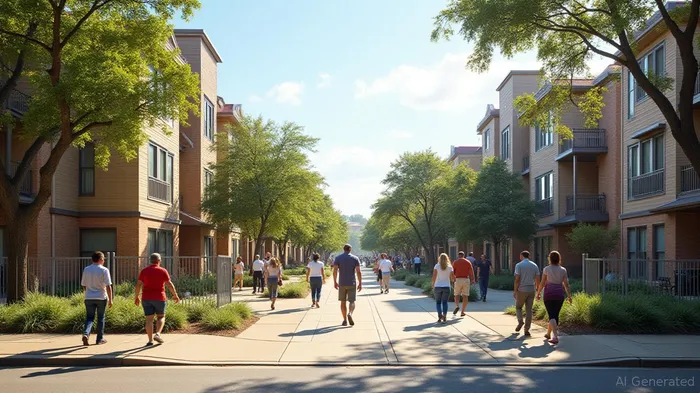
The Current Market Landscape: A Buyer's Advantage
DFW's real estate landscape is shifting dramatically. Median home prices have corrected by 5–9% year-over-year in key counties like Dallas ($365K), Rockwall (6–7% drop), and Collin (9% decline), driven by a 30–65% surge in housing inventory. Buyers now hold significant negotiating power, with 66% of Dallas sales closing below the asking price in early 2025. reveals a clear downward trend, particularly in high-end markets where listings linger longer.
Strategic Investment Opportunities
1. Mid-Range Homes: The Sweet Spot
Focus on $300K–$500K price brackets in areas with strong job growth and population inflows. Frisco/Prosper, Plano, and Uptown Dallas exemplify neighborhoods where homes are undervalued relative to their rental potential. For instance:- A 3-bedroom home in Plano (median price: $475K) could command $2,300/month in rent, yielding a 5.7% cap rate post-repairs—far above savings accounts.- Workforce housing (under $400K) in suburbs like Denton or Lewisville offers 6–7% cap rates, with rents projected to rise 1.1–1.5% by year-end. highlights this sector's stabilization.
2. Rental Properties: A Steady Cash Flow Play
The multifamily sector, though oversupplied in high-end segments, shows resilience in mid-tier and workforce housing. Key trends:- Rents are bottoming out: After six quarters of declines, DFW's average effective rent is expected to rise 1.5% by Q4 2025, outperforming 2024's 1.5% drop. - Workforce units (under $1,200/month) maintain 91.6% occupancy, making them ideal for steady cash flow. Investors should target Class B/C properties in job-rich areas, where cap rates of 6–7% reflect undervaluation.
3. Strategic Urban Neighborhoods
Dallas's urban core, particularly areas like Uptown and Deep Ellum, offer $300K–$600K condos with strong rental demand. A 2-bedroom unit renting at $1,800/month yields a 5.4% return, while appreciation potential exists as downtown revitalization projects (e.g., DART's Silver Line) boost transit access.
Avoiding Overpriced Listings: Red Flags
Not all dips are bargains. Exercise caution with:- Luxury homes in overbuilt markets: High-end listings in Park Cities or Las Colinas face prolonged inventory. For example, a $1M+ home in Rockwall may take 6–8 months to sell, and concessions (e.g., free rent or upgrades) are common.- Overleveraged developments: New construction in non-growth corridors (e.g., far suburbs) often trades below replacement cost. Investors should avoid speculative projects without job growth anchors.- Overvalued office conversions: While hybrid work trends have slowed, avoid office-to-residential conversions in areas with high vacancy rates (e.g., 17.9% in DFW's office sector) unless rental demand is proven.
Expert Insights: Timing the Market
DFW's demographic tailwinds—adding 150K+ residents annually—ensure long-term demand. However, the path to recovery requires patience:- Short-term focus: Prioritize assets with immediate cash flow, like stabilized multifamily or single-family rentals in transit-rich areas.- Long-term bets: Invest in land parcels with power infrastructure for future data centers or mixed-use developments near DART expansions.- Negotiation leverage: Use the 4.9–6.0 months inventory supply in key counties to push for price reductions or seller concessions.
Conclusion: A Buyer's Market Requires Disciplined Strategy
DFW's current correction is a once-in-a-decade opportunity for investors. By targeting mid-range homes in growth corridors, cash-flow-positive rentals, and undervalued multifamily assets, investors can secure 5–7% returns with room for appreciation. Avoid overpriced listings and speculative developments. As inventory peaks and rents rebound, now is the time to act—but with precision.
The key takeaway? Focus on fundamentals: population growth, job markets, and transit access. DFW's underlying strength will reward those who buy low and wait for the cycle to turn.
Data to watch: DFW's 1.8% annual population growth and 5% employment expansion since 2020 underscore its resilience.
Invest wisely, but invest decisively. The DFW real estate reset is here.

Stay ahead of the market.
Get curated U.S. market news, insights and key dates delivered to your inbox.


AInvest
PRO
AInvest
PRO



Comments
No comments yet