
Unlocking the Cosmos: How NASA and Blue Origin's Mars Mission Catalyzes Private-Sector Space Investment


 Aime Summary
Satellite Technology: A Growing Backbone of Space Exploration
The demand for advanced satellite systems is surging, driven by missions like ESCAPADE, which relies on cutting-edge communication technologies to transmit data from Mars. For instance, Viasat Inc. reported that its involvement in relaying telemetry data via geostationary satellites during the ESCAPADE launch highlights NASA's push to commercialize next-generation satellite relay services. This trend aligns with the performance of companies like MDA Ltd (TSX:MDA), in Q3 2025, fueled by its Satellite Systems and Robotics & Space Operations divisions. , MDA exemplifies the robust demand for satellite infrastructure.
Launch Services: Reusability Drives Cost Efficiency and Investment
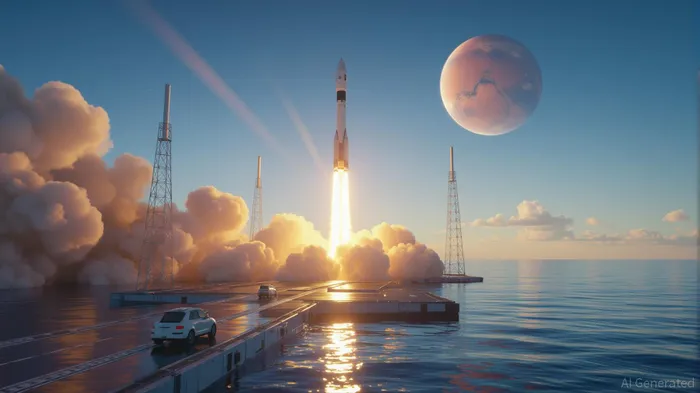
The New Glenn's successful reusable landing-a first for Blue Origin-signals a transformative shift in launch economics. By reducing the cost of interplanetary missions, reusable rockets like the New Glenn are making commercial ventures more viable. , with U.S. firms like Hadrian and Apex securing funding . The competitive landscape, dominated by SpaceX, Rocket LabRKLB--, and now Blue Origin, is fostering a robust ecosystem of private investment.
Planetary Science: Mars Exploration as a Catalyst for Commercialization
The ESCAPADE mission's focus on Mars' atmospheric loss and space weather is not just a scientific endeavor-it's a strategic investment in humanity's long-term presence on the Red Planet. According to market reports, the global Mars exploration technology market, , . NASA's collaboration with private companies to develop Entry, Descent, and Landing (EDL) systems and in-situ resource utilization (ISRU) technologies further amplifies commercial opportunities. For example, the agency's Q&A session on December 4, 2024, highlighted how industry partnerships could streamline payload delivery and imaging services for future Mars missions.
Strategic Implications for Investors
The synergy between NASA's scientific goals and Blue Origin's technological advancements creates a fertile ground for investment. The New Glenn's role in the ESCAPADE mission demonstrates the viability of commercial launch services for interplanetary missions, reducing reliance on government-funded programs. Meanwhile, the broader deep space exploration market, with propulsion and communication systems leading the charge.
For investors, the key lies in identifying companies positioned at the intersection of innovation and scalability. Firms developing reusable launch systems, satellite relay networks, and Mars-specific technologies are likely to outperform as the sector matures. The success of the ESCAPADE mission and the New Glenn's debut not only validate the technical feasibility of private-sector involvement but also signal a paradigm shift in how space exploration is funded and executed.
Conclusion
As Blue Origin's New Glenn rocket propels NASA's ESCAPADE mission into the cosmos, it also propels private-sector space infrastructure into the spotlight. The convergence of technological breakthroughs, declining launch costs, and a burgeoning market for planetary science ventures is creating unprecedented opportunities for investors. From satellite communications to Mars exploration, the next decade promises to be as transformative for space economics as the 21st century was for the internet.

Delivering real-time insights and analysis on emerging financial trends and market movements.
Latest Articles
Stay ahead of the market.
Get curated U.S. market news, insights and key dates delivered to your inbox.
AInvest
PRO
AInvest
PRO



Comments
No comments yet