
Unlocking Circular Economy Value: U.S. Municipalities as the Next Frontier for Sustainable Investment


 Aime Summary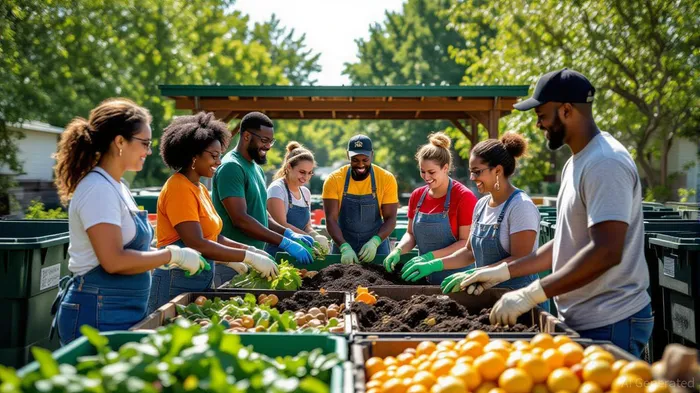
The U.S. circular economy is no longer a niche concept—it's a $4.5 trillion opportunity by 2030, driven by municipalities reimagining waste as a resource. From Nashville's Repair Fair to Cleveland's Circular Cleveland initiative, cities are proving that community-driven sustainability programs can deliver both environmental impact and financial returns. For investors, these efforts represent a goldmine of untapped potential in green infrastructure, ESG-linked bonds, and local clean-tech startups.
The Rise of Circular Economy in U.S. Cities
Cities like Cleveland, Ohio, have become laboratories for circular innovation. Cleveland's Circular Cleveland program, funded by a $476,000 Robert Wood Johnson Foundation grant, has catalyzed 37 grassroots projects, including Rid-All Green Partnership's closed-loop composting system. This initiative not only diverts 6.4 million pounds of food waste annually but also creates jobs and revitalizes vacant land. Similarly, Nashville's Repair Fair, which brings together residents to fix broken items instead of discarding them, exemplifies how community engagement can reduce waste while fostering social cohesion.
These programs are not isolated experiments. By 2025, over 20 U.S. cities—including New York, Seattle, and Austin—have adopted zero-waste goals, with circular economy strategies at their core. For example, San Francisco's mandatory composting program has diverted 80% of waste from landfills since 2012, while Fort Collins, Colorado, has achieved a 90% diversion rate through partnerships with local businesses and residents.
Investment Opportunities in Green Infrastructure
The infrastructure underpinning these initiatives is ripe for investment. Circular cities require robust systems for waste collection, material recovery, and resource redistribution. Take Rebuilders XchangeXHG-- (RBX) in Cleveland, which salvages and resells construction materials, reducing landfill waste and creating a revenue stream. Investors can capitalize on such models by funding infrastructure projects that scale these services.
Green bonds are a prime vehicle for this. In 2024, Phoenix issued a green bond framework explicitly incorporating circular economy principles, allocating funds to projects like urban composting hubs and material recovery facilities. Similarly, New York City's Zero Waste Act, backed by $646,000 tons of diverted waste in 2022, has attracted ESG-focused investors seeking high-impact municipal bonds.
ESG-Linked Bonds: A Win-Win for Investors and Communities
ESG-linked bonds are gaining traction as cities align sustainability goals with financial incentives. For instance, Austin's Universal Recycling and Composting Ordinance, which mandates waste diversion for all properties, has spurred demand for ESG bonds that fund curbside organics collection and zero-waste rebates. These bonds often offer competitive yields while supporting measurable outcomes like reduced greenhouse gas emissions and job creation.
Investors should also consider the role of federal funding. The American Rescue Plan Act (ARPA) has allocated billions to municipalities for circular economy projects, from composting infrastructure to tool-sharing programs like Cleveland's “The Shipping Container.” By pairing ARPA funds with private capital, cities can de-risk investments while maximizing returns.
Clean-Tech Startups: The Engine of Circular Innovation
Startups are the unsung heroes of the circular economy. Companies like Rheaply, which partners with San Francisco to create online marketplaces for surplus materials, and Cyclyx, a joint venture between LyondellBasellLYB-- and ExxonMobil to process recycled plastics, are redefining waste managementWM--. These ventures offer high-growth potential for venture capital and private equity firms.
Nashville's Repair Fair, while community-driven, mirrors the business model of startups like iFixit, which provides repair guides and tools to extend product lifespans. As consumer demand for sustainable practices grows, so does the market for circular tech.
The Path Forward for Investors
For investors, the key lies in diversifying across asset classes:
1. Green Infrastructure: Invest in municipal bonds funding composting, recycling, and material recovery facilities.
2. ESG-Linked Bonds: Target cities with zero-waste mandates and strong community engagement, such as Seattle or Austin.
3. Clean-Tech Startups: Back innovators in advanced recycling, closed-loop manufacturing, and digital platforms for resource sharing.
Cities like Cleveland and Nashville demonstrate that circular economy programs are not just environmentally sound—they're economically resilient. By 2030, the global circular economy could generate $4.5 trillion in value, with U.S. municipalities leading the charge. For investors, the time to act is now.
In a world where sustainability is no longer optional, the circular economy offers a blueprint for profit and purpose. The next frontier of investment isn't just in solar panels or electric vehicles—it's in the communities redefining what it means to waste nothing.

Delivering real-time insights and analysis on emerging financial trends and market movements.
Latest Articles
Stay ahead of the market.
Get curated U.S. market news, insights and key dates delivered to your inbox.


AInvest
PRO
AInvest
PRO



Comments
No comments yet