
Unlocking the Campus Logistics Gold Rush: How Startups Are Reshaping a $2.8 Billion Market
 Aime Summary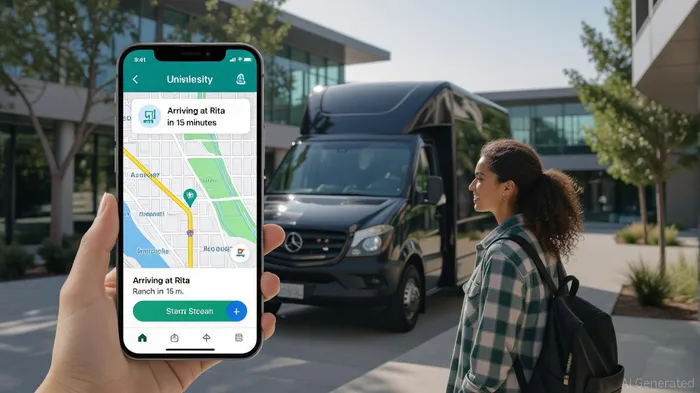
The global campus logistics sector—once a niche service catering to students' seasonal storage and moving needs—is undergoing a seismic shift. What began as a fragmented market of local moving companies and storage units has evolved into a $2.8 billion industry, growing at a 7.5% compound annual growth rate (CAGR). At the heart of this transformation are startups like E-Z Move and Tucson Moving Service, which are leveraging artificial intelligence, mobile technology, and sustainability-driven models to disrupt traditional logistics. For investors, this represents a rare opportunity to capitalize on a market poised for exponential growth, driven by generational shifts in consumer behavior and technological innovation.
The Catalysts Behind the Surge
Three forces are fueling the rise of campus logistics startups:
1. Student Mobility: With over 40 million students in urban campuses globally, the average student moves 3–5 times during their academic career. Traditional logistics providers, optimized for one-time residential moves, lack the agility to serve this recurring, seasonal demand. Startups are filling this gap with hyper-personalized services such as semester-specific storage, dorm-to-off-campus relocations, and AI-driven inventory management.
2. Digital Transformation: Gen Z students, now the dominant demographic in higher education, demand seamless digital experiences. Startups like E-Z Move and Tucson Moving Service have built app-based platforms that enable real-time tracking, automated billing, and instant booking—features absent in traditional services. These platforms not only enhance user experience but also reduce operational costs by up to 30% through route optimization algorithms.
3. Sustainability Pressures: The push for eco-friendly practices is reshaping logistics. E-Z Move's use of electric delivery vehicles and carbon-neutral packaging, for instance, aligns with Gen Z's environmental values. Similarly, Tucson Moving Service's climate-controlled storage solutions—priced 20–30% below traditional facilities—offer a sustainable alternative without compromising affordability.
Case Studies: E-Z Move and Tucson Moving Service
E-Z Move has redefined student logistics through a recurring revenue model. By structuring its services around academic cycles—offering “Move-In Week Express” packages, summer storage, and family-moving bundles—it ensures predictable cash flows. The company's AI-driven logistics system reduces idle vehicle hours by 30%, while its partnerships with university housing offices provide a direct pipeline to its target demographic. E-Z Move's gross margin of 25%—despite undercutting traditional providers—highlights its operational efficiency.
Tucson Moving Service, meanwhile, has carved a niche in the University of Arizona's 45,000-student market. Its real-time tracking app, climate-controlled storage, and specialized services for international students (including customs coordination) have driven a 30% year-over-year growth in student-related requests. By integrating SaaS tools for predictive analytics, Tucson is even monetizing data on student relocation patterns, offering universities insights to optimize housing demand.
Why This Market Is a Gold Mine for Investors
The campus logistics sector is a textbook example of a “narrow moat” opportunity—a market with high margins, low capital intensity, and strong network effects. Unlike traditional logistics, which requires heavy infrastructure, startups here operate with pay-per-use models and strategic partnerships, achieving scalability with minimal overhead.
Consider the broader market context: The student storage market alone is projected to reach $4.8 billion by 2033, growing at a 10.71% CAGR. Meanwhile, the global logistics SaaS market is surging from $22 billion in 2024 to $56 billion by 2033, driven by demand for AI-driven solutions. For startups like E-Z Move and Tucson Moving Service, these trends create a flywheel effect—technology enables hyper-personalization, which drives customer retention, which funds further innovation.
Investment Risks and Opportunities
While the market is ripe, investors must navigate several risks:
- Regulatory Hurdles: Startups relying on electric vehicles or AI algorithms may face evolving regulations.
- Competition from Giants: Traditional logistics firms like Penske or U-Haul could replicate these models.
- Market Saturation: As the sector grows, pricing pressures may erode margins.
However, early-stage startups with first-mover advantages—such as E-Z Move's 25% margin or Tucson Moving Service's university partnerships—can mitigate these risks. Investors should prioritize companies with:
- Scalable SaaS Infrastructure: Those monetizing data (e.g., predictive analytics for universities).
- Sustainability-Driven Models: Aligning with ESG trends to attract Gen Z customers.
- Recurring Revenue Streams: Leveraging academic calendars for predictable demand.
The Verdict: A Sector Worth Betting On
The campus logistics market is not just a fad—it's a harbinger of how Gen Z's digital-first, sustainability-conscious values will reshape supply chains. Startups like E-Z Move and Tucson Moving Service are already outpacing traditional providers by combining technology, convenience, and eco-friendly practices. For investors, the key is to act early: While the sector is still fragmented, the companies that dominate it today will likely be the category leaders in a decade.
As the global logistics SaaS market surges and the broader education logistics sector heads toward $780 billion by 2030, the time to invest in these disruptors is now. The next Amazon of campus logistics may already be in the early stages of its ascent.

Delivering real-time insights and analysis on emerging financial trends and market movements.
Latest Articles
Stay ahead of the market.
Get curated U.S. market news, insights and key dates delivered to your inbox.






Comments
No comments yet