
Unlocking Business Value with SAP Databricks and SAP Business Data Cloud: A Step-by-Step Playbook
ByAinvest
Monday, Aug 11, 2025 9:51 pm ET1min read
SAP--
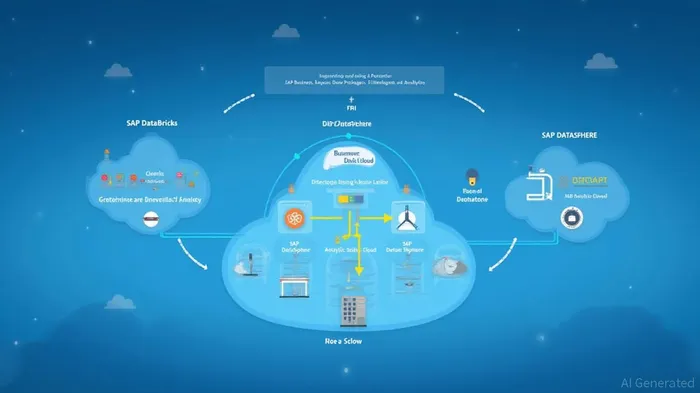
The integration process involves several steps, including data replication, sharing, and visualization. To activate an Intelligent Application or a Data Package in the SAP Business Data Cloud Cockpit, data replication occurs for the respective Data Products into the BDC Object Store. Data Products are then accessible via the BDC Catalog and can be shared with SAP Databricks. These Data Products can be used to build custom data products in SAP Databricks with AI/ML capabilities, and the derived data products can be shared back to SAP BDC Cockpit [1].
The integration allows for the sharing of data products into SAP Datasphere, where data modeling can be conducted. The results can then be shared with SAP Analytics Cloud for visualization and reporting. This end-to-end integration enables enterprises to unlock unified insights across their data landscape, driving smarter, real-time decision-making [1].
The integration process requires specific roles and prerequisites, such as Metastore Admin in SAP Databricks and Datasphere Catalog Admin. The step-by-step playbook outlines the necessary steps, including granting user access, creating shares, and deploying data products [1].
In summary, the integration of SAP Databricks, SAP Datasphere, and SAP Analytics Cloud within SAP Business Data Cloud enables enterprises to achieve seamless, governed data sharing. This integration unlocks greater value by providing a unified platform for data analytics and decision-making, powered by both SAP and non-SAP data sources.
References:
[1] https://community.sap.com/t5/technology-blog-posts-by-sap/sap-databricks-building-an-intelligent-enterprise-with-ai-unleashed-part-4/ba-p/14178056
SAP Databricks, a component of SAP Business Data Cloud, has been integrated with SAP Datasphere and SAP Analytics Cloud to form a Business Data Fabric. The integration enables seamless, governed data sharing and unlocks greater value for enterprises. The services and components within SAP Business Data Cloud include SAP BDC Cockpit, SAP Datasphere, SAP Analytics Cloud, Data Products, Data Packages, and Intelligent Applications. A step-by-step playbook is available for end-to-end integration, including data replication, sharing, and visualization.
SAP Databricks, a core component of SAP Business Data Cloud, has been integrated with SAP Datasphere and SAP Analytics Cloud to create a Business Data Fabric. This integration enables seamless, governed data sharing, unlocking greater value for enterprises. The integration encompasses SAP BDC Cockpit, SAP Datasphere, SAP Analytics Cloud, Data Products, Data Packages, and Intelligent Applications.The integration process involves several steps, including data replication, sharing, and visualization. To activate an Intelligent Application or a Data Package in the SAP Business Data Cloud Cockpit, data replication occurs for the respective Data Products into the BDC Object Store. Data Products are then accessible via the BDC Catalog and can be shared with SAP Databricks. These Data Products can be used to build custom data products in SAP Databricks with AI/ML capabilities, and the derived data products can be shared back to SAP BDC Cockpit [1].
The integration allows for the sharing of data products into SAP Datasphere, where data modeling can be conducted. The results can then be shared with SAP Analytics Cloud for visualization and reporting. This end-to-end integration enables enterprises to unlock unified insights across their data landscape, driving smarter, real-time decision-making [1].
The integration process requires specific roles and prerequisites, such as Metastore Admin in SAP Databricks and Datasphere Catalog Admin. The step-by-step playbook outlines the necessary steps, including granting user access, creating shares, and deploying data products [1].
In summary, the integration of SAP Databricks, SAP Datasphere, and SAP Analytics Cloud within SAP Business Data Cloud enables enterprises to achieve seamless, governed data sharing. This integration unlocks greater value by providing a unified platform for data analytics and decision-making, powered by both SAP and non-SAP data sources.
References:
[1] https://community.sap.com/t5/technology-blog-posts-by-sap/sap-databricks-building-an-intelligent-enterprise-with-ai-unleashed-part-4/ba-p/14178056
Stay ahead of the market.
Get curated U.S. market news, insights and key dates delivered to your inbox.


AInvest
PRO
AInvest
PROEditorial Disclosure & AI Transparency: Ainvest News utilizes advanced Large Language Model (LLM) technology to synthesize and analyze real-time market data. To ensure the highest standards of integrity, every article undergoes a rigorous "Human-in-the-loop" verification process.
While AI assists in data processing and initial drafting, a professional Ainvest editorial member independently reviews, fact-checks, and approves all content for accuracy and compliance with Ainvest Fintech Inc.’s editorial standards. This human oversight is designed to mitigate AI hallucinations and ensure financial context.
Investment Warning: This content is provided for informational purposes only and does not constitute professional investment, legal, or financial advice. Markets involve inherent risks. Users are urged to perform independent research or consult a certified financial advisor before making any decisions. Ainvest Fintech Inc. disclaims all liability for actions taken based on this information. Found an error?Report an Issue


ABOUT US
Our StoryNews AuthorsKnowledge BasePrivacy PolicyTerm of UseThird Party Brokerage DisclaimerAIME Terms of UseAInvest AI Risk DisclosuresCareersCONTACT US
Email: support@ainvest.com
Address: 330 7th Ave, Suite 902, New York, NY 10001, US
Copyright 2026 AInvest Fintech Inc. All rights reserved.


Comments
No comments yet