
Unlocking the Blue-Collar Boom: Vocational Training as the Next Frontier for Investors
 Aime Summary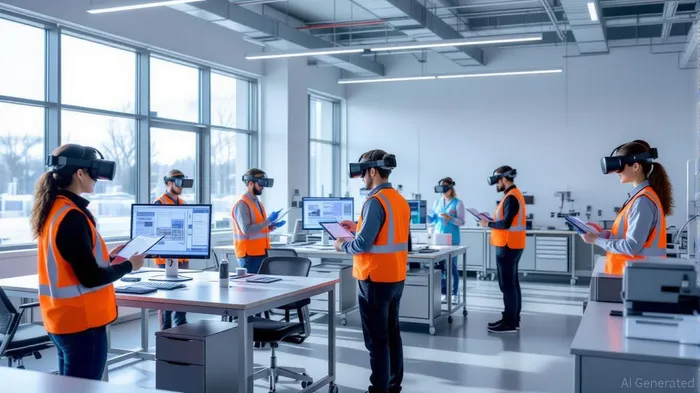
The post-pandemic labor market has revealed a seismic shift in the global economy: while white-collar sectors grapple with automation and cost-cutting, blue-collar industries are experiencing a renaissance. From 2020 to 2025, the demand for skilled blue-collar workers has surged, driven by labor shortages in construction, healthcare, transportation, and manufacturing. This trend is not a temporary anomaly but a structural realignment of the workforce, creating a fertile ground for investment in vocational training and workforce development.
The Blue-Collar Resilience: A Structural Shift
The pandemic initially devastated labor markets, but by 2021, blue-collar sectors began outpacing white-collar recovery. By 2024, the blue-collar share of employment for workers aged 20–24 had risen by 2.3 percentage points compared to 2019, a trend amplified by declining college enrollment and rising vocational interest. Younger workers, acutely aware of AI's threat to knowledge-based jobs, are increasingly opting for careers in skilled trades. Meanwhile, industries like healthcare and construction face persistent labor gaps, with job postings in these sectors remaining 30–40% above pre-pandemic levels.
This divergence is rooted in the nature of blue-collar work: manual, non-routine tasks are less susceptible to automation than repetitive white-collar roles. For instance, while AI can streamline project management or customer service, it cannot replace the precision of a skilled electrician or the adaptability of a construction worker. This resilience has made blue-collar labor a cornerstone of economic recovery, with wages in these sectors rising faster than in white-collar counterparts.
Vocational Training: The Untapped Goldmine
The surge in demand for blue-collar workers has catalyzed a boom in vocational training. The global vocational training market, valued at $388.1 billion in 2024, is projected to grow at a 8.9% CAGR, reaching $648.9 billion by 2030. This growth is fueled by three key drivers:
1. Industry 4.0 Demands: Advanced manufacturing, smart cities, and renewable energy require workers skilled in robotics, data analysis, and green technologies.
2. Government Incentives: Policies like the U.S. Infrastructure Investment and Jobs Act and the CHIPS and Science Act allocate billions to workforce development, particularly in STEM and manufacturing.
3. Corporate Upskilling: Companies are investing in apprenticeships and reskilling programs to address labor shortages. For example, Amazon's $700 million Skills Academy initiative trains employees for technical roles.
Investors are now targeting platforms that blend online learning with hands-on training. Blended models, which combine AI-driven microlearning with in-person workshops, are gaining traction. For instance, platforms like CourseraCOUR-- and Udacity have expanded into vocational niches, offering certifications in cloud computing, cybersecurity, and industrial automation.
Regional and Sectoral Opportunities
1. Healthcare and Personal Care: Aging populations and post-pandemic healthcare backlogs have created a critical need for nursing assistants, medical technicians, and home healthcare workers. Vocational programs in these fields are seeing 15–20% annual enrollment growth.
2. Advanced Manufacturing and Construction: The U.S. construction sector alone faces a $160 billion labor gap by 2030. Training centers specializing in green building, 3D printing, and modular construction are prime targets for investment.
3. Emerging Markets: Southeast Asia and Africa are expanding vocational training to meet labor demands in agriculture, logistics, and digital infrastructure. For example, Kenya's Moringa School trains students in software development and data science at a fraction of Western costs.
Strategic Investment Plays
1. EdTech Platforms with Vocational Focus: Companies like Anthology, Inc. and Articulate Global, Inc. are developing AI-powered tools for vocational training. Anthology's LMS (Learning Management System) integrates with AR/VR simulators for construction and healthcare training.
2. Apprenticeship Networks: Partnerships between corporations and vocational schools are gaining momentum. For example, General Electric's (GE) PREDICT program trains workers in industrial maintenance, with a 90% job placement rate.
3. Regional Vocational Hubs: Emerging markets like Vietnam and Nigeria are establishing training centers aligned with local industries. Investors can capitalize on these hubs through private equity or public-private partnerships.
Risks and Mitigation
While the outlook is optimistic, investors must navigate challenges:
- Regulatory Hurdles: In regions like China and Vietnam, shifting policies can disrupt vocational training models. Diversifying geographically and partnering with local governments can mitigate this.
- Technology Adoption: AR/VR and AI tools require significant upfront investment. Focusing on scalable platforms with modular curricula reduces risk.
- Market Saturation: As demand grows, competition in vocational training will intensify. Differentiation through niche specializations (e.g., green energy, AI-assisted manufacturing) is key.
Conclusion: A Blue-Collar Renaissance Awaits
The post-pandemic economy is reshaping labor markets, with blue-collar sectors leading the charge. For investors, vocational training represents a high-growth, low-automation-risk sector poised to benefit from demographic shifts, technological innovation, and policy support. By targeting platforms that bridge the skills gap in critical industries, investors can capitalize on a $650 billion market while addressing one of the most pressing challenges of the 21st century: building a workforce ready for the future.
The time to act is now. As the labor market continues to polarize, those who invest in the backbone of the economy—its skilled blue-collar workers—will reap the rewards of a resilient, future-proof portfolio.

Stay ahead of the market.
Get curated U.S. market news, insights and key dates delivered to your inbox.


AInvest
PRO
AInvest
PRO



Comments
No comments yet