
Unlocking the AI Localization Opportunity: Zetrix and the Power of Cultural Specificity in Emerging Markets
 Aime Summary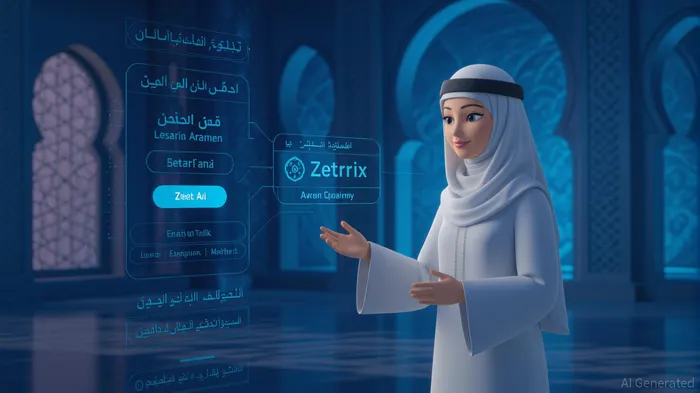
The global AI race has long been dominated by Silicon Valley and Beijing, but a new frontier is emerging: AI localization. As open-source models and cross-border partnerships lower technical barriers, companies are increasingly tailoring AI to the cultural, linguistic, and ethical nuances of underserved populations. In this context, Malaysia's Zetrix AI Bhd, in collaboration with China's DeepSeek, offers a compelling case study. By leveraging open-source AI architecture and embedding Islamic values into its NurAI chatbot, Zetrix is not only addressing a $2 billion Muslim-majority market but also redefining how AI can scale ethically in emerging economies.
The Strategic Synergy: Open-Source AI and Cultural Specificity
Zetrix's NurAI is a testament to the power of combining open-source innovation with cultural specificity. By partnering with DeepSeek, a Chinese firm known for its cost-effective Mixture of Experts (MoE) architecture, Zetrix optimized computational efficiency while maintaining scalability. The MoE approach allows NurAI to split queries into specialized modules, reducing latency and costs—a critical advantage in markets where infrastructure and affordability constraints often limit AI adoption.
This collaboration is not merely technical. NurAI's design is rooted in Sharia-compliant guidance, offering advice on dining, legal matters, health, and finance. The chatbot's availability in Malay, Indonesian, Arabic, and English, alongside AI avatars of Islamic scholars, ensures cultural resonance. Such specificity is vital in markets where trust in AI hinges on alignment with local values. For investors, this model demonstrates how open-source AI can be repurposed to serve niche demographics, creating a flywheel of user loyalty and regulatory acceptance.
Business Model Scalability: From Subscription Tiers to Systemic Integration
Zetrix's monetization strategy is equally innovative. The free tier of NurAI attracts mass adoption, while subscription tiers ($5–$50/month) cater to premium users seeking personalized services. This freemium model is a proven path to scale, particularly in markets with high smartphone penetration but low disposable income.
Long-term, Zetrix aims to integrate NurAI into Malaysia's Sharia-based court systems, automating administrative tasks and reducing judicial backlogs. This systemic integration—powered by localized data from historical manuscripts—highlights the platform's potential to become a foundational infrastructure for governance. For investors, the transition from consumer-facing tools to institutional adoption signals a shift from a product-led to a platform-led business model, unlocking recurring revenue streams and regulatory partnerships.
Ethical Deployment and Regulatory Alignment: A Dual Advantage
Emerging markets are not passive recipients of AI; they are increasingly proactive in shaping their AI ecosystems. In 2025, countries like Malaysia, Indonesia, and Saudi Arabia have strengthened data privacy laws and ethical AI frameworks. For instance, Malaysia's Personal Data Protection (Amendment) Act 2024 mandates data breach notifications and cross-border transfer assessments, while Saudi Arabia's SDAIA Ethics Principles require AI systems to align with Islamic values.
Zetrix's NurAI is designed with these regulations in mind. By training the model on localized data and embedding ethical guidelines, Zetrix minimizes compliance risks and gains a competitive edge. This alignment is not accidental—it is a strategic response to the growing demand for cultural compliance in public procurement and private-sector partnerships. For investors, this underscores the importance of regulatory foresight: companies that preemptively align with local norms are better positioned to dominate markets where AI governance is still evolving.
Cross-Border Partnerships: The New Normal in AI Innovation
The Zetrix-DeepSeek collaboration exemplifies a broader trend: cross-border tech partnerships are becoming essential for AI localization. Chinese firms like DeepSeek offer advanced, low-cost models, while local players like Zetrix provide cultural and regulatory expertise. This symbiosis allows for rapid deployment in markets where Western models often face skepticism due to perceived cultural insensitivity or data privacy concerns.
For investors, this dynamic presents opportunities in two areas:
1. Infrastructure Providers: Firms like DeepSeek that supply scalable, open-source AI models to emerging markets.
2. Localization Experts: Companies like Zetrix that bridge the gap between global AI and local needs.
Investment Thesis: Capturing the AI Localization Wave
The AI localization market is projected to grow at a 35% CAGR through 2030, driven by demand in Asia, Africa, and the Middle East. Zetrix's position at the intersection of open-source AI, cultural specificity, and regulatory alignment makes it a standout player. Key metrics to watch include:
- User Growth: NurAI's adoption rate in Malaysia and expansion into Indonesia and the Gulf.
- Regulatory Milestones: Partnerships with Sharia courts or government agencies.
- Cross-Border Synergies: Deepening ties with Chinese tech firms or ASEAN AI labs.
Investors should also consider the broader ecosystem. For example, Zetrix's collaboration with the ASEAN-China AI Lab highlights the role of government-backed initiatives in accelerating AI adoption. These partnerships reduce R&D costs and create de facto monopolies in niche markets.
Conclusion: A Blueprint for Ethical AI in Emerging Markets
Zetrix's NurAI is more than a product—it is a blueprint for ethical AI in emerging markets. By combining open-source innovation with cultural specificity, the company addresses both technical and ethical challenges, creating a scalable, sustainable model. For investors, the lesson is clear: the future of AI lies not in one-size-fits-all solutions but in localized, values-driven platforms that resonate with diverse populations. As regulatory frameworks mature and cross-border partnerships deepen, the winners in this space will be those who prioritize cultural alignment as much as algorithmic accuracy.

Stay ahead of the market.
Get curated U.S. market news, insights and key dates delivered to your inbox.


AInvest
PRO
AInvest
PRO



Comments
No comments yet