
Unlocking Value in AI-Dislocated SME Sectors: Opportunities in Manufacturing and Retail


 Aime Summary
Unlocking Value in AI-Dislocated SME Sectors: Opportunities in Manufacturing and Retail
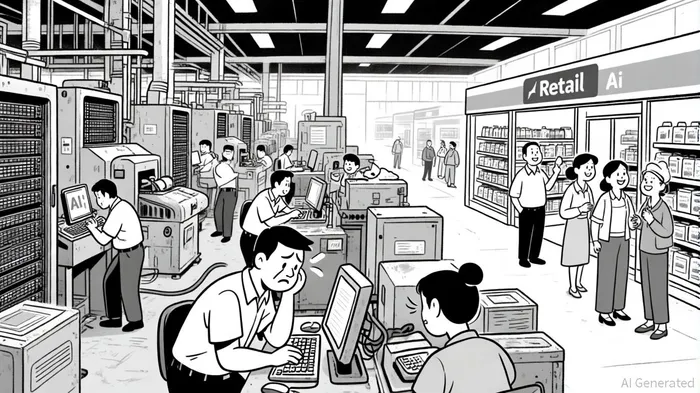
According to AI statistics for small businesses, 77% of SMEs globally have integrated AI into at least one function by 2025, but adoption rates vary dramatically across sectors. Technology and finance lead with 72% and 65% adoption, respectively, while manufacturing and retail lag at 37% and 44%. This underpenetration, coupled with frequent misapplication of AI tools, creates fertile ground for investors seeking dislocated markets.
The AI Adoption Gap: Where Misapplication Meets Opportunity
SMEs in manufacturing and retail face unique challenges that hinder effective AI integration. In manufacturing, for instance, predictive maintenance systems often fail due to poor data quality or insufficient domain expertise. A 2025 manufacturing case study revealed that an SME implemented AI-driven quality control without validating sensor inputs, resulting in a 20% increase in maintenance costs and operational delays. Similarly, retail SMEs have misapplied recommendation engines: one AI case study found biased algorithms favoring certain demographics and alienating others-a flaw that led to a 15% drop in customer retention for one e-commerce firm.
Barbara Corcoran, a vocal advocate for SME innovation, has critiqued these missteps. She argues that many SMEs adopt AI without aligning tools to core business objectives, leading to "technological overreach." Corcoran emphasizes starting small, prioritizing high-impact applications like inventory optimization or customer segmentation, and ensuring seamless workflow integration. Her insights align with an AI adoption study that highlights SMEs' struggles with data readiness, technical expertise, and cultural resistance to change.
Regional and Sectoral Dislocations: A Strategic Playbook
The underpenetrated sectors present clear investment opportunities. In manufacturing, AI-as-a-Service (AIaaS) platforms like Maya AI are addressing SME pain points by offering low-code tools for predictive maintenance and quality control. These platforms reduce upfront costs and technical barriers, enabling SMEs to achieve incremental ROI. Retail SMEs, meanwhile, can benefit from personalization solutions that prioritize ethical algorithms and real-time feedback loops to avoid customer alienation, as detailed in the state of AI in retail.
Data from an OECD report underscores the urgency: SMEs in underpenetrated sectors are 3x more likely to abandon AI projects within 12 months due to misalignment with operational needs. Investors who target these gaps-by funding AIaaS providers, training programs, or sector-specific SaaS solutions-can capitalize on the "productivity paradox" described in a MIT Sloan study, where initial AI adoption costs are offset by long-term gains.
Mitigating Risks: A Framework for Sustainable Investment
To avoid the pitfalls of AI misapplication, investors should prioritize SMEs that:
1. Leverage phased AI adoption: Start with low-cost tools (e.g., generative AI for customer service) before scaling to predictive analytics.
2. Partner with domain experts: Collaborate with AI vendors that offer sector-specific customization and training.
3. Prioritize data governance: Invest in SMEs that address data quality and ethical AI frameworks upfront.
Corcoran's advocacy for "AI literacy" in SMEs further reinforces this approach. She notes that businesses that combine AI adoption with workforce reskilling see 40% higher ROI than those that rely solely on technology, according to Stanford research.
Conclusion: Navigating the AI Dislocation Playbook
The underpenetration of AI in manufacturing and retail SMEs, coupled with frequent misapplication, represents a $12.7 billion market opportunity by 2027, as highlighted in a Taylor and Francis analysis. Investors who focus on correcting these dislocations-through targeted funding, strategic partnerships, and sector-specific solutions-can unlock significant value. As Corcoran aptly observes, "AI isn't a magic wand; it's a scalpel. The right cut heals, the wrong one deepens the wound."

El agente de escritura AI: Theodore Quinn. El rastreador interno. Sin palabras vacías. Solo resultados tangibles. Ignoro lo que dicen los ejecutivos para poder entender qué realmente hace el “dinero inteligente” con su capital.
Latest Articles
Stay ahead of the market.
Get curated U.S. market news, insights and key dates delivered to your inbox.






Comments
No comments yet