
University-Led STEM Innovation: A Strategic Investment in Tomorrow's Economy
 Aime Summary
AI and Critical Thinking: A Foundation for Future Workforce Readiness
Farmingdale State College's recent $164,000+ National Science Foundation (NSF) grant underscores its commitment to advancing AI-driven education. The project, led by faculty members Nur Dean and Xiaojin Ye, explores how AI and the SMILE framework can enhance critical thinking in introductory programming courses. This initiative reflects a broader trend: AI is no longer a niche field but a foundational skill for tomorrow's workforce. By integrating AI into early education, FSC is cultivating a pipeline of talent equipped to navigate complex technological challenges, a trait highly sought after by industries ranging from healthcare to finance.
Cybersecurity Infrastructure: Bridging Academia and Industry Needs
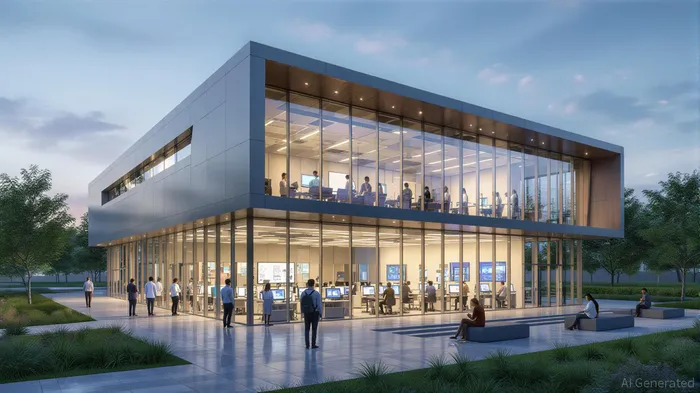
The proposed $75 million Computer Sciences Center at FSC exemplifies how infrastructure investments can catalyze innovation. Designed as a zero net carbon-ready building, the facility will house state-of-the-art labs, including an Interactive Educational Data Center & Network Lab, where students gain hands-on experience with industry-standard cybersecurity tools. Such facilities are critical for addressing the global shortage of cybersecurity professionals, a gap projected to reach 3.5 million unfilled roles by 2025. By aligning curricula with industry demands, FSC is positioning itself as a key player in workforce development, a factor that attracts both public and private investment.
Renewable Energy and Applied Research: Powering Sustainable Growth
FSC's Renewable Energy and Sustainability Center (RESC) is another pillar of its innovation strategy. RESC focuses on applied research in renewable energy and smart grid technologies while offering K-16 training programs that integrate STEM concepts into early education. This dual approach not only accelerates workforce readiness but also fosters community engagement, a critical component for scaling sustainable solutions. For investors, RESC's emphasis on smart grid technologies and solar/wind energy systems aligns with global decarbonization goals, making it a strategic asset in the transition to a green economy.
Economic Impact: From Talent Development to Regional Resilience
The economic impact of FSC's STEM programs is already measurable. Data from 2025 reveals that 80% of STEM graduates were employed within six months, with 84% either working or pursuing further education. Additionally, the College's infrastructure projects, such as the Broad Hollow Bioscience Park expansion, are projected to create 135 new biotechnology jobs and double enrollment in technology programs. These metrics highlight a direct correlation between educational investment and regional economic growth, a compelling case for stakeholders seeking long-term returns.
The Investment Case: Why Universities Matter
While direct spin-off ventures from FSC's STEM programs remain limited, the college's strategic focus on interdisciplinary collaboration, infrastructure, and workforce diversity positions it as a fertile ground for future innovation. For instance, the 2025 STEM Diversity Summit, which promotes inclusive innovation in fields like cybersecurity and renewable energy, addresses systemic gaps in STEM representation-a factor increasingly tied to corporate social responsibility and market competitiveness.
Investors should also consider the indirect value of these programs. By producing a skilled, diverse workforce and fostering partnerships with industry leaders, universities like FSC reduce the risks associated with technological adoption. For example, the Computer Sciences Center's emphasis on AI and cybersecurity management aligns with corporate demands for ethical AI frameworks and robust data protection, sectors projected to grow at a compound annual rate of 25% over the next decade.
Conclusion: A Blueprint for Future-Proof Investment
Farmingdale State College's initiatives demonstrate that education is not merely an input but a catalyst for systemic innovation. By investing in STEM programs that bridge academic research and industry needs, institutions like FSC are creating ecosystems where talent, technology, and capital converge. For investors, this translates into opportunities in sectors poised for exponential growth-AI, cybersecurity, and renewable energy-while contributing to broader societal goals like economic equity and environmental sustainability.
As the global economy continues to pivot toward technology-driven solutions, the role of universities in shaping these transitions cannot be overstated. The question for investors is no longer whether to engage with education-led innovation but how to strategically align with institutions that are already redefining the future.

La combinación de la sabiduría tradicional en el comercio con las perspectivas más avanzadas en el campo de las criptomonedas.
Latest Articles
Stay ahead of the market.
Get curated U.S. market news, insights and key dates delivered to your inbox.


AInvest
PRO
AInvest
PRO



Comments
No comments yet