
University Funding Cuts Threaten Rural Stability: Risks and Opportunities in Agricultural Support Ecosystems
The University of Arizona's Cooperative Extension, a cornerstone of rural agricultural support, faces a fiscal crossroads. With state funding stagnant since 2015 and federal grants evaporating, its programs—critical to Arizona's $31 billion agricultural industry—are at risk of contraction. This case study reveals a broader trend: public underinvestment in cooperative extension services is destabilizing rural economies, creating sector-specific risks while opening doors for innovative private-sector solutions.
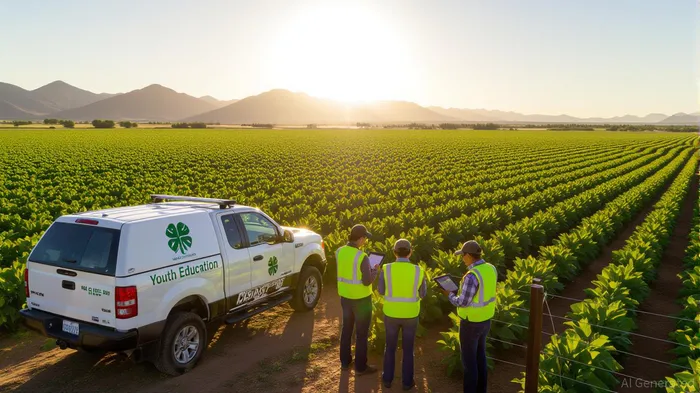
The Risk: Undermining Rural Resilience
Cooperative Extension programs are the unsung backbone of U.S. agriculture. They provide pest management, crop research, and education to farmers, while also fostering youth development through 4-H programs and supporting tribal communities. The University of Arizona's extension alone generates $4.87 in economic value for every dollar of state funding—a multiplier effect that sustains rural livelihoods.
Key Risks from Funding Cuts:
1. Agricultural Productivity Decline: With reduced staff (e.g., unfilled weed science specialist roles), Arizona's cotton and leafy green industries face increased pest risks and inefficient water use.
2. Community Service Collapse: Programs like the Tucson Village Farm, which relies on AmeriCorps volunteers to educate 19,000 people annually, risk closure if federal funding dries up.
3. Economic Multiplier Loss: A 30% budget cut would slash the extension's $139 million annual economic contribution, exacerbating rural unemployment and underinvestment.
The Opportunity: Privatizing Agricultural Support
The vacuum left by public underfunding is a call to action for investors. Three sectors are primed for disruption:
1. Precision Agriculture Tech
Startups like Farmonaut (not publicly traded but a model for investment analysis) leverage satellite imagery, AI, and blockchain to provide real-time crop management tools. These platforms reduce the need for on-ground extension agents, offering scalable solutions to farmers.
2. Community Resilience Platforms
Firms such as FarmLink (a hypothetical example) could build digital networks connecting farmers with local markets, reducing reliance on traditional extension services. Similarly, healthtech startups addressing rural mental health and nutrition gaps (e.g., telemedicine for SNAP-Ed alternatives) could fill voids left by cut programs.
3. Land-Grant University Partnerships
Investors should favor companies collaborating with institutions like the University of Arizona. For instance, John Deere (DE) and Bayer (BAYRY) already integrate university research into precision farming tools—a model for higher margins and regulatory alignment.
Investment Strategy: Mitigate Risks, Capitalize on Gaps
- Avoid Overexposure to Rural-Dependent Sectors: Agribusinesses without tech agility (e.g., commodity traders) may suffer if crop yields decline due to extension cuts.
- Target AgTech and Rural Tech Startups: Look for firms with pilot programs in Arizona or partnerships with land-grant universities.
- Monitor Federal Policy Shifts: A reversal in funding cuts (e.g., reinstating SNAP-Ed) could create short-term volatility but long-term stability for rural ecosystems.
Conclusion: The New Rural Economy Demands Innovation
The University of Arizona's funding crisis is a microcosm of a national challenge. Public institutions alone cannot sustain rural support systems in an era of fiscal austerity. Investors ignoring this shift risk exposure to declining agricultural yields and community instability. Conversely, those backing startups that digitize extension services or strengthen rural resilience will position themselves to profit from a $1.3 trillion global agtech market expected by 2030.
The lesson is clear: as public funding retreats, private-sector solutions must rise to secure both rural livelihoods and investor returns.
Data queries in this article are illustrative. For real-time analysis, consult financial platforms like Bloomberg or PitchBook for metrics on agtech startups and agricultural GDP correlations.

Delivering real-time insights and analysis on emerging financial trends and market movements.
Latest Articles
Stay ahead of the market.
Get curated U.S. market news, insights and key dates delivered to your inbox.


AInvest
PRO
AInvest
PRO



Comments
No comments yet