
Unity's 0.9% Rally Stalls at 470th Volume Rank Amid $12M Insider Selling
 Aime Summary
Market Snapshot
Unity Software Inc. , 2025, , . The modest volume suggests limited short-term institutional or retail interest, contrasting with recent insider activity that has drawn attention. While the price gain indicates some positive sentiment, the volume ranking highlights that the move may not reflect broad market enthusiasm.
Key Drivers
Recent insider transactions have emerged as a primary factor influencing Unity’s stock dynamics. , a notable shareholder, filed a notice to sell 817 shares of UnityU-- via Charles Schwab & Co. on November 17, 2025, . These shares were acquired in August 2023 through equity compensation (a restricted stock lapse) and are being sold under the SEC’s Rule 144, which allows insiders to liquidate shares without public disclosure if certain conditions are met. Barrysmith’s sale is part of a broader pattern of divestment, as he has sold over 10,000 shares in the past three months, , 2025. The timing and volume of these sales may signal a strategic rebalancing of his portfolio or a lack of near-term confidence in the stock’s performance, though Barrysmith explicitly disclaims possession of material non-public information in the filing.
Compounding this, Unity insiders executed six stock-sale transactions between November 3 and November 11, 2025, . One of these transactions deviated from the typical pattern in both size and value, raising questions about potential strategic shifts or internal reassessments. While insider selling is not inherently bearish—particularly when tied to compensation structures or liquidity needs—the cumulative magnitude of these sales could amplify market skepticism. Investors often interpret such activity as a proxy for management’s private views, even when disclaimers are included in filings. The lack of a clear catalyst for these sales, combined with the absence of public guidance from the company, may have contributed to the stock’s muted volume on November 18, as traders await further signals of momentum.
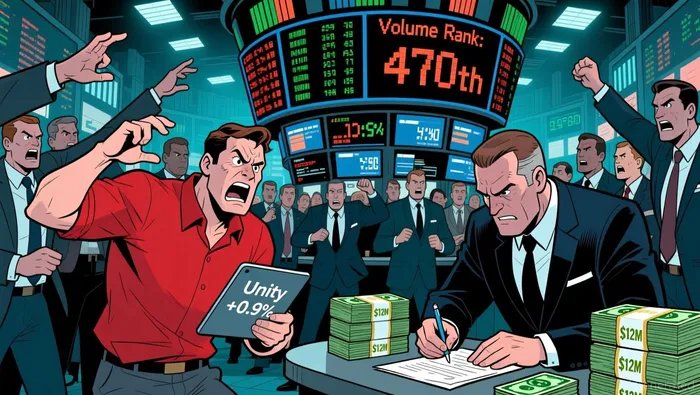
The interplay between insider activity and market performance also reflects broader uncertainties in Unity’s business environment. The company has faced ongoing challenges in monetizing its core gaming platform and expanding into enterprise markets, which may have influenced selling decisions. However, , potentially viewing the insider sales as routine rather than indicative of fundamental weakness. The divergence between price action and volume metrics underscores the complexity of interpreting short-term signals in a stock with a fragmented ownership structure and mixed signals from insiders.
Finally, the Rule 144 filing itself highlights regulatory nuances that shape trading dynamics. Barrysmith’s adherence to the rule’s requirements—such as holding the shares for a minimum period and disclosing the sale—ensures compliance but does not eliminate market speculation. The inclusion of multiple past sales in the filing (e.g., 9,149 shares in August 2025) further contextualizes the current activity as part of a longer-term strategy rather than a reactive move. While the SEC’s framework aims to balance insider liquidity with investor protection, the cumulative effect of these transactions may still weigh on Unity’s stock sentiment in the absence of counterbalancing corporate news.
In summary, Unity’s recent performance reflects a tug-of-war between technical factors (modest volume, positive price action) and fundamental uncertainties (insider selling, opaque guidance). The market’s response to these dynamics will likely hinge on whether the company can demonstrate progress in key growth areas or address structural challenges that have historically constrained its valuation.

Stay ahead of the market.
Get curated U.S. market news, insights and key dates delivered to your inbox.


AInvest
PRO
AInvest
PRO



Comments
No comments yet