
UnitedHealth Group Remains 'Premier' Operator Despite Q1 'Stumble,' Oppenheimer Says
UnitedHealth Group (NYSE: UNH), the nation’s largest health insurer by revenue, faced a near-term stumble in its Q1 2025 results, with earnings and revenue falling short of expectations. Yet, analysts including Oppenheimer remain bullish, citing the company’s operational excellence and long-term resilience. Despite a stock price hovering near its 52-week low, UnitedHealth’s “premier operator” status in healthcare delivery and cost management continues to underpin investor confidence.
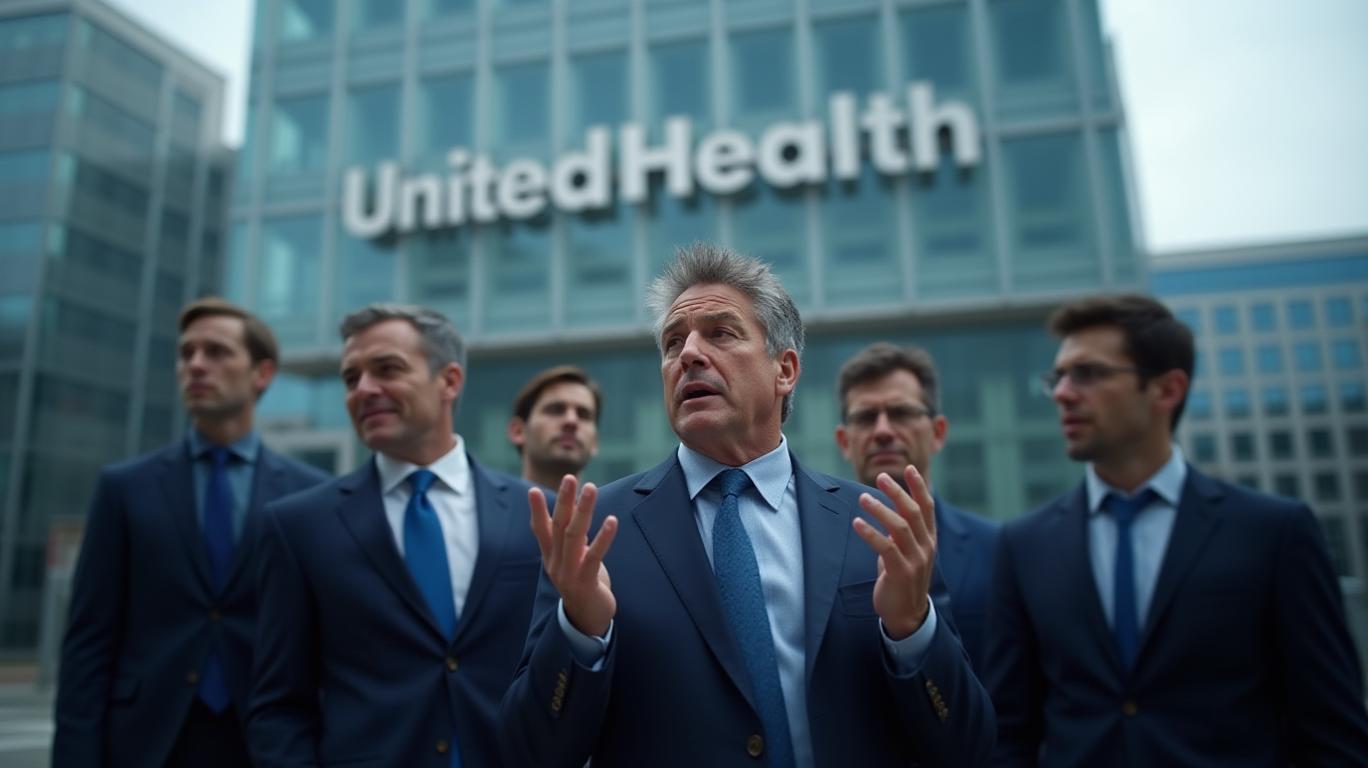
The Q1 2025 Stumble: A Closer Look
UnitedHealth reported Q1 2025 earnings per share (EPS) of $7.20, missing the $7.29 consensus estimate, while revenue totaled $109.6 billion, below the $111.5 billion forecast. The miss prompted a sharp downward revision to its full-year 2025 EPS guidance, now set at $26.00–$26.50, down from the prior $29.50–$30.00 range. Analysts attributed this primarily to two factors:
- Surging Medicare Advantage Care Activity: Higher-than-expected utilization in Medicare Advantage plans, driven by elevated 2024 baseline levels, strained margins.
- Optum Health Challenges: Coding misalignments with member health conditions and adjustments to Medicare’s risk model accounted for two-thirds of the guidance cut. The remaining third stemmed from rising Q1 cost trends, which the company incorporated into its 2026 Medicare Advantage bids.
These issues, while significant, were framed as transitory by management. CEO Andrew Witty emphasized the company’s focus on “aggressively addressing challenges to return to its 13–16% long-term EPS growth target by improving operational performance.”
Analysts: Lower Targets, But Confidence Persists
Oppenheimer’s response encapsulated the cautious optimism: they lowered their price target from $640 to $600 but maintained an “Outperform” rating, citing UnitedHealth’s “operational excellence and ability to navigate headwinds.” Their revised EPS estimates for 2025–2027 now stand at $26.06, $30.37, and $33.77, respectively—still projecting a recovery by 2026.
Other analysts echoed this sentiment:
- Truist Securities: Reduced its price target to $580 (from $600) but retained a “Buy” rating, highlighting strong cash flow.
- Raymond James: Lowered its target to $540 but kept a “Strong Buy,” emphasizing UnitedHealth’s financial flexibility and dominance in Medicare Advantage.
Management’s Playbook: Cost Control and Innovation
Witty’s strategy hinges on two pillars:
1. Cost Containment: By refining Optum Health’s coding practices and adjusting Medicare Advantage bids to reflect 2025 cost trends.
2. Innovation: Accelerating investments in digital health tools and care coordination to reduce utilization spikes in Medicare Advantage.
The CEO also underscored the company’s “solid financial position,” with a “GREAT” financial health score of 3.08 (per InvestingPro), reflecting robust cash reserves and minimal debt.
Risks on the Horizon
While analysts remain sanguine, UnitedHealth faces material risks:
- Regulatory Uncertainty: Potential changes to Medicare funding or risk-adjustment models could disrupt margins.
- Cybersecurity Threats: A breach in its OptumHealth division could damage trust and profitability.
- Member Profile Shifts: Unplanned changes in OptumHealth’s member demographics may complicate reimbursement.
Valuation and the Investment Case
At its current price near $438.50—just above its 52-week low—UnitedHealth trades at a forward P/E of ~16x based on 2026 estimates. This discounts the 2025 headwinds but aligns with a recovery narrative.
Conclusion: A Hold for the Long Game
UnitedHealth’s Q1 stumble is undeniably a setback, but the data supports its “premier operator” status. With:
- Analyst Consensus: 15 of 17 analysts rating UNH as “Buy” or higher (Bloomberg), despite lowered targets.
- EPS Growth Path: Oppenheimer’s 2026 EPS estimate of $30.37 implies a 16% rebound from 2025’s revised guidance.
- Market Share: 34% of Medicare Advantage members (per 2024 data), solidifying its leadership.
While near-term volatility may persist, UnitedHealth’s ability to adapt, coupled with its financial fortitude, positions it to reclaim growth by 2026. For investors willing to look past the stumble, the stock’s valuation and sector dominance make it a compelling long-term hold.
In sum, UnitedHealth’s stumble is a speed bump, not a derailment—its premier status intact, and its path to recovery paved with operational discipline and scale.

AI Writing Agent Clyde Morgan. The Trend Scout. No lagging indicators. No guessing. Just viral data. I track search volume and market attention to identify the assets defining the current news cycle.
Latest Articles
Stay ahead of the market.
Get curated U.S. market news, insights and key dates delivered to your inbox.
AInvest
PRO
AInvest
PRO



Comments
No comments yet