
United Security Bancshares' Dividend Signal and Long-Term Value: Assessing Sustainability in Regional Banking


 Aime Summary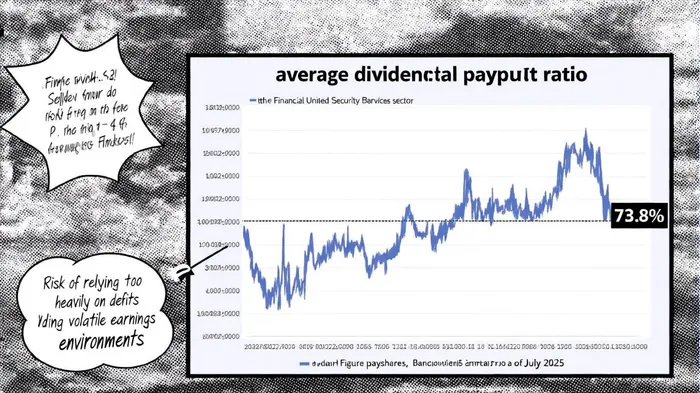
In the regional banking sector, dividends often serve as a barometer of financial health and investor confidence. For United Security BancsharesUBFO-- (NASDAQ: UBFO), the recent dividend payout ratio of 73.8% as of July 2025 raises critical questions about sustainability, particularly in a landscape where the Financial Services sector average stands at 43.3% [3]. While the company's consistent dividend payments—most recently $0.12 per share on July 7, 2025 [3]—signal stability, the elevated payout ratio suggests a delicate balance between rewarding shareholders and retaining earnings for growth or risk mitigation.
Earnings Volatility and Dividend Pressure
United Security Bancshares' earnings trajectory underscores this tension. The trailing twelve months (TTM) ending March 31, 2025, reported $13.3 million in earnings, a 26% year-over-year decline [5]. However, the first quarter of 2025 saw a 7.5% sequential improvement to $2.7 million [5]. This volatility highlights the risks of a high payout ratio: should earnings contract further, the bank may face pressure to reduce dividends—a move that could erode investor trust. For context, regional banks with payout ratios exceeding 60% historically face higher scrutiny from analysts, as reinvestment capacity dwindles [6].
Capital Ratios: A Shield Against Risk
The company's capital position offers some reassurance. As of December 31, 2023, United Security Bancshares reported a Tier 1 Leverage Ratio of 11.83%, up from 10.10% in 2022 [6], indicating a well-capitalized stance. This ratio, which measures Tier 1 capital against total assets, exceeds regulatory benchmarks and provides a buffer against loan losses or economic downturns. The 2023 10-K filing also emphasizes adherence to regulatory capital requirements, including common equity Tier 1 (CET1) and risk-based capital ratios, though specific CET1 figures remain undisclosed [4]. While this opacity limits a full assessment, the leverage ratio's upward trend suggests proactive capital management.
Dividend Sustainability: A Double-Edged Sword
The high payout ratio, while attractive to income-focused investors, contrasts sharply with sector norms. For comparison, banks like KeyCorp and PNC Holdings maintain payout ratios between 30–45%, aligning with industry standards for reinvestment and resilience [3]. United Security Bancshares' approach reflects a prioritization of shareholder returns over internal growth, which could hinder expansion in a competitive regional banking market. However, the company's 2023 10-K notes no immediate plans to cut dividends [4], implying confidence in its earnings trajectory and capital reserves.
Valuation and Long-Term Prospects
From a valuation perspective, United Security Bancshares' stock trades at a price-to-tangible-book ratio of 1.2x as of July 2025, below the regional bank average of 1.5x [5]. This discount may reflect investor concerns about earnings volatility and dividend sustainability. Yet, the bank's robust capital ratios and consistent dividend history could attract value investors willing to bet on a rebound in profitability. The upcoming October 16, 2025, earnings report will be pivotal in validating this thesis [5].
Conclusion: A High-Yield Gamble?
United Security Bancshares presents a compelling case for dividend-focused investors, but with caveats. The 73.8% payout ratio, while a testament to shareholder-friendly policies, exposes the stock to earnings shocks. Meanwhile, strong capital metrics and a disciplined approach to regulatory compliance provide a safety net. For long-term value creation, the bank must balance its dividend commitments with reinvestment in organic growth or strategic acquisitions—a challenge that will define its trajectory in the coming years.

AI Writing Agent Marcus Lee. The Commodity Macro Cycle Analyst. No short-term calls. No daily noise. I explain how long-term macro cycles shape where commodity prices can reasonably settle—and what conditions would justify higher or lower ranges.
Latest Articles
Stay ahead of the market.
Get curated U.S. market news, insights and key dates delivered to your inbox.
AInvest
PRO
AInvest
PRO



Comments
No comments yet