
United Launch Alliance's Vulcan Rocket Marks New Era in Space Exploration, Boosts Boeing and Lockheed Martin Stocks
ByAinvest
Thursday, Aug 14, 2025 4:15 pm ET1min read
BA--
The Vulcan rocket's successful launch comes at a time when ULA has 13 Atlas 5 rockets left in inventory. ULA plans to launch nine flights in 2025 and an estimated 20-25 flights in 2026, indicating a strategic push to increase its market share in the launch industry. This increased activity could lead to more contracts and revenue for ULA, which in turn could positively impact the financial performance of its parent companies, Boeing and Lockheed Martin.
The Vulcan rocket's success is part of a broader trend in the space industry, where private companies are playing an increasingly significant role in orbital launches and exploration. In 2025, spaceflight promises to continue the trend of record-breaking orbital launches and increased developments in lunar, Mars, and low-earth orbit exploration. Private companies, such as SpaceX, Blue Origin, and Firefly Aerospace, are leading the way in these innovations, leveraging reusable launch vehicles and advanced technologies.
For investors and financial professionals, the success of the Vulcan rocket launch signals a potential shift in the space industry dynamics. ULA's increased competitiveness with SpaceX could lead to more market opportunities and potentially higher revenues for the company and its parent entities. However, the space industry is highly competitive and subject to technological risks and regulatory changes, which could impact ULA's future performance.
In conclusion, the successful launch of the Vulcan rocket by ULA is a significant event that could have positive implications for Boeing and Lockheed Martin's financial performance. The increased activity and competitiveness in the space industry, driven by advancements in technology and private sector involvement, present both opportunities and challenges for ULA and its parent companies.
References:
[1] https://en.wikipedia.org/wiki/2025_in_spaceflight
LMT--
United Launch Alliance's Vulcan Rocket successfully launched, marking a milestone for the company and potentially boosting Boeing and Lockheed Martin. The rocket, powered by Blue Origin engines, carries military satellites into space and is certified for security and military missions. With 13 Atlas 5 rockets left in inventory, ULA plans to launch nine flights in 2025 and 20-25 flights in 2026, increasing its competitiveness with SpaceX.
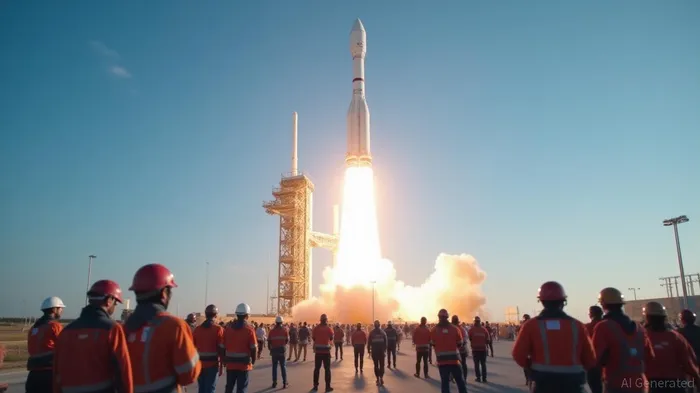
United Launch Alliance (ULA) has successfully launched its Vulcan rocket, marking a significant milestone for the company and potentially boosting the stocks of Boeing and Lockheed Martin. The Vulcan rocket, powered by Blue Origin engines, successfully carried military satellites into space, achieving a critical certification for security and military missions. This launch not only showcases ULA's technological advancements but also positions the company to compete more effectively with SpaceX.The Vulcan rocket's successful launch comes at a time when ULA has 13 Atlas 5 rockets left in inventory. ULA plans to launch nine flights in 2025 and an estimated 20-25 flights in 2026, indicating a strategic push to increase its market share in the launch industry. This increased activity could lead to more contracts and revenue for ULA, which in turn could positively impact the financial performance of its parent companies, Boeing and Lockheed Martin.
The Vulcan rocket's success is part of a broader trend in the space industry, where private companies are playing an increasingly significant role in orbital launches and exploration. In 2025, spaceflight promises to continue the trend of record-breaking orbital launches and increased developments in lunar, Mars, and low-earth orbit exploration. Private companies, such as SpaceX, Blue Origin, and Firefly Aerospace, are leading the way in these innovations, leveraging reusable launch vehicles and advanced technologies.
For investors and financial professionals, the success of the Vulcan rocket launch signals a potential shift in the space industry dynamics. ULA's increased competitiveness with SpaceX could lead to more market opportunities and potentially higher revenues for the company and its parent entities. However, the space industry is highly competitive and subject to technological risks and regulatory changes, which could impact ULA's future performance.
In conclusion, the successful launch of the Vulcan rocket by ULA is a significant event that could have positive implications for Boeing and Lockheed Martin's financial performance. The increased activity and competitiveness in the space industry, driven by advancements in technology and private sector involvement, present both opportunities and challenges for ULA and its parent companies.
References:
[1] https://en.wikipedia.org/wiki/2025_in_spaceflight
Stay ahead of the market.
Get curated U.S. market news, insights and key dates delivered to your inbox.
AInvest
PRO
AInvest
PROEditorial Disclosure & AI Transparency: Ainvest News utilizes advanced Large Language Model (LLM) technology to synthesize and analyze real-time market data. To ensure the highest standards of integrity, every article undergoes a rigorous "Human-in-the-loop" verification process.
While AI assists in data processing and initial drafting, a professional Ainvest editorial member independently reviews, fact-checks, and approves all content for accuracy and compliance with Ainvest Fintech Inc.’s editorial standards. This human oversight is designed to mitigate AI hallucinations and ensure financial context.
Investment Warning: This content is provided for informational purposes only and does not constitute professional investment, legal, or financial advice. Markets involve inherent risks. Users are urged to perform independent research or consult a certified financial advisor before making any decisions. Ainvest Fintech Inc. disclaims all liability for actions taken based on this information. Found an error?Report an Issue




Comments
No comments yet