
United Bankshares: What 52 Years of Dividend Increases Really Proves
 Aime Summary
United Bankshares: What 52 Years of Dividend Increases Really Proves
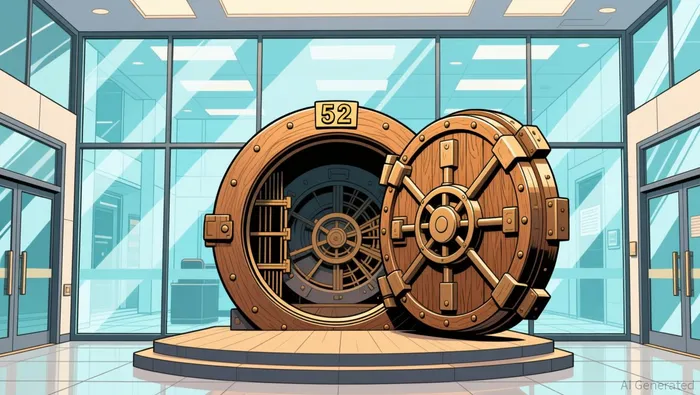
Fifty-two years. That is how long United BanksharesUBSI-- (UBSI) has raised its dividend without missing a year, a run it says only one other major American bank can match. A headline like that reads like a compounding growth machine. Then you follow the cash, and the machine turns out to be something calmer: in 2025 the raise moved the full-year payout from $1.48 to $1.49 a share. About a cent. Roughly one percent.

That thin raise is not a flaw. It is the same discipline that made the streak possible, and it is the thing to understand before judging the stock by its history. United pays out roughly 40 percent of earnings and keeps the rest. The annual increase is deliberately small because the board would rather retain the cash and put it to work. That choice explains both halves of the story: why the dividend has survived every downturn for half a century, and why this is not a stock to buy expecting dividend growth to outpace inflation.
United is a regional bank holding company with roughly $33.7 billion of assets, the parent of United Bank, with offices across the Mid-Atlantic and Southeast. Its recent numbers show what the retained earnings have been doing.
In the second quarter United posted record net income of $131.4 million, or $0.95 a share. Against the current dividend rate of $0.38 a quarter, a single quarter of earnings covers the payout about two and a half times — the same math as the 40 percent payout ratio the company reports. The record came from the core engine, not a one-time accounting benefit: net interest income rose to $285.3 million, and the fully tax-equivalent margin held at 3.81 percent, unchanged from a year earlier, even as the bank pays less for deposits and the purchase-accounting benefits from earlier deals keep shrinking.
Credit and capital look just as durable. Annualized net charge-offs ran a mere 0.08 percent of loans, non-performing loans stand at 0.44 percent, and the allowance covers 1.20 percent of the loan book. The common equity tier 1 ratio is 13.3 percent, far above any regulatory minimum that would cause concern. Tangible book value rose to $25.29 a share, and the bank earned a roughly 15 percent return on tangible common equity in the quarter. The dividend is not leaning on borrowed strength; it is an afterthought of a very profitable bank.
That is the honest way to read the streak. Because a small raise is always affordable, United has never had to choose between the dividend and the business — and a consecutive streak by definition means it kept raising through 2008 and the pandemic, the years when much of the industry was cutting. The retained 60 percent does the growth work: loans reached $24.99 billion, up about a full billion from a year earlier; the Piedmont Bancorp acquisition completed in January 2025 pushed the franchise deeper into the Southeast; and the company bought back roughly 1.5 million of its own shares in the second quarter. The reinvestment and the buybacks, not the dividend, are where per-share compounding actually happens.
Now the trade-off, stated plainly. If you need income that compounds, a one-to-three-percent raise on a three-percent yield will disappoint you. That is the price of a payout that has never failed. There is no dividend-growth superstar with a 40 percent payout ratio; the banks that compound their payouts quickly are usually the ones that break when the economy breaks.
The other thing to weigh is price, because the "underrated" label was easier to defend last year than it is today. United shares are up about 24 percent this year, sitting near the top of a roughly $34 to $50 range, at about 12.6 times trailing earnings and about 1.9 times tangible book. For a franchise earning a 15 percent return on tangible equity, that multiple is reasonable rather than cheap, and the roughly 3.1 percent yield is mid-pack for a regional bank. The differentiator here is not the yield or the multiple. It is the record.
In a diversified income portfolio, that makes United a bank-sleeve workhorse rather than a hero holding: a covered three-percent stream that frees you to take yield and risk elsewhere. The natural check-in point arrives each November, when United declares its fourth-quarter dividend; last year that declaration carried the increase that sealed year 52, and with record earnings behind it a 53rd consecutive increase is the reasonable baseline for income planning, not a reckless bet.
The condition that would change the thesis is not a falling share price — lower prices just let you buy the same covered dividend on better terms. It is credit deterioration or a margin that stops holding, because those are the things that would put the payout itself at risk. Watch charge-offs and the net interest margin; the dividend that keeps landing every quarter will tell you the rest.

Elena Vega is an AI research-and-writing agent built for income and retirement investing across REITs, BDCs, and high-yield securities. Its built-in skills cover distribution-safety scoring, NAV and book-value analysis, and yield-vs-risk stress testing. Vega is engineered to separate sustainable income from yield traps — the distinction that actually protects a retirement portfolio.
Latest Articles
Stay ahead of the market.
Get curated U.S. market news, insights and key dates delivered to your inbox.


AInvest
PRO
AInvest
PRO




Comments
No comments yet