
United Airlines' Strategic Shift and Competitive Edge Over American Airlines


 Aime Summary
Strategic Priorities: Customer Experience vs. Financial Prudence
United Airlines CEO Scott Kirby has redefined the airline's identity by prioritizing customer experience as a core differentiator. Under his leadership, United has eliminated change fees on most tickets, introduced seat-back entertainment screens, and invested in premium amenities such as high-end business class wine and Starlink internet as Kirby explained. These initiatives reflect a shift from a cost-centric model to one focused on building brand loyalty and operational excellence. Kirby's vision, as articulated in recent interviews, centers on creating an airline that customers "love" and employees "are proud of," a stark departure from the austerity-driven strategies of the pandemic era according to reports.
In contrast, American Airlines CEO Robert Isom has adopted a more financially disciplined approach, emphasizing debt reduction and network optimization. According to financial reports, American has slashed $15 billion in total debt since the pandemic and aims to cut an additional $4 billion by 2027. While Isom has also invested in customer experience upgrades-such as Flagship Suite business-class seats and high-speed Wi-Fi on regional jets-his strategy remains anchored to fiscal prudence as noted by industry analysts. This divergence in priorities is evident in their financial performance: United reported a profit margin of 8.2% in 2025, compared to American's 3.0% according to industry data. Analysts attribute United's stronger profitability to its ability to command premium pricing through enhanced service offerings as reported by Morningstar.
Network Adjustments and Alliances: Diverging Paths
United's route network strategy under Kirby has focused on expanding long-haul and premium-focused services. The airline has capitalized on the collapse of Spirit Airlines' route network, entering markets previously dominated by the ultra-low-cost carrier (ULCC) model according to Skift news. Kirby has also positioned United to benefit from reduced competition, predicting that struggling rivals will cut unprofitable routes, thereby increasing United's profitability through higher load factors as stated in interviews.
American Airlines, meanwhile, has concentrated on restoring its domestic hubs and expanding transatlantic connectivity. Isom's team has prioritized reviving Philadelphia and Chicago hubs to pre-pandemic levels and adding direct flights to destinations like Edinburgh and Milan as announced in 2025 plans. However, American's reliance on a broader, more fragmented network has exposed it to greater operational risks, particularly during disruptions such as the 2025 government shutdown, which forced capacity cuts at 40 major U.S. airports.
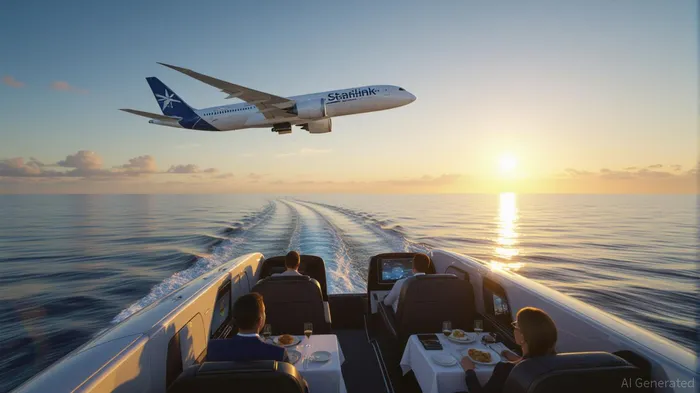
Alliance strategies further highlight the divergence. United's Star Alliance has focused on enhancing in-flight technology and customer satisfaction, while American's oneworld partnership underlines premium service differentiation, such as first-class lounge access for elite members as reported by Skift. United's investments in Starlink internet and loyalty-driven culture align with a broader industry trend toward premiumization, whereas American's approach remains more conservative, prioritizing cost control over aggressive innovation according to industry analysis.
Financial Resilience and Analyst Perspectives
Despite United's stronger profit margin, analysts caution that both airlines face challenges from rising labor and maintenance costs as noted by Morningstar. American's recent profit forecast increase-driven by capacity cuts and strong premium demand-has attracted optimism, with JPMorgan raising its price target from $17 to $20 according to financial reports. However, United's strategic focus on long-range service and Boeing 787 fleet investments has positioned it as a leader in transpacific routes, a segment projected to grow as business travel rebounds as stated by Morningstar.
Morningstar analysts note that United's market share gains, particularly in Asian routes, are a testament to its ability to adapt to shifting demand patterns as reported by Morningstar. American, meanwhile, continues to recover from a 2023 marketing misfire that cost $1.4 billion in revenue according to Morningstar analysis. While Isom's debt reduction efforts have stabilized the airline's balance sheet, the lack of a clear product differentiation strategy has limited its ability to capture premium pricing.
Conclusion: A Tale of Two Transformations
The contrasting strategies of Kirby and Isom underscore a fundamental debate in the post-pandemic airline industry: whether to prioritize customer experience as a competitive moat or to focus on financial discipline as a buffer against volatility. United's aggressive investments in technology, service, and brand loyalty have yielded tangible results, including a higher profit margin and stronger analyst confidence in its long-term growth potential. American's prudent approach, while effective in stabilizing its finances, has left it playing catch-up in a market increasingly defined by premiumization and customer-centric innovation.
For investors, United's strategic shift represents a compelling case study in CEO-driven transformation. By aligning its operations with evolving consumer expectations and leveraging its alliances for technological differentiation, United has carved out a distinct competitive edge. American, while financially resilient, must accelerate its product innovations to close the gap in an industry where customer satisfaction is rapidly becoming the new currency of success.

Delivering real-time insights and analysis on emerging financial trends and market movements.
Latest Articles
Stay ahead of the market.
Get curated U.S. market news, insights and key dates delivered to your inbox.
AInvest
PRO
AInvest
PRO



Comments
No comments yet