
United Airlines Slumps to 238th in Trading Volume as Alaska Surges with Starlink Partnership Redefining Airline Connectivity and Efficiency
 Aime Summary
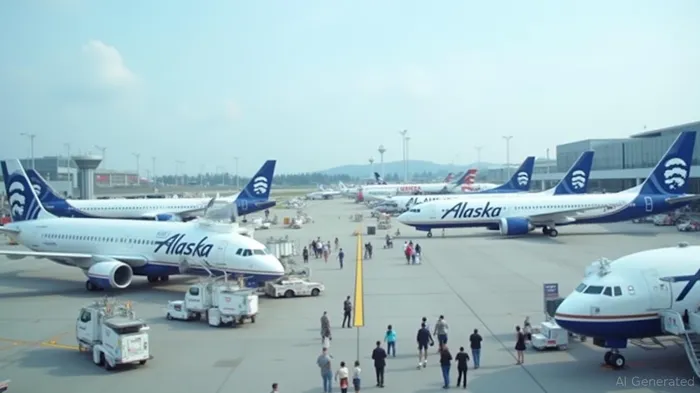
On August 20, 2025, United AirlinesUAL-- (UAL) closed with a 2.30% decline, trading at a volume of $0.44 billion, ranking 238th in market activity. The move followed broader industry developments as Alaska Airlines announced a strategic partnership with Starlink to deploy high-speed in-flight Wi-Fi across its entire fleet by 2027. This initiative positions Alaska as a leader in connectivity, offering speeds up to 500 Mbps and latency under 99ms—far exceeding traditional systems. The upgrade, which includes lightweight technology reducing annual fuel consumption by 800,000 gallons, aligns with growing investor focus on operational efficiency and sustainability in the aviation sector.
Alaska’s integration of Starlink technology is expected to enhance its competitive edge, particularly on long-haul routes from Seattle to Asia and Europe, where uninterrupted connectivity becomes a differentiator. The airline also launched Atmos Rewards, a unified loyalty program offering free Wi-Fi access to members starting in 2026. This customer-centric approach, combined with projected cost savings from fuel efficiency, underscores a broader industry shift toward leveraging technology to drive both revenue and operational gains. Analysts note that such advancements could pressure peers, including United, to accelerate their own digital and sustainability initiatives to maintain market relevance.
Financially, the Starlink rollout is projected to yield $20 million in annual fuel savings and support $1 billion in incremental profits by 2027 through expanded international routes and premium seating. While United’s recent decline may reflect sector-wide volatility, Alaska’s strategic moves highlight the potential for airlines to balance customer experience with cost optimization. Investors are closely watching how competitors respond to these innovations, as the ability to adopt cutting-edge solutions becomes increasingly critical in a post-pandemic landscape.
Backtested data from 2022 to 2025 shows that a strategy of buying top 500 stocks by daily trading volume and holding them for one day generated a total return of 31.52% over 365 days, with an average 0.98% daily gain. This suggests short-term momentum can be captured through volume-driven strategies, though it also underscores the risks of market timing and volatility inherent in such approaches.

Market Watch column provides a thorough analysis of stock market fluctuations and expert ratings.
Latest Articles
Stay ahead of the market.
Get curated U.S. market news, insights and key dates delivered to your inbox.
AInvest
PRO
AInvest
PRO



Comments
No comments yet