
United Airlines' Polaris Revamp: A Strategic Play for Dominance in the Premium Travel Renaissance
The aviation industry’s post-pandemic recovery has been anything but uniform. While budget carriers and economy-class passengers have driven the bulk of traffic rebound, the real gold mine lies in high-margin business travel—a segment where United AirlinesUAL-- is now doubling down. With its Polaris cabin upgrades, route expansions, and tech-driven differentiation, United is positioning itself to outmaneuver rivals like Delta Air Lines and capture a disproportionate share of premium demand. For investors, this is a buy signal for the long haul.
The Polaris Pivot: A Masterclass in Premium Differentiation
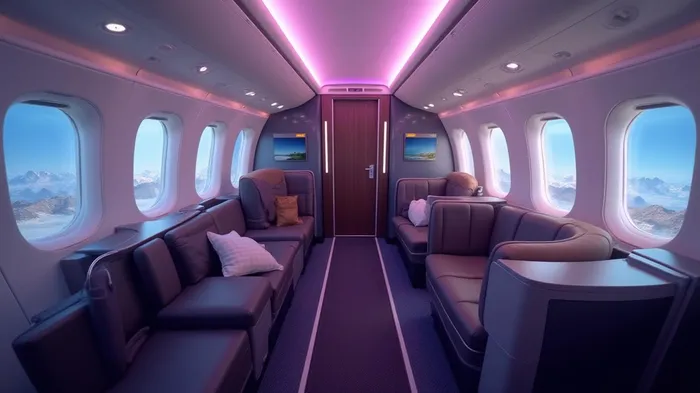
United’s Polaris Studio Suites, launching in early 2026 on flagship routes like San Francisco to Singapore and London, represent a leap beyond competitors. These 25%-larger suites with sliding privacy doors, 27-inch 4K OLED screens, and exclusive amenities like Ossetra caviar and Perricone MD skincare kits are designed to rival the luxury offerings of Middle Eastern carriers like Emirates, while retaining a distinctly American edge.
The strategic brilliance here lies in layered pricing. By introducing both Polaris Studio Suites (front-row premium) and standard Polaris Suites, United creates a tiered experience that captures both ultra-high-net-worth travelers and corporate buyers seeking value. This contrasts sharply with Delta’s Suite Seats, which lack the scalable, segmented approach that caters to diverse premium segments.
Route Expansions Fuel Global Reach
United isn’t just upgrading existing routes—it’s expanding its premium footprint. By 2025, Polaris will debut on flights to Brussels, Lisbon, and Cape Town, while 2026’s rollout targets 30 Boeing 787-9 aircraft with 99 premium seats each. This network expansion ensures Polaris isn’t confined to trans-Pacific routes but becomes a global brand, competing directly with Lufthansa’s First Class and British Airways’ Suites.
The geographic calculus is flawless:
- Asia-Pacific: Singapore and Sydney are gateways to booming markets like India and Southeast Asia.
- Europe: Brussels and Lisbon tap into corporate hubs and leisure demand.
- Emerging Markets: Cape Town and Wellington cater to luxury tourism and emerging business corridors.
Tech Investments: The Invisible Differentiator
While competitors focus on seat pitch, United is future-proofing with Starlink Wi-Fi and Bluetooth-enabled cabins, creating a seamless digital experience. The $150M+ annual investment in food upgrades—think chef-curated menus with regional twists—also signals a commitment to experiential luxury, a key driver for premium travelers.
Financials: Proof of Concept
The numbers back the strategy:
- United’s 2024 operating margin rose to 8.9%, outpacing Delta’s 7.2%, driven by premium yield stability (only a 0.5% decline vs. Delta’s 2.6% drop).
- Corporate bookings surged 14% in early 2024, a direct hit to Delta’s weaker corporate yield performance.
- With 30 upgraded 787-9s by 2027, United will control 1,785 premium seats globally, a scalable asset base to capitalize on rising luxury travel demand.
Why This Justifies a Buy Rating
- Premium Demand is Exploding: McKinsey forecasts luxury travel will grow 4x faster than economy post-pandemic. United’s $2.5B investment in Polaris positions it to capture this.
- Competitive Advantage Over Delta: While Delta’s Suite Seats are a one-size-fits-all product, United’s tiered pricing and global route network create a moat against price competition.
- Capacity Constraints = Pricing Power: With U.S. airline capacity growing just 3.5% in 2024, premium cabins—where United holds a 10% yield premium—will remain in demand.
Final Verdict: Buy UAL Before the Takeoff
United’s Polaris overhaul isn’t just an upgrade—it’s a strategic repositioning as the U.S. leader in premium travel. With 2026’s rollout and $150M/year in amenities, the brand is primed to dominate a segment where loyalty and differentiation matter most. For investors, this is a buy—a chance to board the plane to premium recovery before rivals catch up.
Act now—before the skies get crowded again.

Stay ahead of the market.
Get curated U.S. market news, insights and key dates delivered to your inbox.
AInvest
PRO
AInvest
PRO



Comments
No comments yet