
United Airlines' 2025 Forecast and Pricing Power Recovery: A Sustainable Turnaround in a Stabilizing Sector
 Aime Summary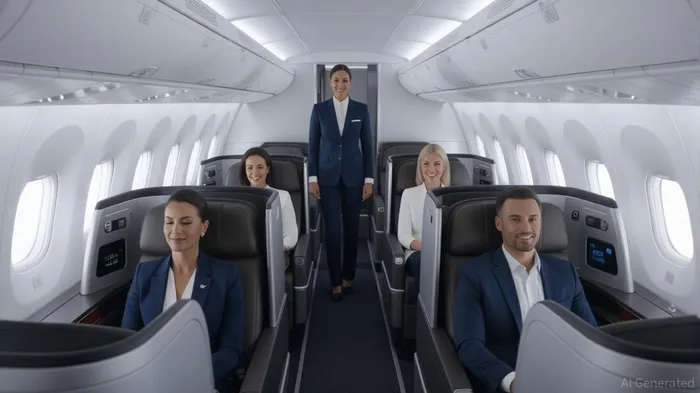
The airline sector is emerging from a turbulent chapter of the post-pandemic recovery, and United AirlinesUAL-- (UAL) has positioned itself as a standout performer. With Q2 2025 earnings surpassing expectations, a disciplined approach to capacity management, and a focus on premium offerings, United is not just surviving—it's thriving. But is this turnaround sustainable, and does it justify long-term investment in a sector historically prone to volatility? Let's break it down.
Financial Turnaround: Earnings, Margins, and Liquidity
United's Q2 2025 results were nothing short of impressive. The airline reported pre-tax earnings of $1.2 billion and adjusted pre-tax margins of 11.0%, a significant leap from its 2024 H1 margin of 6.5%. Revenue of $15.2 billion, up 1.7% year-over-year, was bolstered by a 5.6% increase in premium cabin revenue and 8.7% growth in loyalty program earnings. These figures underscore United's ability to pivot from volume-driven growth to a strategy focused on pricing power and high-margin segments.
Historically, when United beats earnings expectations, the stock has shown a positive short-term performance. From 2022 to the present, the 3-day win rate after earnings beats stood at 52.46%, while the 10-day and 30-day win rates were 51.99% and 50.40%, respectively. This suggests that outperforming expectations has consistently acted as a catalyst for near-term gains, even amid sector volatility.
Equally critical is United's balance sheet strength. With $18.6 billion in liquidity and a net leverage ratio of 2.0x, the airline has weathered the storm of debt repayments and supply chain bottlenecks. Its recent repayment of $6.8 billion in MileagePlus-secured debt has unlocked flexibility in its loyalty program, a key differentiator in a competitive market.
Strategic Shifts: Premium Offerings and Capacity Discipline
United's recovery isn't just about numbers—it's about strategy. The airline has reinvented its premium product with the United Elevated initiative, featuring PolarisPII-- Studio suites on new BoeingBA-- 787-9 aircraft. These suites, with their private cabins and lie-flat seats, have driven a 6.9 million premium seat record in Q2, capturing a larger share of the $120 billion global premium travel market.
Complementing this is a 4% reduction in domestic capacity for Q3 2025, a move that prioritizes pricing power over volume. By aligning supply with demand, United is avoiding the fare wars that plagued 2022 while maintaining strong load factors. This approach mirrors the success of 2024, where reduced capacity led to higher ticket prices and a rally in airline stocks.
The Blue Sky partnership with JetBlue further amplifies United's reach, allowing customers to use MileagePlus and TrueBlueTBI-- points interchangeably. This collaboration not only boosts customer retention but also taps into price-sensitive segments without eroding margins.
Industry Context: Capacity Constraints and Pricing Power
The broader airline sector is navigating a delicate balance. Global capacity is expected to grow by 3-4% in 2025, constrained by supply chain issues at Boeing and Airbus. This scarcity of aircraft and components has forced airlines to operate with tighter capacity, creating a tailwind for pricing power.
United's position in this environment is particularly strong. While the “revenge spending” surge of 2021-2023 has faded, corporate and international demand remains resilient. Airfares are up 8% year-over-year, driven by a combination of limited supply, rising operational costs, and the U.S. dollar's strength. United's focus on premium and international routes—where demand is more inelastic—positions it to outperform peers reliant on price-sensitive domestic markets.
Long-Term Risks and Mitigation Strategies
No investment is without risk. United's fuel hedging strategy, which covers 60% of 2025 needs at an average of $2.70 per gallon, is a double-edged sword. While this provides a buffer against short-term volatility, it leaves the airline exposed to potential spikes beyond this hedge. However, operational efficiency measures—such as single-engine taxiing and fleet modernization—offset some of this risk.
Labor negotiations with the Association of Flight Attendants (AFA) also loom on the horizon. A favorable outcome would balance fair compensation with cost control, but a breakdown could disrupt operations. United's proactive route optimization and automation initiatives, however, reduce reliance on labor cost fluctuations.
On the ESG front, United's investment in sustainable aviation fuel (SAF) and carbon-reduction technologies aligns with regulatory trends and investor expectations. This isn't just about compliance—it's a way to future-proof the business against carbon pricing and reputational risks.
Investment Thesis: A High-Conviction Buy?
United's updated 2025 guidance of $9.00–$11.00 in adjusted diluted EPS reflects confidence in a strong finish to the year. With a free cash flow yield of 3.6% (vs. the S&P 500's 2.1%) and a price-to-EBITDA ratio of 8.5x (below its five-year average of 10.2x), the stock appears undervalued relative to its earnings power.
For long-term investors, the key question is whether United can sustain its margin expansion. The airline's focus on premium offerings, disciplined capacity management, and strategic partnerships suggests it can. However, patience is required to navigate near-term volatility—such as geopolitical tensions or fuel price shocks.
Conclusion: Balancing Cautious Optimism with Strategic Exposure
United Airlines' 2025 turnaround is a masterclass in operational discipline and strategic reinvention. From premium product innovation to capacity management, the airline has positioned itself to capitalize on a stabilizing sector. While risks like fuel volatility and labor negotiations persist, United's financial strength, ESG initiatives, and industry tailwinds create a compelling case for long-term investment.
For investors with a 3-5 year horizon, a position in United could serve as a high-conviction play on the airline sector's recovery. However, it's prudent to diversify across the sector—pairing United with more defensive plays like cargo-focused carriers or low-cost operators with strong balance sheets. The key is to balance United's growth potential with the cyclical nature of air travel.
In the end, United's story isn't just about flying higher—it's about landing in the right seat for the long haul.
"""

Delivering real-time insights and analysis on emerging financial trends and market movements.
Latest Articles
Stay ahead of the market.
Get curated U.S. market news, insights and key dates delivered to your inbox.
AInvest
PRO
AInvest
PRO



Comments
No comments yet