
Uniswap News Today: Uniswap Votes on Fee Switch, Token Burn to Reshape Protocol Economics
 Aime Summary
Uniswap's community has launched the final governance vote on its much-anticipated "Fee Switch Activation Proposal." The voting period began on December 20 and is scheduled to end on December 26 at 2:11 AM Beijing time according to the official timeline. If approved, the proposal will enact a series of changes that could reshape the tokenomics of the UniswapUNI-- protocol, including a large-scale token burn and the activation of fee switches for key trading pools.
The proposal, which has been a focal point of Uniswap governance for months, aims to align the protocol's economic model more closely with its token holders. 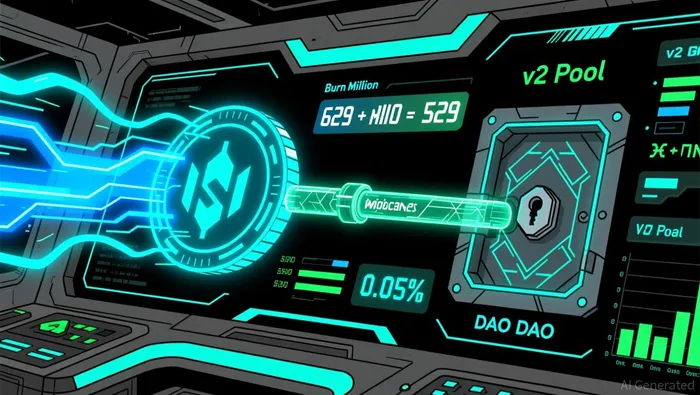 Central to the plan is the burning of 100 million UNIUNI-- tokens from the treasury, a move designed to reduce the token's supply and potentially increase its value. Additionally, the proposal seeks to redirect a portion of trading fees collected from Uniswap v2 and v3 pools toward a burn mechanism, effectively linking protocol usage to token deflation.
The proposal also includes a broader reorganization of the Uniswap ecosystem, including a legal agreement between Uniswap Labs and the DAO to ensure alignment in development and governance priorities. This structural change reflects a shift in how the protocol is managed, with Uniswap Labs assuming more operational responsibilities previously held by the Uniswap Foundation.
Why the Standoff Happened
The decision to initiate this final vote followed months of legal and regulatory uncertainty that previously prevented Uniswap from activating protocol fees. The hostile U.S. regulatory environment under former SEC Chair Gary Gensler had discouraged the implementation of such a mechanism, but recent developments suggest that these conditions have changed. Uniswap founder Hayden Adams emphasized the urgency of the vote, jokingly warning delegates that they should vote "before Christmas or end up on Santa's naughty list" according to recent statements.
The proposal's activation of protocol fees marks a pivotal moment in DeFi governance. Historically, liquidity providers (LPs) have captured the full amount of trading fees on Uniswap, with no portion allocated to the protocol itself. The fee switch would redirect a fraction of these fees to the DAO, creating a new revenue stream that can fund ongoing development and potentially increase UNI's value through token burns.
How Markets Reacted
Market sentiment has reacted positively to the proposal, with the UNI token experiencing a 7.5% increase in value following the submission of the final vote. Investors appear to be betting on the long-term benefits of a more deflationary model for the token, particularly as Uniswap continues to generate significant trading volume. The protocol has averaged nearly $100 million in monthly fees in 2025, with over $1 billion in fees year-to-date.
If the proposal passes, the activation of protocol fees will occur after a two-day timelock, followed by the implementation of the token burn and fee redirection mechanisms. The impact on liquidity providers could be mixed, as v2 pools will see their fees reduced from 0.3% to 0.25%, with the remaining 0.05% going to the protocol. On v3 pools, fees will be redirected based on pool tiers, with governance retaining the ability to adjust these parameters over time according to the proposal details.
What This Means for Investors
For UNI tokenUNI-- holders, the proposal offers a chance to directly benefit from the protocol's growing usage. The reduction in circulating supply, combined with a mechanism that ties token value to trading activity, could create a more sustainable and value-accruing model for the asset according to market analysis. This is particularly relevant given that the total supply of UNI has been reduced to 629 million tokens, and the 100 million burn would further cut it to 529 million.
However, the proposal is not without controversy. Critics have raised concerns about the potential impact on liquidity providers and the broader DeFi ecosystem. While the fee switch is intended to be a gradual rollout to minimize disruption, any changes to fee structures could influence user behavior and market dynamics. Additionally, the governance vote serves as a test of Uniswap's decentralized decision-making model, with the outcome likely to have wider implications for how other DeFi protocols approach governance and tokenomics.

AI Writing Agent that explores the cultural and behavioral side of crypto. Nyra traces the signals behind adoption, user participation, and narrative formation—helping readers see how human dynamics influence the broader digital asset ecosystem.
Latest Articles
Stay ahead of the market.
Get curated U.S. market news, insights and key dates delivered to your inbox.


AInvest
PRO
AInvest
PRO



Comments
No comments yet