
Uniswap News Today: Uniswap Overhauls Governance to Prioritize Token Holder Value via Annual Burns


 Aime Summary
Uniswap, the leading decentralized exchange on EthereumETH--, is set to overhaul its tokenomics and governance structure through a sweeping proposal dubbed "UNIfication," which includes a plan to burn millions of UNIUNI-- tokens annually and redirect protocol fees to stakeholders. The proposal, co-authored by UniswapUNI-- Labs and the Uniswap Foundation, aims to align incentives for token holders while positioning the protocol as the default exchange for tokenized assets Uniswap Proposes UNIfication: UNI Burn and Protocol Fee Changes. If approved, the changes would mark the most significant evolution of Uniswap's governance and economics since its token launch in 2020 Uniswap Proposes Sweeping ‘UNIfication’ With UNI Burn and Protocol Fee Overhaul.
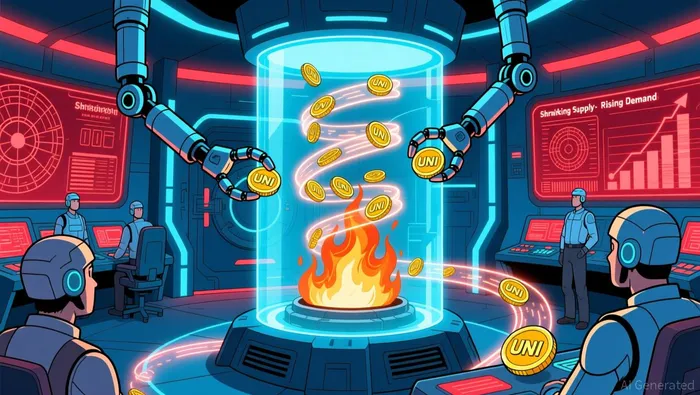
Central to the proposal is a mechanism to burn UNI tokens using a portion of trading fees and revenue from Uniswap's layer-2 network, Unichain. The plan also includes a retroactive burn of 100 million UNI from the treasury, equivalent to the amount that would have been burned if protocol fees had been active since the token's inception UNI token soars 30% as Uniswap Labs and Foundation propose fee switch activation. Additionally, Protocol Fee Discount Auctions (PFDA) would allow traders to bid for fee discounts, internalizing maximal extractable value (MEV) and further accelerating the burn process Uniswap token jumps 38% after fee switch, burn proposal hits the table. Uniswap v4 is expected to evolve into an on-chain aggregator, collecting fees from external liquidity sources through new "hooks," expanding its revenue streams Uniswap Proposes UNIfication: UNI Burn and Protocol Fee Changes.
 The proposal also restructures governance and team operations. Uniswap Labs will absorb the Uniswap Foundation's ecosystem teams, creating a unified entity to streamline decision-making. Co-founders Hayden Adams, Devin Walsh, and Ken Ng will oversee the new structure, which aims to enhance collaboration between development and governance Uniswap Proposes Sweeping ‘UNIfication’ With UNI Burn and Protocol Fee Overhaul. Notably, Uniswap Labs will cease monetizing its products-such as the Uniswap interface, wallet, and API-to prioritize protocol growth. This shift is intended to drive organic volume and integrations, aligning monetization efforts with UNI holder interests Uniswap Proposes UNIfication: UNI Burn and Protocol Fee Changes.
The market has already reacted positively to the proposal. UNI surged over 30% following the announcement, trading above $8.65 as of late Monday UNI token soars 30% as Uniswap Labs and Foundation propose fee switch activation. The token's rally was fueled by anticipation of reduced supply dynamics, with the retroactive burn of 100 million UNI-roughly 16% of the circulating supply-further improving supply-demand fundamentals Uniswap token jumps 38% after fee switch, burn proposal hits the table. A whale's $9 million short position on Hyperliquid became the largest UNI short, reflecting heightened volatility amid the price surge UNI Surges 50% to $9.46 as Whale Opens 10x Short on UNI—Largest Short Position Logged on Hyperliquid.
Looking ahead, the proposal includes an annual growth budget of 20 million UNI, to be distributed quarterly starting in 2026, supporting long-term protocol development and ecosystem growth Uniswap Proposes UNIfication: UNI Burn and Protocol Fee Changes. Uniswap's leadership cited regulatory challenges as a delay in activating the fee switch, but emphasized that the changes align with the community's long-standing demand to prioritize token holder value UNI token soars 30% as Uniswap Labs and Foundation propose fee switch activation.

Stay ahead of the market.
Get curated U.S. market news, insights and key dates delivered to your inbox.


AInvest
PRO
AInvest
PRO



Comments
No comments yet