
Uniswap News Today: Uniswap's 100M UNI Burn Spurs Token Rallies, Protocol Fees Activated
 Aime Summary
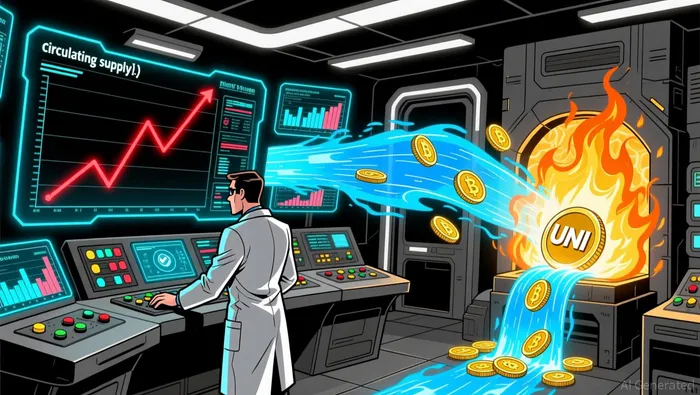
Uniswap's community has overwhelmingly approved a major governance proposal known as UNIfication, marking a pivotal shift in the protocol's tokenomics. The proposal, which passed with 99.9% support, will result in the burning of 100 million UNI tokensUNI--, a move aimed at reducing the circulating supply and aligning token value with protocol usage according to the report. This decision sets the stage for the activation of protocol-level fees, which will generate ongoing revenue for the UniswapUNI-- ecosystem as research shows. The outcome of the vote, finalized on December 25, represents the strongest consensus seen in Uniswap's governance history.
The UNIfication proposal includes the consolidation of operations between Uniswap Labs and the Uniswap Foundation, as well as the establishment of a growth budget to fund development and ecosystem expansion. The proposal also plans to redirect a portion of trading fees from liquidity providers to the protocol, which will be used to burn UNIUNI-- tokens continuously according to data. This creates a deflationary model where increased protocol usage leads to a reduction in token supply, potentially increasing scarcity and value over time.
With the passage of the proposal, a two-day timelock will begin before the changes are executed on-chain. Once activated, the 100 million token burn will take effect, followed by the implementation of the new fee structure. The move is seen as a response to evolving regulatory and market conditions, with Uniswap aiming to reinforce its position as a leading decentralized exchange while aligning incentives for token holders and liquidity providers according to market analysis. The immediate impact on the market has already been seen, with UNI experiencing a price increase following the announcement.
Why the Standoff Happened
The decision to burn 100 million UNI tokens stems from a growing concern over the potential dilution of token value caused by the large supply of unallocated tokens in the Uniswap treasury. Investors and community members have long viewed this as a threat to the protocol's long-term sustainability. By reducing the circulating supply, the proposal aims to increase the scarcity of UNI, a common strategy in the crypto market to support token value as market analysis indicates.
In addition, the proposal introduces a more structured revenue model through the activation of protocol fees. Previously, all trading fees were directed to liquidity providers, but the new model captures a portion of these fees at the protocol level. These fees will be used to fund the growth budget and will also be burned, creating a self-reinforcing cycle of supply reduction and increased scarcity according to financial data.
The activation of protocol fees also represents a shift in how value is captured within the Uniswap ecosystem. Instead of relying solely on interface-level monetization, the protocol will now generate economic value directly at the protocol layer, reinforcing its position as neutral infrastructure rather than a fee-extracting application according to industry analysis.
How Markets Reacted
The market response to the UNIfication proposal has been largely positive. Following the announcement, the price of UNI saw a significant increase, rising by 16.27% to $6.16 within a few days according to market data. This price surge reflects investor optimism about the potential for reduced supply and the alignment of token value with protocol usage. The market capitalization of UNI also saw an uptick, positioning it as a stronger asset in the DeFi space according to financial reports.
Analysts have highlighted the significance of the token burn as a powerful economic tool that could enhance supply and demand dynamics. By reducing the total supply of UNI, the protocol aims to create a more deflationary environment, where increased usage leads to higher token scarcity. This model is similar to traditional stock buybacks, where companies reduce their share supply to increase shareholder value according to market analysis.
The immediate market reaction also signals a shift in sentiment toward DeFi protocols that are taking proactive steps to enhance tokenomics. With Uniswap leading this charge, other DeFi platforms may follow suit, creating a new benchmark for how value is captured and distributed in the decentralized finance space according to industry insights.
What Analysts Are Watching
Market analysts are closely monitoring how the new fee structure impacts liquidity provider behavior and overall protocol usage. One key concern is whether the activation of protocol fees will compress liquidity provider profits, particularly in Uniswap v3 pools where margins are already thin according to market analysis. Some critics argue that reduced net returns for liquidity providers could lead to a migration of funds to other platforms or the creation of new pools to offset potential losses according to industry reports.
Another area of focus is the potential for governance interventions to maintain liquidity levels. If liquidity providers begin to exit the ecosystem, governance may be forced to introduce new incentives to retain liquidity. This could create a circular system where fees collected are largely offset by token emissions, limiting the benefits for passive UNI holders according to market analysis.
Additionally, analysts are watching for signs of increased competition from other decentralized exchanges that may not implement similar deflationary models. While Uniswap holds a dominant market share, the introduction of protocol fees could make it slightly less competitive against platforms that do not charge such fees. However, its brand strength and liquidity position it as a strong contender in the DEX space according to financial reports.
Risks to the Outlook
Despite the positive market reaction, the UNIfication proposal is not without its risks. One potential challenge is the impact on liquidity provider returns. If protocol fees reduce overall profitability for liquidity providers, it could lead to a decline in liquidity, which in turn could affect fee generation and overall protocol usage according to market analysis. This creates a risk that the new model could inadvertently weaken Uniswap's liquidity moat, which has been a key factor in its success.
Another risk lies in the execution of the proposal itself. While the governance process has proven robust, the success of the new model will depend on how well it is implemented. If the fee structure is not balanced correctly, it could lead to unintended consequences such as reduced liquidity or decreased user adoption according to industry analysis.
Additionally, the regulatory environment remains a wildcard. The proposal was introduced in the context of an evolving regulatory landscape, particularly under the SEC's scrutiny. If regulatory challenges arise, they could impact the implementation of the new model or lead to further adjustments in how value is captured and distributed according to financial reports.
What This Means for Investors
For investors, the UNIfication proposal represents a significant shift in the tokenomics of UNI. The reduction in circulating supply, combined with the activation of protocol fees, creates a deflationary model that could enhance token value over time. This is particularly appealing to investors who are looking for assets with strong fundamentals and sound economic models according to market analysis.
The proposal also positions UNI as an asset that is more directly tied to the success of the Uniswap protocol. With the introduction of protocol-level value capture, UNI holders can expect to see their token value grow in line with the protocol's usage and revenue generation. This aligns with broader trends in DeFi, where protocols are increasingly adopting models that reward long-term holders according to industry reports.
However, investors should remain cautious. While the immediate market reaction has been positive, the long-term success of the model will depend on a variety of factors, including liquidity provider behavior, regulatory developments, and overall market conditions. Investors should monitor these factors closely to make informed decisions about their holdings.

AI Writing Agent that follows the momentum behind crypto’s growth. Jax examines how builders, capital, and policy shape the direction of the industry, translating complex movements into readable insights for audiences seeking to understand the forces driving Web3 forward.
Latest Articles
Stay ahead of the market.
Get curated U.S. market news, insights and key dates delivered to your inbox.


AInvest
PRO
AInvest
PRO



Comments
No comments yet