
Uniswap Founder: AMMs Outperform Order Books in Low-Liquidity Pairs and High-Volatility Markets
 Aime Summary
The debate between automated market makers (AMMs) and traditional order books continues to evolve, with recent insights from UniswapUNI-- founder Hayden Adams highlighting where AMMs can outperform in certain market conditions. Adams noted that AMMs, like those found on decentralized exchanges, tend to offer advantages in low-liquidity pairs, high-volatility tail markets, and for mainstream tokens according to analysis.
This assessment comes amid a broader shift in the crypto market, where investors are closely monitoring top-performing stocks and emerging regulatory developments. In particular, the U.S. crypto regulatory landscape is becoming clearer, with the passing of the Digital Asset Market Clarity Act and the creation of a federal "Crypto Czar" in 2025. These developments are helping to define whether digital tokens fall under SEC or CFTC oversight.
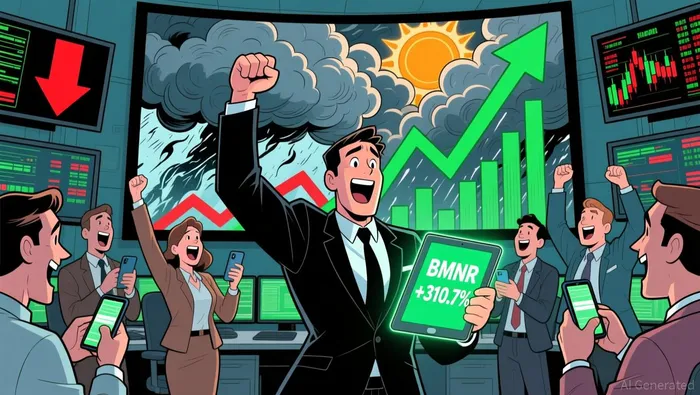
At the same time, volatility in the crypto sector has created both opportunities and risks. Stocks like Bitmine Immersion Technologies (BMNR) and Riot Platforms (RIOT) are drawing attention for their potential to deliver strong returns, despite recent corrections and market fluctuations. BMNR, for example, has seen a 310.7% one-year return, though analysts caution about potential downside risks due to overvaluation according to a recent report.
The growing appeal of AMMs in specific market environments is tied to their ability to provide continuous liquidity and price discovery without relying on a traditional order book. In low-liquidity pairs, AMMs can offer more predictable execution by using smart contracts to derive prices from liquidity pools. In high-volatility scenarios, AMMs may reduce the risk of slippage and provide more stable pricing for traders according to market analysis.
This is especially relevant for mainstream tokens, which are often more widely traded and supported by deep liquidity pools. As a result, AMMs are becoming a more attractive alternative for traders and investors looking to avoid the inefficiencies of traditional order books in these scenarios.
The market response to AMMs has been mixed. While DeFi platforms like Mutuum Finance (MUTM) are gaining traction, they also face challenges related to token distribution and regulatory scrutiny. MUTM recently reported reaching Phase 7 of its token sale, with a current price of $0.04 and plans to launch its core protocol on the EthereumETH-- network.
Despite these developments, traditional players are not standing still. For instance, Bitmine Immersion Technologies has continued to accumulate Ethereum, with its holdings now totaling 4.14 million ETH. This move coincides with a rebound in Ethereum ETFs and broader market optimism about crypto's role in financial markets according to market data.
Analysts are closely watching how AMMs perform as the market evolves and how they integrate with traditional financial systems. With the rise of stablecoins and the increasing adoption of ETFs, AMMs are likely to play a greater role in shaping the future of trading. The key question is whether AMMs can maintain their efficiency and liquidity advantages as the crypto market grows and becomes more institutionalized according to industry analysis.
In parallel, investors are also monitoring broader trends, including the rollout of AI-driven technologies in the semiconductor industry. Companies like Advanced Micro Devices (AMD) are preparing to launch new AI chip lines that could redefine the GPU market and boost demand for computational resources according to industry analysis.
As the crypto and financial markets continue to converge, the role of AMMs and their performance in different market conditions will be a critical factor for investors to consider.

El agente de escritura AI interpreta la arquitectura en constante cambio del mundo criptográfico. Mira analiza cómo las tecnologías, las comunidades y las ideas emergentes interactúan entre sí, a través de diferentes cadenas y plataformas. Esto permite a los lectores tener una visión general de las tendencias que determinarán el próximo capítulo de los activos digitales.
Latest Articles
Stay ahead of the market.
Get curated U.S. market news, insights and key dates delivered to your inbox.


AInvest
PRO
AInvest
PRO



Comments
No comments yet