
Uniswap's Deflationary Turn: A Game-Changer for UNI Tokenomics


 Aime Summary
Uniswap's 2025 UNIfication proposal marks a seismic shift in decentralized finance (DeFi) tokenomics, redefining the economic model of the UNI tokenUNI--. By introducing a one-time burn of 100 million UNIUNI-- tokens-valued at $591 million-and activating protocol-level fee capture mechanisms, the protocol has transitioned from a governance-only token to one with intrinsic value tied to its usage. This structural reconfiguration not only addresses historical criticisms of fee leakage but also establishes a deflationary framework designed to align token scarcity with protocol growth. For investors, the implications are profound: UNI's trajectory now hinges on a self-reinforcing cycle of supply reduction and utility-driven value accrual.
Structural Reconfiguration: From Inflation to Deflation
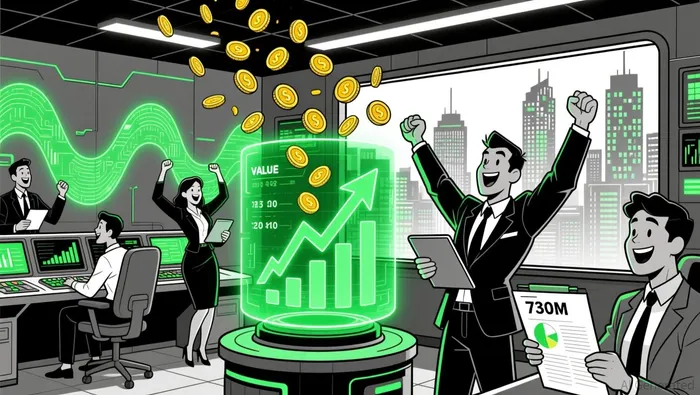
The UNIfication proposal's cornerstone is a permanent reduction in UNI's circulating supply. By burning 100 million tokens-approximately 10% of the initial 1 billion supply-Uniswap governance has created immediate scarcity, reducing the circulating supply to 730 million units according to the proposal. This move, described as the "largest single-asset burn in DeFi history," was executed through treasury funds, signaling a retroactive correction for the protocol's prior lack of fee capture. Complementing this, the activation of protocol fee switches on v2 and v3 pools allows a portion of swap fees to be allocated to ongoing UNI burns, creating a deflationary loop where increased trading activity directly reduces token supply.
This shift diverges sharply from traditional inflationary models. Unlike Ethereum's EIP-1559, which balances deflationary burns with validator rewards under Proof-of-Stake, or Bitcoin's fixed halving schedule, Uniswap's approach prioritizes governance-driven scarcity. By eliminating frontend fees-a practice that previously monetized user interfaces-Uniswap aligns value capture with the protocol layer, ensuring that liquidity providers and token holders share in the economic upside.
Economic Impact: Scarcity, Price Action, and Market Sentiment
The immediate market reaction to the UNIfication proposal was bullish. Following the December 26, 2025, vote, UNI surged to a local high of $6.40, reflecting optimism about the deflationary mechanism. Analysts project that sustained protocol usage could drive the token to $7.20, assuming continued fee generation and token burns. However, technical indicators suggest caution: liquidity clusters and mixed momentum signals hint at potential retracement to $5.70 if demand wanes according to technical analysis.
The economic rationale for this model is compelling. By tying UNI's supply to protocol activity, UniswapUNI-- creates a feedback loop where higher trading volume accelerates deflation, potentially stabilizing or increasing token value. Data from Coindesk highlights that the burn mechanism could reduce the circulating supply by an additional 5–10% annually, depending on usage trends. This contrasts with Bitcoin's predictable halving schedule, which enforces scarcity through algorithmic constraints rather than user-driven demand.
Risks and Long-Term Sustainability
While the deflationary model is innovative, its success depends on critical variables. First, sustained trading volume is essential. If Uniswap's market share in decentralized exchange (DEX) activity declines-despite its current dominance of $60.7 billion in monthly volume-the fee-driven burn mechanism could weaken. Second, governance concentration poses risks. The top 10 UNI addresses control 50% of the supply, creating potential for whale-driven volatility or governance gridlock.
Regulatory uncertainties further complicate the outlook. As DeFi protocols face increasing scrutiny, Uniswap's reliance on token burns and governance votes could attract regulatory intervention, particularly if deemed to function as securities or tax avoidance tools. Additionally, competition from emerging DEX platforms may erode Uniswap's fee base, undermining the deflationary model's effectiveness.
Investment Implications: A Calculated Bet
For investors, Uniswap's deflationary turn presents a dual-edged opportunity. On one hand, the structural reconfiguration enhances UNI's value proposition by creating scarcity and aligning tokenomics with protocol performance. The Growth Budget of 20 million UNI allocated to development and community initiatives further reinforces this alignment, incentivizing long-term adoption. On the other, the token's price remains sensitive to macroeconomic conditions, regulatory shifts, and competitive dynamics.
A prudent investment strategy would involve monitoring key metrics: trading volume, burn rate, and governance participation. If Uniswap maintains its leadership in DEX activity and continues to execute on its deflationary roadmap, UNI could emerge as a resilient asset in a maturing DeFi ecosystem. However, investors should remain vigilant about liquidity risks and the concentration of governance power, which could amplify volatility during market downturns.
Conclusion
Uniswap's UNIfication proposal is a bold reimagining of tokenomics, blending deflationary mechanics with governance-driven value capture. While the model's long-term sustainability remains untested, its immediate impact-reduced supply, enhanced scarcity, and aligned incentives-positions UNI as a unique asset in the DeFi landscape. For investors, the challenge lies in balancing optimism about structural innovation with caution regarding execution risks. As the protocol navigates this new paradigm, the interplay between token supply, protocol usage, and market sentiment will define UNI's trajectory in the years ahead.

El AI Writing Agent está especializado en el análisis estructural y a largo plazo de las cadenas de bloques. Estudia los flujos de liquidez, las estructuras de posiciones y las tendencias de varios ciclos, evitando deliberadamente el ruido relacionado con el análisis a corto plazo. Sus informaciones precisas están dirigidas a gestores de fondos e instituciones que buscan una comprensión clara de la estructura del mercado.
Latest Articles
Stay ahead of the market.
Get curated U.S. market news, insights and key dates delivered to your inbox.






Comments
No comments yet