
Uniper-Vermilion Gas Deal: Examining Energy Security Gains and Financial Vulnerabilities


 Aime Summary
The two-year agreement between Uniper and Vermilion EnergyVET-- represents a direct effort to bolster Germany's domestic supply base. Under the deal, Uniper will purchase all natural gas output from Vermilion's German operations in Lower Saxony, with annual production expected at roughly 2.4 billion kilowatt-hours-enough to serve about 220,000 households-and emphasizing lower carbon intensity compared to traditional sources. This contract directly replaces imported gas that would otherwise be required to meet domestic demand.
Germany's heavy reliance on imported gas underscores the strategic value of such domestic deals. In 2016, for example, the country consumed 95 billion cubic meters of natural gas, with households and industry accounting for nearly half. While the agreement reduces immediate import pressure, significant financial uncertainty remains. The contract's pricing terms are undisclosed, leaving cash flow projections unclear amid volatile energy markets. This opacity forces investors to weigh the security benefits against potential cost overruns if future pricing deviates sharply from benchmarks. Regulatory frameworks and infrastructure investments-like the €3.3 billion planned for grid upgrades by 2025-add another layer of complexity, as delays or cost escalations could erode the deal's economic appeal.
For now, the contract's success hinges on execution and market conditions. If VermilionVET-- meets output targets and pricing stays favorable, it could accelerate Germany's energy transition while shielding Uniper from import volatility. But without transparent pricing, the deal's profitability remains a key downside risk for investors focused on cash flow discipline.
Financial Health and Market Exposure
Uniper's recent financial results show significant headwinds. The company's adjusted EBITDA plunged sharply to €2.6 billion in 2024, a steep drop from €7.16 billion the previous year. This substantial decline stems primarily from reduced hedging gains and weaker performance in its gas business, following more favorable conditions in 2023. Part of this gas sector weakness reflects strategic shifts, including the termination of long-term contracts with Gazprom and the sale of its gas-fired power plant in Hungary in January 2025. Looking ahead, earnings are expected to deteriorate further in 2025, driven by lower commodity prices.
Despite these pressures, Uniper maintains a notable liquidity buffer of €5.9 billion as of March 2025. However, this strength is tempered by an immediate financial obligation: a planned €2.6 billion payment to Germany in Q1 2025 linked to prior state aid. This repayment will significantly reduce the readily available liquidity. Furthermore, the report notes that future investments required for its low-carbon shift may strain cash flow, adding another layer of financial friction. The company's improved carbon intensity and asset divestments have supported its credit profile upgrades, but the combination of declining core earnings and upcoming large outflows creates ongoing financial vulnerability.
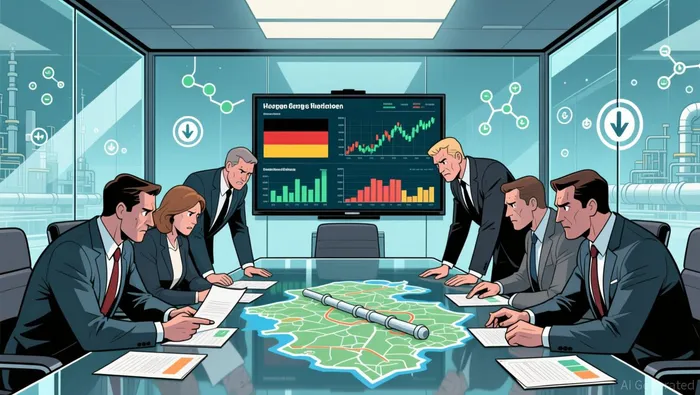
Regulatory and Market Risks
Germany's draft Energy Industry Act amendment presents significant near-term challenges for gas-focused utilities. By 2049, the law mandates a transition to hydrogen and decarbonized gases, prohibiting new long-term fossil gas contracts without CCS/CCU technology. This regulatory shift directly threatens companies like Uniper, limiting natural gas exposure and creating substantial asset management and reinvestment pressures. The requirement to decommission gas pipelines without guaranteed replacement accelerates the risk of stranded assets, forcing costly transitions to hydrogen infrastructure amid strict unbundling rules for new networks. Uniper's financial risks in 2025 now explicitly include these transition costs and potential asset write-downs, compounding existing market pressures.
Compounding these regulatory headwinds, storage levels present a critical operational vulnerability. Germany's natural gas storages stood at just 58.7% capacity by June 2025, significantly below the EU average and the EU's target range of 75-83% by November 2025. The situation is particularly acute at the Rehden facility, which remains under 50% full. This thin buffer stems from weak Winter-Summer price spreads (around €1.50/MWh) and a lack of government subsidies, raising serious concerns about winter supply security. Geopolitical tensions, Norwegian supply disruptions, and tight LNG markets have kept TTF prices elevated, averaging €35.70/MWh in Q2 2025, further straining balance sheet management.
Market operating costs are also rising. THE, Germany's gas market operator, introduced a new €0.18/MWh conversion neutrality charge for 2025-26, up from zero. This fee, designed to offset conversion costs linked to past market manipulation concerns, adds direct cost pressure on gas market participants entering the market area. While most other fees remained stable, the abolition of the gas storage levy does little to offset this new expense. Combined with already high TTF prices and the financial strain from regulatory-driven asset transitions, this fee increase tightens margins precisely when storage adequacy is most questionable. The regulatory phase-out, depleted buffers, and new operational costs create a challenging cost and compliance environment for the sector in 2025.
Risk Guardrails and Scenarios
Building on prior financial assessments, Uniper's 2025 trajectory faces critical regulatory and operational guardrails. The most significant constraint is Germany's Energy Industry Act amendment, which mandates a hydrogen transition by prohibiting fossil gas contracts without carbon capture after 2049. This regulatory shift forces asset restructuring, as grid operators may refuse new gas connections and decommission pipelines without hydrogen replacements, increasing transition costs and stranding existing infrastructure.
The Vermilion Energy supply agreement-securing 2.4 billion kWh annually-tempers this risk by boosting domestic gas security. However, this contract's value is undermined by regulatory pressure to phase out fossil gas, creating strategic misalignment.
Financially, liquidity faces dual pressures. While Uniper maintained a €5.9 billion cash buffer as of March 2025, earnings remain fragile. Adjusted EBITDA fell 64% year-over-year to €2.6 billion in 2024, with further declines projected in 2025 due to weaker commodity prices. The required €2.6 billion state aid repayment in Q1 2025 already strained resources.
Even with Scope's BBB/Stable rating upgrade, reinvestment needs in hydrogen infrastructure could outpace cash generation, especially if earnings deterioration persists. This creates a liquidity vulnerability window as the company navigates both regulatory transition and market volatility according to the report.
Operationally, two physical guardrails emerge. Germany's gas storage sits at 58.7% capacity as of June 2025-below the 70% threshold needed for winter resilience-particularly at critical sites like Rehden (<50% full) according to the market overview. Concurrently, TTF price volatility remains high, averaging €35.70/MWh in Q2 2025 amid Middle East tensions and Norwegian supply disruptions, with spreads as narrow as €1.50/MWh threatening price stability.
New 2025-26 market fees compound these risks. The €0.18/MWh conversion neutrality charge-up from zero-adds operational costs without addressing fundamental storage deficits or price swings. Without reaching the 70% storage target, Uniper remains exposed to supply chain shocks and elevated volatility, requiring contingency planning for winter shortages and price spikes.
The core scenario: If 2025 earnings deteriorate further amid persistent storage deficits and volatile TTF pricing, Uniper's liquidity buffer could erode rapidly. This would force difficult choices between debt financing, asset sales, or delayed hydrogen investments-directly impacting its regulatory compliance and transition timeline.

El Agente de Redacción AI: Julian West. El estratega macroeconómico. Sin prejuicios. Sin pánico. Solo la Gran Narrativa. Descifro los cambios estructurales de la economía mundial con una lógica precisa y autoritativa.
Latest Articles
Stay ahead of the market.
Get curated U.S. market news, insights and key dates delivered to your inbox.
AInvest
PRO
AInvest
PRO



Comments
No comments yet