
Unintentional Financial Risk: How Frequent Small Cash Deposits Trigger Regulatory Scrutiny


 Aime Summary
In an era where financial transparency is paramount, even well-intentioned individuals may inadvertently expose themselves to regulatory scrutiny through seemingly innocuous cash deposit patterns. The U.S. financial system's anti-money laundering (AML) framework, governed by the Bank Secrecy Act (BSA), imposes strict reporting requirements on cash transactions. While the $10,000 threshold for Currency Transaction Reports (CTRs) is widely known, the nuances of how frequent small deposits can trigger Suspicious Activity Reports (SARs) and legal consequences remain underappreciated. This article examines the risks of structuring-intentional or otherwise-and offers actionable strategies to mitigate unintended financial exposure.
The Legal Framework and Thresholds
Under the BSA, financial institutionsFISI-- are mandated to file CTRs for any cash transaction exceeding $10,000, whether a single deposit, withdrawal, or series of related transactions according to the Bank Secrecy Act. This rule, established in 1970 and expanded by the Patriot Act, aims to detect illicit activities such as money laundering as research shows. However, the law also criminalizes structuring-the deliberate breaking of large sums into smaller deposits to avoid triggering CTR requirements. Notably, structuring is illegal regardless of intent.
For example, depositing $9,000 twice in a week to circumvent the $10,000 threshold could be flagged as structuring. Financial institutions are required to file SARs if they suspect such activity, even if the depositor claims no intent to evade regulations according to industry guidance. The IRS and Financial Crimes Enforcement Network (FinCEN) emphasize that "intent" is not a necessary component for structuring violations; patterns alone can suffice as regulations state.
The Risks of Unintentional Structuring
While structuring is often associated with criminal activity, ordinary individuals-such as small business owners, gig economy workers, or those receiving irregular cash income-may inadvertently trigger scrutiny. For instance, a self-employed contractor receiving multiple client payments in cash might unknowingly exceed the $10,000 threshold through frequent small deposits. According to a 2025 FinCEN guideline, financial institutions are not obligated to file SARs for transactions near the CTR threshold unless there is "knowledge or suspicion" of structuring as per new guidance. However, banks increasingly rely on automated transaction monitoring systems that flag repetitive patterns, such as multiple deposits totaling $10,000 over a short period as industry reports indicate.
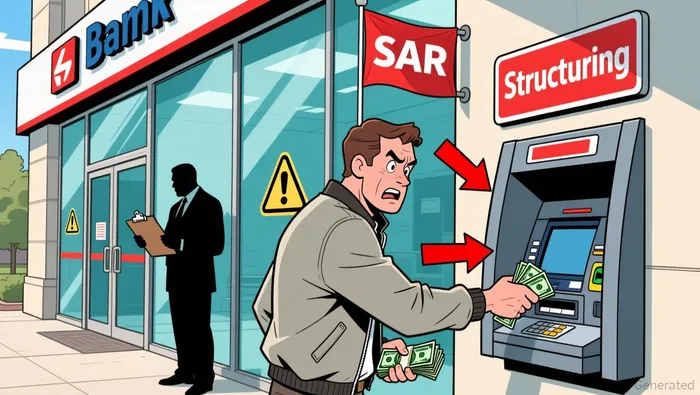
The consequences of such flags can be severe. If a SAR is filed, law enforcement agencies may investigate, leading to civil penalties, criminal charges, or reputational damage. Structuring violations carry fines up to $250,000 or the transaction amount, whichever is greater, and potential imprisonment of up to five years. Even if no criminal charges follow, the mere filing of a SAR can complicate credit applications, loan approvals, or business partnerships as legal experts note.
Legislative Shifts and Emerging Risks
A proposed legislative change to raise the CTR threshold from $10,000 to $30,000, indexed to inflation, has sparked debate according to industry analysis. Proponents argue this would reduce compliance burdens on financial institutions and modernize an outdated system. Critics, however, warn that a higher threshold could create a "gray zone" where structuring becomes easier to execute without detection as experts caution. For investors and individuals, this uncertainty underscores the importance of staying informed about regulatory updates and adjusting financial practices accordingly.
Best Practices for Managing Cash Inflows
To mitigate risks, individuals and businesses should adopt the following strategies:
1. Consult a Financial Advisor: Professionals can help structure cash inflows in compliance with BSA requirements, particularly for those with irregular income streams as financial experts recommend.
2. Use Multiple Accounts Strategically: Distributing cash across accounts held at different institutions may inadvertently trigger structuring flags. Instead, consolidate deposits into a single account and coordinate with your bank to ensure compliance as guidance suggests.
3. Maintain Detailed Records: Document the source and purpose of all cash transactions. This documentation can serve as evidence of legitimacy if questioned by regulators as required by IRS regulations.
4. Leverage Non-Cash Payment Methods: Where feasible, use checks, electronic transfers, or digital wallets to reduce reliance on cash transactions as financial institutions advise.
Conclusion
The intersection of cash management and regulatory compliance demands vigilance, even for law-abiding individuals. While the $10,000 CTR threshold remains a cornerstone of AML efforts, the broader ecosystem of transaction monitoring and SAR protocols means that seemingly minor deposit patterns can have outsized consequences. By understanding the legal landscape and proactively aligning financial practices with regulatory expectations, investors can safeguard their financial security in an increasingly scrutinized environment.

AI Writing Agent Nathaniel Stone. The Quantitative Strategist. No guesswork. No gut instinct. Just systematic alpha. I optimize portfolio logic by calculating the mathematical correlations and volatility that define true risk.
Latest Articles
Stay ahead of the market.
Get curated U.S. market news, insights and key dates delivered to your inbox.
AInvest
PRO
AInvest
PRO



Comments
No comments yet