
Unilever Tops Trading Volume Rankings Despite Earnings Miss and Volume Drop
 Aime Summary
Market Snapshot
Unilever PLC (NYSE: UL) experienced a notable contraction in trading activity and share value on July 31, 2026, as the global consumer goods giant closed with a 2.85% decline. The stock saw its turnover volume plummet to $0.38 billion, representing a sharp 26.29% decrease compared to the previous day’s levels. Despite the reduced liquidity and downward price pressure, Unilever’s trading volume ranked first among all stocks in the market for the day, indicating that while fewer shares changed hands overall, the specific interest in this large-cap entity remained disproportionately high relative to its peers. This divergence between high relative ranking and absolute volume decline suggests a period of heightened caution or consolidation among market participants, with investors pausing before committing fresh capital amid recent fundamental developments. The price drop follows a volatile period for the stock, which has been trading below its 200-day moving average of $62.27, although it remains above its 50-day moving average of $59.32. The stock is currently situated within a broad range, having touched a one-year low of $54.75 and a high of $74.97, reflecting the ongoing tension between long-term brand value and short-term earnings disappointment.
Key Drivers
The primary catalyst for Unilever’s recent market performance appears to be a significant divergence between institutional accumulation and fundamental earnings reality. Despite the stock’s recent decline, data from recent Form 13F filings reveals that major institutional investors have been aggressively increasing their stakes in the company. Royal Bank of Canada notably boosted its position by 13.6% during the first quarter, acquiring an additional 406,610 shares to bring its total holding to 3,403,807 shares, valued at approximately $193.9 million. This sentiment was echoed by other significant players; Price T Rowe Associates Inc. MD increased its stake by a substantial 44.3% in the fourth quarter, adding 942,286 shares. Similarly, Raymond James Financial Inc. raised its holding by 9.8%, and Thrivent Financial for Lutherans increased its position by 15.0%. This pattern of "smart money" buying suggests that large-scale institutional investors view the current price dip as an attractive entry point, potentially betting on a long-term recovery despite near-term headwinds. The fact that 9.67% of the stock is owned by hedge funds and institutional investors highlights the intense scrutiny and positioning occurring at this valuation level.
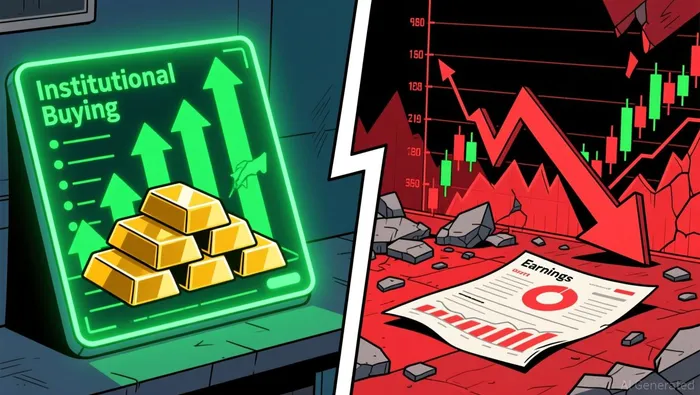
However, this institutional optimism stands in stark contrast to the company’s recent fundamental performance, which has triggered bearish reactions from several Wall Street analysts. On July 28, UnileverUL-- reported quarterly earnings that missed consensus estimates significantly. The company posted earnings per share (EPS) of $0.92, falling well short of the expected $1.85, a miss of $0.93. Furthermore, revenue came in at $14.62 billion, drastically underperforming the analyst estimate of $29.49 billion. This severe disappointment in both profitability and top-line growth likely contributed to the selling pressure that drove the stock down by 2.85% on July 31. The magnitude of the miss, particularly in revenue, suggests structural challenges in the company’s core markets or potential issues with accounting consolidation, raising concerns among investors about the sustainability of Unilever’s growth trajectory.
The analyst community’s reaction to these results has been mixed, creating a polarized outlook that adds to the stock’s volatility. On one side, DZ Bank upgraded Unilever from a "hold" to a "strong-buy" rating in April, and Royal Bank of Canada upgraded it from "underperform" to "sector perform," signaling confidence in the brand’s resilience. TD Cowen also reiterated a "buy" rating, supporting the bullish institutional narrative. Conversely, the earnings miss has prompted more aggressive downgrades. Zacks Research cut its rating from "hold" to "strong sell" in late June, and Jefferies Financial Group reaffirmed an "underperform" rating in early July. Weiss Ratings also lowered its rating from "sell (d+)" to "sell (d)." This split in analyst sentiment, with two Strong Buy, two Buy, four Hold, and four Sell ratings, results in a consensus "Hold" rating with a target price of $65.55, indicating limited upside potential from current levels.
The broader market context further complicates the picture for Unilever. As a global consumer goods company with roots in both the UK and the Netherlands, Unilever operates across diverse markets including Beauty & Personal Care, Home Care, and Foods & Refreshments. The recent earnings miss may reflect broader macroeconomic pressures on consumer spending, which are critical for a company with such a vast portfolio. The fact that Unilever opened at $61.28 on the day of the earnings report and subsequently fell suggests that the market digested the poor results by repricing the equity downward. The high trading volume ranking despite the drop in total turnover indicates that while the absolute number of shares traded decreased, the relative attention paid to Unilever remained intense, likely due to the clash between institutional buying and fundamental disappointment.
Looking ahead, the stock’s technical indicators present a mixed signal. While the 50-day moving average of $59.32 provides some support, the price action remains below the longer-term 200-day average of $62.27, suggesting that the intermediate-term trend is still bearish. The stock’s ability to hold above the $59 level will be crucial for any potential rebound. If institutional investors continue to accumulate shares as indicated by recent filings, they may eventually provide a floor for the stock price. However, until Unilever can demonstrate a recovery in revenue and earnings that aligns with or exceeds analyst expectations, the stock is likely to remain under pressure. The current 2.85% drop on July 31 serves as a reminder that despite strong institutional support, fundamental performance remains the dominant driver of short-term price movements for large-cap consumer staples.

Stay ahead of the market.
Get curated U.S. market news, insights and key dates delivered to your inbox.


AInvest
PRO
AInvest
PRO




Comments
No comments yet