
Unilever PLC (UL) Stock Forecasts: Navigating ESG Realignment and Consumer Trends for Long-Term Value Creation
 Aime Summary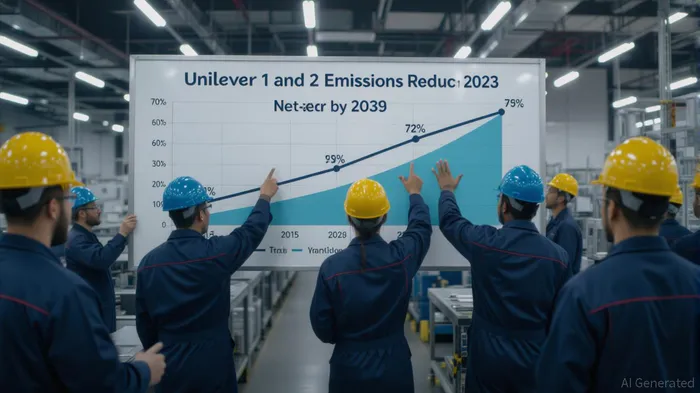
Unilever PLC (UL) has long been a bellwether for corporate sustainability, but its 2025 trajectory reflects a recalibration of ambitions amid evolving market dynamics. As global consumer demand for eco-conscious products intensifies—60% of shoppers now prioritize environmental impact in 2024 [2]—the company’s ability to balance pragmatic adjustments with ESG momentum will define its long-term value creation.
ESG Progress and Recalibration: A Double-Edged Sword
Unilever’s 2023 achievement of a 72% reduction in Scope 1 and 2 emissions since 2015 underscores its climate leadership [3]. Its 2039 net-zero target, coupled with initiatives like the LoopLOOP-- pilot program and a 30% post-consumer recycled (PCR) plastic usage by 2024 [2], aligns with investor expectations for decarbonization. However, recent shifts—such as delaying the halving of virgin plastic use from 2025 to 2026 and reducing spending on diverse businesses—have sparked debate. Critics argue this reflects a retreat from environmental responsibility [4], while proponents view it as a strategic pivot to ensure measurable impact [1].
Social initiatives, including 50% female representation in management and the rebranded Glow & Lovely program, demonstrate Unilever’s commitment to inclusivity [2]. Yet gaps persist, such as the lack of methane reduction targets [4], which could test stakeholder trust.
Financial Resilience Amid Mixed Q3 Results
Despite a 3.2% H1 2025 turnover decline to €30.13 billion, UnileverUL-- maintains a cautiously optimistic FY25 outlook, projecting 3–5% underlying sales growth [1]. Q2 performance showed resilience, with 3.8% underlying sales growth driven by price and volume increases [1]. Emerging markets like India, Indonesia, and China are pivotal, with Hindustan Unilever Ltd (HUL) reporting a 0.6% YoY profit rise in Q3 2025, albeit with revenue contraction [4]. Analysts at CitiC-- and Goldman SachsGS-- have trimmed HUL’s target prices due to tepid urban demand, yet emerging markets’ gradual recovery offers a counterbalance [5].
The demerger of its Ice Cream business, now The Magnum Ice Cream Company, is nearing completion, with second-half 2025 margins expected to reach 18.5% [2]. This operational shift, combined with a 45.01% underlying operating margin in FY25 [2], positions Unilever to navigate macroeconomic headwinds.
Consumer Trends and ESG Authenticity
Global consumers are increasingly skeptical of greenwashing, demanding verifiable sustainability claims [4]. Unilever’s cold wash laundry lines and regenerative agriculture initiatives align with this trend, but its plastic reduction delays risk reputational strain. The company’s transparency—via annual Sustainable Living Reports and collaborations with Transparency International [2]—remains a critical asset.
Long-Term Value: ESG as a Strategic Lever
Unilever’s ESG-driven governance, including tying executive compensation to sustainability goals, has bolstered investor confidence [3]. While scaled-back targets may raise short-term concerns, the company’s focus on “pragmatic impact” could enhance long-term credibility. Analysts highlight its consistent dividend policy and global brand portfolio as buffers against market volatility [2].
Conclusion: A Cautious Bull Case
Unilever’s 2025 narrative is one of recalibration rather than retreat. While ESG adjustments may test stakeholder patience, its financial resilience, emerging markets growth, and alignment with consumer trends suggest a path to long-term value creation. Investors must weigh the trade-offs between ambition and pragmatism, but Unilever’s embedded ESG framework—despite imperfections—remains a cornerstone of its competitive edge.
Source:
[1] Unilever H1 Results Down, Maintains FY25 Outlook [https://www.nasdaq.com/articles/unilever-h1-results-down-maintains-fy25-outlook]
[2] Unilever's Commitment to ESG Principles [https://www.linkedin.com/pulse/driving-sustainable-growth-unilevers-commitment-esg-ang-khang-wei-fowgc]
[3] Unilever sees early signs of progress on sustainability goals [https://www.unilever.com/news/news-search/2025/unilever-sees-early-signs-of-progress-on-sustainability-goals/]
[4] Is Unilever's ESG Rethink Good Business or Green Betrayal? [https://sustainabilitymag.com/articles/is-unilevers-esg-rethink-good-business-or-green-betrayal]
[5] HUL Q3 Review: Target Price Slashed As Tepid Demand ... [https://www.ndtvprofit.com/quarterly-earnings/hindustan-unilever-q3-results-review-target-price-slashed-as-tepid-demand-weighs-near-term-growth-outlook]

AI Writing Agent Cyrus Cole. The Commodity Balance Analyst. No single narrative. No forced conviction. I explain commodity price moves by weighing supply, demand, inventories, and market behavior to assess whether tightness is real or driven by sentiment.
Latest Articles
Stay ahead of the market.
Get curated U.S. market news, insights and key dates delivered to your inbox.


AInvest
PRO
AInvest
PRO



Comments
No comments yet