
Unilever's $2.5–3 Billion Bet on Dr. Squatch: A Strategic Pivot to Male Grooming and Digital Dominance
The consumer goods sector is in the midst of a seismic shift. Legacy giants like UnileverUL-- are shedding commoditized food brands and doubling down on premium, digitally native personal care products. Their June 23, 2025, acquisition of Dr. Squatch—a cult-favorite men's grooming brand—epitomizes this strategic realignment. Valued at an estimated $2.5–3 billion (c.20x EBITDA), the deal signals a bold wager on two critical trends: the $80 billion male grooming market and the power of “social-first” brands to captivate Gen Z and millennials.
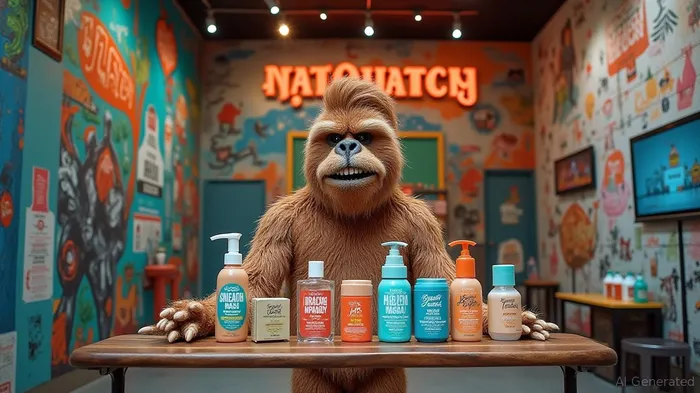
The Strategic Rationale: Why Male Grooming?
Unilever's move is not merely a bid to acquire a quirky brand. It is a calculated response to a market where men's personal care is growing at twice the pace of women's beauty products. The male grooming segment, fueled by rising awareness of hygiene, wellness, and self-expression, is projected to hit $120 billion by 2030. Dr. Squatch's 22.5% EBITDA margins ($90 million on $400 million revenue in 2024) and 20–50% annual growth trajectory make it a rare gem in a sector dominated by commoditized products like Axe, whose relevance has waned among younger consumers.
For Unilever, the acquisition serves three key purposes:
Digital Marketing Mastery: Dr. Squatch's viral campaigns—think limited-edition “Body Wash Genie” collaborations with celebrities like Sydney Sweeney—provide a blueprint for engaging younger demographics. Unilever aims to integrate this expertise into its broader marketing strategy, as CEO Fernando Fernandez shifts 50% of its ad budget to social media.
Premium Portfolio Expansion: The deal marks a stark departure from Unilever's legacy food brands (e.g., divested Unox, Zwan). Dr. Squatch's premium positioning and DTC model (which captures first-party consumer data) align with Unilever's goal to rebalance its portfolio toward high-margin, culturally relevant brands.
Global Scalability: While Dr. Squatch dominates North America and Europe, its untapped potential in Asia—where male grooming is underpenetrated—could unlock exponential growth. Unilever's infrastructure will help navigate cultural nuances without diluting the brand's “bro-friendly” authenticity.
Risks and Challenges
The acquisition is not without pitfalls. Past DTC acquisitions, such as Dollar Shave Club (sold in 2023 for a loss), underscore the difficulty of scaling niche brands. Unilever's success hinges on preserving Dr. Squatch's viral marketing edge while leveraging its global reach. Key risks include:
- Brand Dilution: Maintaining the “irreverent” image amid corporate integration is critical.
- Market Saturation: Competitors like Beardo (India) and Bulldog (Europe) are also targeting the male grooming space.
- Regulatory Hurdles: The deal's closure depends on antitrust approvals, which could delay or limit its execution.
Investment Implications
For investors, Unilever's bet offers both opportunities and caution.
Bull Case:
- Dr. Squatch's growth trajectory aligns with Unilever's “premiumization” strategy, boosting margins and top-line expansion.
- The brand's DTC model provides a trove of consumer data, enabling hyper-targeted marketing in an era of privacy constraints.
- Unilever's stock could benefit from a re-rating if the acquisition signals a broader shift toward high-margin, digitally native brands.
Bear Case:
- Overpaying for a niche brand with limited geographic diversification could strain Unilever's balance sheet.
- If Dr. Squatch's growth slows post-acquisition, it may become a drag on earnings.
The Broader Trend: Consumer Goods' Digital Evolution
Unilever's move is part of a broader industry shift. Giants like Procter & Gamble and L'Oréal are acquiring DTC brands (e.g., P&G's acquisition of Native Deodorant) to combat declining sales in traditional channels. The rise of “social-first” brands—built on humor, influencer partnerships, and limited-edition drops—threatens traditional marketing models. Investors should prioritize firms with:
1. Strong digital capabilities: Brands with robust e-commerce and social media strategies (e.g., L'Oréal's IT Kosmetik).
2. Focus on wellness and sustainability: Men's grooming's link to health trends (e.g., organic ingredients) mirrors broader consumer preferences.
3. Agile portfolio management: Companies willing to divest underperforming assets (like Unilever's food divestments) to fund growth.
Conclusion
Unilever's acquisition of Dr. Squatch is a watershed moment. It reflects the industry's pivot from mass-market commoditization to niche, digitally driven premium brands. For investors, the deal is a bellwether: success here could validate Unilever's strategy and fuel its stock, while failure might reignite skepticism about conglomerate agility. Monitor Dr. Squatch's performance in Asia and Unilever's ability to scale its social media playbook. In a market hungry for growth, this bet could redefine what it means to “smell like a man, man”—or become another cautionary tale.
Investment Takeaway:
- Buy Unilever: If you believe in its ability to execute on digital-first strategies and scale Dr. Squatch globally.
- Hold: For cautious investors awaiting proof of post-acquisition synergy execution.
- Avoid: If you doubt Unilever's capacity to navigate brand dilution risks or regulatory hurdles.

Stay ahead of the market.
Get curated U.S. market news, insights and key dates delivered to your inbox.
AInvest
PRO
AInvest
PRO



Comments
No comments yet