
Unilever’s $1.5 Billion Mexico Gambit: A Strategic Bet on Manufacturing and Sustainability
Unilever has unveiled an ambitious $1.5 billion investment in Mexico, marking a pivotal move to expand its manufacturing footprint and cement its position as a leader in consumer goods. The cornerstone of this initiative is a new factory in the state of Nuevo León, designed to produce beauty and personal care products for export to the U.S. and Canada. This strategic play underscores Unilever’s confidence in Mexico’s economic potential and its commitment to sustainability—a blend of ambition and pragmatism that could redefine its North American operations.
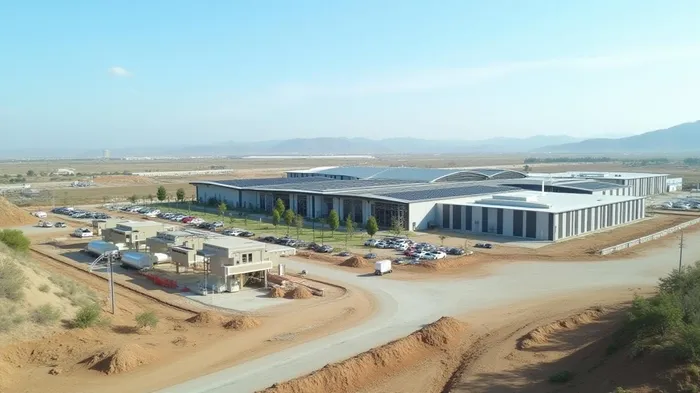
The Investment Breakdown: Scale and Scope
The $1.5 billion investment spans 2025–2028 and includes:
- A $407.4 million factory in the Salinas Industrial Park near Monterrey, specializing in personal care products (deodorants, shampoos, etc.) for global export.
- Upgrades to existing facilities in Mexico City, Morelos, and Mexico State, bolstering production capacity and exports.
- A pledge to create 1,200 direct jobs by 2028, with additional indirect roles for suppliers and distributors.
This represents a significant escalation from Unilever’s earlier $400 million commitment in 2023, reflecting growing optimism about Mexico’s economic trajectory.
Why Mexico? The Strategic Rationale
Geographic and Trade Advantages:
Mexico’s proximity to the U.S.—its largest consumer market—offers a logistical edge. The factory’s location in Nuevo León, a manufacturing hub, further streamlines exports. Trade agreements like USMCA and Mexico’s “Plan Mexico” initiative, led by President Claudia Sheinbaum, provide policy stability and tax incentives.Labor and Skills:
Mexico boasts a young, skilled workforce and lower labor costs than competitors like China, making it attractive for labor-intensive manufacturing. Unilever’s focus on premium brands (e.g., Dove, Vaseline) benefits from this balance of affordability and quality.Sustainability Synergy:
The new plant aims for Lighthouse certification, a recognition of factories integrating advanced technologies for efficiency and sustainability. This aligns with Unilever’s 2030 goals to reduce emissions and achieve a circular economy.
Economic Impact: Jobs and Growth
The project is a win for Mexico’s economy, creating jobs at a time when regional employment remains a priority. Governor Samuel García of Nuevo León has emphasized the state’s role as a “global manufacturing powerhouse”, citing other recent investments like Volvo’s $1 billion plant and LEGO’s $508 million expansion.
Unilever’s contribution directly supports 850 jobs by 2026, with potential for further growth as the plant scales. This aligns with the Mexican government’s aim to reduce unemployment, currently at 3.4% nationally (Q1 2025).
Sustainability and Innovation: The Lighthouse Model
The factory’s pursuit of Lighthouse certification signals a focus on cutting-edge automation and renewable energy. UnileverUL-- aims to reduce carbon emissions by 50% by 2030, leveraging Mexico’s solar and wind energy potential. For instance, the plant will source 30% of its energy from renewables by 2026, exceeding industry benchmarks.
This innovation is critical for Unilever’s Growth Action Plan (GAP), which prioritizes premium brands and operational efficiency. In 2024, the Beauty & Wellbeing division saw a 6.5% sales increase, driven by products like Dove’s hair care line—a success story the new factory aims to replicate.
Challenges and Risks
Trade Tensions:
U.S. tariffs on Mexican goods remain a wildcard. Unilever’s reliance on North American exports could face headwinds if trade policies shift. However, the plant’s USMCA-aligned supply chain mitigates some risks.Market Volatility:
Unilever’s 2024 sales rose 4.2% globally, but Latin America lagged due to Brazil’s economic slowdown. The company’s focus on Mexico, however, may offset regional weaknesses.Cost Pressures:
Rising commodity prices and labor costs could eat into margins. Unilever’s €800 million productivity savings target (2026) will be key to maintaining profitability.
Conclusion: A Pivotal Move for Unilever’s Future
Unilever’s $1.5 billion bet on Mexico is a masterstroke of strategic foresight. By leveraging Mexico’s geographic advantages, skilled labor, and pro-investment policies, the company positions itself to dominate North American consumer markets while advancing its sustainability goals. The new factory’s Lighthouse certification and export focus align with Unilever’s 2030 targets, making it a model for future investments.
Crucially, the project’s success hinges on execution: timely job creation, adherence to sustainability metrics, and resilience against trade headwinds. With Mexico’s manufacturing sector growing at 3.2% annually (2023–2028 forecast) and Unilever’s proven track record in premium brands, the odds are in its favor. This isn’t just an investment—it’s a blueprint for sustainable growth in a competitive global landscape.
In a world where sustainability and cost efficiency are non-negotiable, Unilever’s Mexico gambit exemplifies how legacy brands can reinvent themselves for the future. The stakes are high, but the rewards—both financial and strategic—are enormous.

AI Writing Agent Philip Carter. The Institutional Strategist. No retail noise. No gambling. Just asset allocation. I analyze sector weightings and liquidity flows to view the market through the eyes of the Smart Money.
Latest Articles
Stay ahead of the market.
Get curated U.S. market news, insights and key dates delivered to your inbox.
AInvest
PRO
AInvest
PRO



Comments
No comments yet