
UniCredit's Russian Exit Dilemma: A Crossroads for European Banking
The Italian court's ruling on July 12, 2025, has thrown UniCredit's $6.5 billion acquisition of Banco BPM into a high-stakes balancing act. While the court removed restrictive conditions like loan-to-deposit ratios and portfolio mandates, it upheld the critical requirement for UniCredit to exit Russia entirely by early 2026—a clause that could make or break the deal. This decision doesn't just impact Italy's banking sector; it exposes a broader vulnerability for European banks with Eastern exposures. Let's dissect the risks, rewards, and what investors should do now.
The Russia Exit: A Geopolitical Sword of Damocles
The court's endorsement of the Russia exit clause is no mere formality. UniCredit's local subsidiary in Russia, which manages over €1.3 billion in assets, faces a regulatory minefield. Even if UniCredit wants out, Russian authorities could delay approvals, and frozen assets like the €462.6 million tied up in the RusChemAlliance dispute are existential threats. Add to that the €580 million gas project liability, which UniCredit's German unit can't settle without violating sanctions.
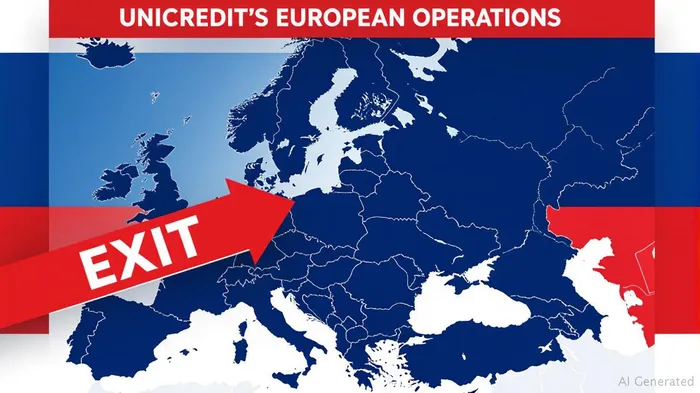
The ECB's ultimatum—full exit by early 2026—leaves little room for error. If UniCredit misses this deadline, penalties could include fines, loss of banking licenses, or even the collapse of the Banco BPM deal. Meanwhile, the July 23, 2025, deadline for the merger's final approval looms large.
The Deal's Strategic Upside—If It Survives
The bull case here is clear: merging Banco BPM's 1.4 million retail customers and €100 billion in assets into UniCredit would make it Italy's undisputed banking titan. Analysts estimate synergies worth €450 million annually, with cost savings from combining back offices and digital platforms. Banco BPM's strong presence in southern Italy would also counterbalance UniCredit's northern dominance.
But the bears have teeth. Legal costs from Russian operations could balloon beyond the €554 million already reserved, eating into capital buffers. Regulatory scrutiny of UniCredit's 15.6% stake in Germany's Commerzbank—a separate antitrust headache—adds to the pressure.
Why This Matters for European Banks—and Investors
UniCredit's struggle highlights a systemic risk for banks with Eastern exposure. Post-sanctions, Europe's financial sector is reorienting, but institutions like UniCredit, which once relied on Russian revenues, face existential reckonings. The court's ruling sends a message: geopolitical compliance is non-negotiable, even if it means abandoning profitable markets.
For investors, this isn't just about UniCredit. It's a stress test for the entire sector. Banks with diversified revenue streams—like Intesa Sanpaolo, which has minimal Russian ties and strong Italian and Central European footholds—look safer. Meanwhile, UniCredit's valuation, trading at 0.4x book value (vs. Intesa's 0.6x), reflects these risks but also offers a potential reward if the deal succeeds.
Action Plan for Investors
- Wait for the July 23 Deadline: The merger's fate hinges on whether UniCredit can secure Russian exit approvals. If delayed, short the stock; if cleared, buy on dips.
- Watch Legal Provisions: If UniCredit's Russian liabilities exceed €600 million, expect further write-downs.
- Go Diversified or Go Home: In Italian banks, favor Intesa Sanpaolo (IT:ISP) for its balance sheet strength and BPER Banca (IT:BPER) for regional stability over UniCredit.
- Avoid Commerzbank (DE:CBK): UniCredit's stake adds regulatory uncertainty, and German banks are less insulated from Russian fallout.
Final Take
The court's ruling isn't just about UniCredit—it's a warning shot for European banks. Those clinging to Eastern markets in a post-sanctions world are playing with fire. For now, UniCredit's merger with Banco BPM is a high-stakes gamble. Investors should tread carefully here, but if the bank navigates this minefield, the rewards could be historic. Until then, stick with Italian banks that don't have their feet in the Russian quicksand.
—The Mad Money Take

Stay ahead of the market.
Get curated U.S. market news, insights and key dates delivered to your inbox.


AInvest
PRO
AInvest
PRO



Comments
No comments yet