
U.S. Unemployment Rate Defies Forecasts, Signaling Labor Market Resilience: Sector Rotation Opportunities in Commercial Services and Automobiles
 Aime Summary
The U.S. labor market has once again proven its stubborn resilience, with the December 2025 unemployment rate dropping to 4.4%, a tick below the 4.5% forecast. While the headline number might seem like a victory lap, the underlying data tells a more nuanced story. Nonfarm payrolls added just 50,000 jobs—a stark contrast to the 73,000 expected—and revisions to prior months' data painted a murkier picture of hiring trends. Yet, the labor force participation rate and employment-population ratio held steady, suggesting that the market remains tight enough to keep wage pressures in check.
This dichotomy—between a stubbornly low unemployment rate and a faltering payroll count—has created a fertile ground for sector rotation. Investors who can parse the labor market's mixed signals may find themselves with a golden opportunity to reallocate capital between two diverging industries: the surging Commercial Services sector and the struggling Automobiles sector.

Let's start with the bright spot: Commercial Services, particularly construction and engineering (E&C). This sector has become a poster child for labor market resilience, adding 19,000 jobs in February 2025 alone. The tailwinds? A perfect storm of AI-driven infrastructure demand, green energy mandates, and digital tools like agentic AI and BIM (Building Information Modeling) that are turbocharging productivity. Nonresidential building and heavy engineering subsectors have seen job gains of 1,700 and 2,500, respectively, in recent months.
For investors, this isn't just about job numbers—it's about long-term structural trends. Companies like Bechtel and FluorFLR--, which are deeply embedded in data center and energy infrastructure projects, are benefiting from a decade-long shift toward decarbonization and digitalization. These firms are not just surviving; they're thriving by leveraging technology to offset labor shortages and material cost inflation.
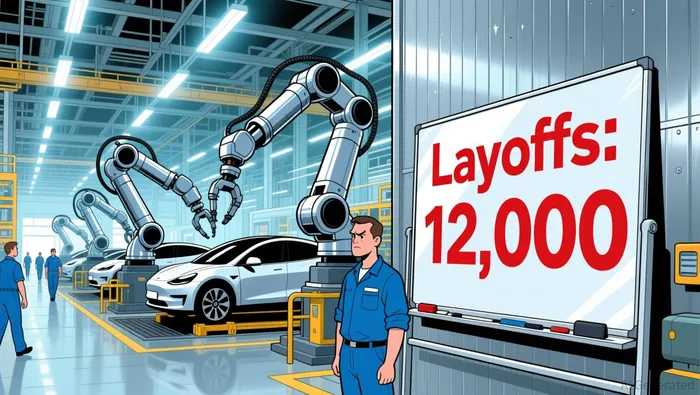
Now, let's pivot to the Automobiles sector—a cautionary tale of structural disruption. The U.S. auto industry shed 12,000 manufacturing jobs in August 2025, a direct consequence of the EV transition, automation, and the expiration of federal EV tax credits. Major players like StellantisSTLA-- and Amazon have slashed headcounts, while Tesla's stock has mirrored the sector's volatility.
The pain isn't just on the labor side. Rising tariffs on imported vehicles, high interest rates for auto financing, and supply chain bottlenecks are creating a perfect storm for automakers. Sales projections have plummeted to 14.6 million units for 2025, and the 25% tariffs on imported vehicles have already triggered a short-term buying frenzy—only to leave consumers with sticker shock in the long run.
Here's where the rubber meets the road for investors: the labor market's resilience in Commercial Services and the fragility in Automobiles demand a strategic reallocation. For those with exposure to the auto sector, the message is clear—brace for a prolonged period of restructuring. Automakers will need to navigate the dual challenges of automation and trade policy shifts, which could take years to resolve.
Conversely, Commercial Services offers a more stable runway. The infrastructure bill's tailwinds, coupled with the AI revolution in construction, are creating a virtuous cycle of demand and innovation. Investors should consider overweighting this sector, particularly firms with exposure to data centers and energy infrastructure.
But let's not sugarcoat it: the auto sector isn't dead. It's in a painful metamorphosis. For the bold, there may be opportunities in companies that successfully pivot to EVs and autonomous tech. However, the path is fraught with risk, and patience will be a virtue.
In the end, the U.S. labor market's resilience is a double-edged sword. While it keeps the Federal Reserve on hold with rate cuts, it also highlights the uneven recovery across sectors. For investors, the key is to lean into the winners—like Commercial Services—and hedge against the losers—like Automobiles. The labor market may be tight, but your portfolio doesn't have to be.
The takeaway? Rotate with the tides. The labor market isn't just defying forecasts—it's rewriting the playbook for where value will be created in 2026.

Stay ahead of the market.
Get curated U.S. market news, insights and key dates delivered to your inbox.
AInvest
PRO
AInvest
PRO



Comments
No comments yet