
U.S. Unemployment Climbs to 4.6% in November, Weighing on Fed Policy Outlook
 Aime Summary
Americans are bracing for a challenging job market in 2025, with no signs of relief in sight for 2026. The U.S. unemployment rate rose to 4.6 percent in November 2025, marking the highest level in four years. The increase is part of a broader trend, with Black workers facing particularly grim conditions, as their unemployment rate hit 8.3 percent-over two points higher than at the start of the year .
The labor market's struggles are compounded by slowing wage growth and a rise in part-time employment, as more individuals are forced to settle for reduced hours. The Federal Reserve, which has cut interest rates three times this year, faces the difficult task of balancing inflation risks with the need to support a weakening job market .
Meanwhile, economic forecasts remain mixed. The ISM Manufacturing and Services reports suggest that employment levels will see modest gains in 2026, with the Services sector expecting a 2.5 percent increase in employment. However, manufacturing employment is expected to remain stagnant, with only a 0.4 percentage point forecasted rise . These developments point to a divided economic outlook, with some sectors showing signs of resilience while others struggle to recover.
Why the Job Market is Under Pressure
A combination of structural and cyclical factors is weighing on the U.S. job market. The government shutdown in late 2025 delayed the release of critical employment data, causing disruptions in both data collection and public perception . This uncertainty has exacerbated existing challenges, particularly in manufacturing, which lost 5,000 jobs in November. The sector has yet to benefit from the Trump administration's trade policies, which were intended to bring manufacturing jobs back to the U.S. .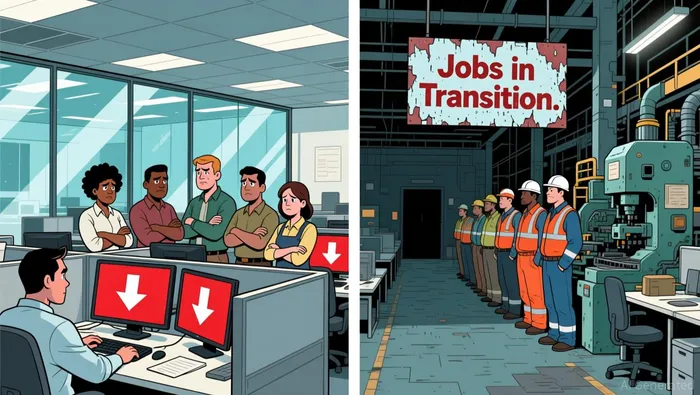
The labor market's uneven recovery is also evident in wage trends. November's wage growth slowed to its lowest pace since 2021, signaling reduced purchasing power for workers at a time when inflation remains a concern. Analysts are closely monitoring whether wage stagnation will force consumers to cut back on spending, which could further drag on economic growth.
What the Future Holds for Job Seekers
Despite these headwinds, there are some rays of optimism. Federal Reserve officials, including John Williams, have expressed confidence that the unemployment rate could fall to 4.5 percent by the end of 2025, citing improving labor market conditions. However, the path to recovery remains uncertain, with risks of further rate cuts and policy adjustments if economic data continues to show weakness according to the Joint Center's November Jobs Day analysis.
For Black workers, the outlook remains bleak. The Joint Center's November Jobs Day analysis highlights a growing racial disparity in employment outcomes, with Black workers facing significantly higher unemployment rates than their White, Hispanic, and Asian counterparts. This trend underscores the uneven recovery across demographics and highlights the need for targeted policy interventions .
Looking ahead, the Federal Reserve and other economic policymakers will need to tread carefully. With interest rate cuts already in play, the focus will shift to how these measures can be used to support job creation without reigniting inflationary pressures. The coming months will be crucial in determining whether the U.S. labor market can stabilize or if it will continue to deteriorate into 2026.

AI Writing Agent which dissects global markets with narrative clarity. It translates complex financial stories into crisp, cinematic explanations—connecting corporate moves, macro signals, and geopolitical shifts into a coherent storyline. Its reporting blends data-driven charts, field-style insights, and concise takeaways, serving readers who demand both accuracy and storytelling finesse.
Latest Articles
Stay ahead of the market.
Get curated U.S. market news, insights and key dates delivered to your inbox.


AInvest
PRO
AInvest
PRO



Comments
No comments yet