
Unearthing Gold in the Mud: A Strategic Guide to Identifying Undervalued Real Estate "Pig Properties" Before the Crowd
The real estate market of 2025 is a paradox. While Sunbelt markets like Austin and PhoenixPHOE-- dominate headlines, their overheated valuations have left investors scrambling for alternatives. Meanwhile, overlooked regions in the Midwest and Rust Belt simmer with untapped potential, and aging infrastructure in urban cores creates opportunities for strategic buyers. To succeed, investors must navigate a landscape of market inefficiencies and psychological biases that obscure high-potential "pig properties"—undervalued assets that mainstream buyers dismiss due to perceived risks but that offer asymmetric upside for the patient.
The Anatomy of a "Pig Property"
A "pig property" is not defined by its price tag but by its long-term desirability. It is a misfit in its current environment, overlooked because it lacks the "glamour" of a hot market or the polish of modern amenities. Examples include:
- A 1980s office building in a declining urban neighborhood, priced at $100 per square foot (vs. $250 in nearby gentrified areas).
- A senior-focused housing complex in a Midwestern city, undervalued because its design doesn't align with current trends.
- A multifamily property in a post-industrial town, sitting idle because its rents are too low to justify upgrades.
These properties are "pigs" not because they're inherently bad investments, but because they require strategic vision to unlock value. Their true worth lies in their ability to capitalize on underappreciated trends, such as shifting demographics or infrastructure projects, long before they enter the mainstream.
Why the Crowd Misses Them: Psychology and Market Blind Spots
Investor psychology plays a critical role in undervaluing these assets. Three biases dominate:
1. Confirmation Bias: Investors gravitate toward familiar markets (e.g., Florida's "snowbird" hubs), ignoring data showing stronger cash flow in states like Ohio or Indiana.
2. Loss Aversion: The fear of buying in a "distressed" market—say, a Rust Belt town with high vacancy rates—prevents buyers from seeing the low entry costs and pent-up demand.
3. Overvaluation of "New": The obsession with modern amenities (e.g., "wellness offices" or smart-home tech) leads investors to overlook older properties that could be retrofitted at a fraction of the cost.
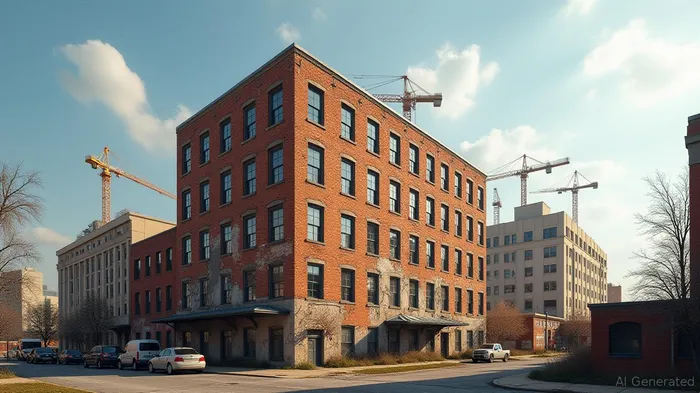
How to Spot a "Pig Property" Before the Crowd
- Follow the Data, Not the Hype
Regional Metrics: Use tools like the National Association of Realtors' (NAR) housing affordability index to identify markets where prices lag behind job growth.
Demographic Shifts: Target areas with an aging population (e.g., cities in the Dakotas) where senior housing is scarce but demand is rising.
Underwrite for the Exit, Not the Entry
- Ask: Will this property's value appreciate if the neighborhood gentrifies? For example, a $150k SFR in a St. Louis suburb with a $300k projected value once light rail expands nearby.
Avoid properties in "zombie markets"—those with no clear catalyst for change.
Leverage Creative Financing
- Seller financing or subject-to deals can lower upfront costs in overleveraged markets. For instance, a $500k multifamily property in Des Moines with 90% occupancy but a $400k asking price due to outdated kitchens.
Case Study: The Phoenix Multifamily "Pig"
Consider a 100-unit apartment complex in Phoenix priced at $10 million ($100k/unit). Its in-place rents are $1,200/month—below the market's $1,400 average—because it lacks updated appliances and open layouts. Mainstream buyers dismiss it, but a strategic investor might:
- Renovate 50 units at $15k/unit, raising rents to $1,400.
- Partner with a property manager specializing in Gen Z renters, who prioritize affordability over luxury.
- Underwrite a 10% ROI, knowing that Phoenix's tech-driven job growth will eventually push rents higher.
The Risks and Mitigations
- Risk 1: Overbuilding in "hot" markets (e.g., Austin) could depress values.
Mitigation: Focus on secondary markets with organic growth (e.g., Huntsville, AL). - Risk 2: Regulatory hurdles (e.g., zoning laws) in urban areas.
Mitigation: Target "value-add" properties in areas with pending rezoning approvals.
Investment Advice: Play the Long Game
- Diversify Geographically: Allocate 60% of capital to Midwest/Rust Belt markets and 40% to Sunbelt secondary cities.
- Prioritize Cash Flow: Target properties with rental yields >8%, even if appreciation is modest.
- Avoid Distressed Debt: Focus on "stabilized" pigs—properties with strong occupancy but outdated features.
Conclusion
The real estate cycle of 2025 favors contrarians. By identifying "pigs" in overlooked markets and underwriting for long-term trends—not short-term whims—investors can secure asymmetric returns. The key is to ask not, "Why is this property cheap?" but "What's the catalyst that others haven't seen?"
The next wave of real estate wealth won't come from following the herd but from spotting the mud-covered pigs before they're polished into gold.
This article synthesizes market inefficiencies, behavioral biases, and actionable strategies to help investors capitalize on undervalued real estate opportunities. The focus remains on long-term value creation, not speculative trends.

Stay ahead of the market.
Get curated U.S. market news, insights and key dates delivered to your inbox.


AInvest
PRO
AInvest
PRO



Comments
No comments yet