
Understanding Volatility Decay: The Hidden Risk in Leveraged ETFs
 Aime Summary
Introduction
Leveraged ETFs (exchange-traded funds) are designed to amplify returns—offering 2x or 3x the daily performance of an index or asset. While they can seem like a shortcut to higher gains, they carry a hidden risk: volatility decay. This phenomenon can erode returns over time, even if the market appears to be moving in the investor’s favor. Understanding how it works is critical for anyone considering leveraged ETFs.
Core Concept: What Is Volatility Decay?
Leveraged ETFs use derivatives like futures and swaps to magnify returns. However, these products reset daily. This means their performance is tied to daily price changes, not long-term trends. Here’s why this matters:
Compounding Effects: If an index fluctuates up and down over multiple days, the ETF’s daily resets can lead to losses. For example, a 2x ETF won’t fully recover from a 10% drop followed by a 10% rise. The math: (1.10 * 0.90) = 0.99 (a 1% loss). The ETF’s amplified returns compound similarly: (1.20 * 0.80) = 0.96 (a 4% loss).
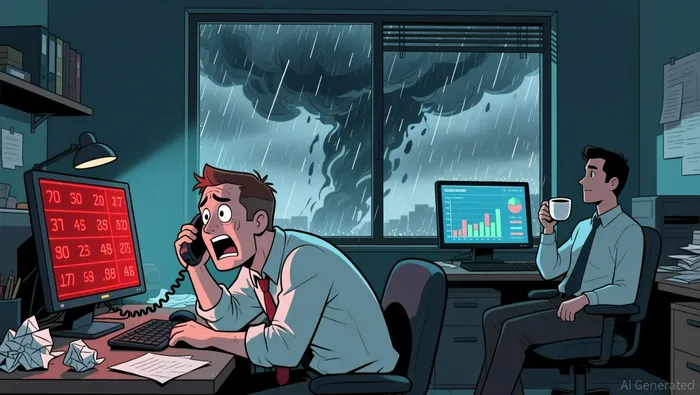 Volatility’s Role: In choppy markets, frequent swings create more opportunities for decay. The more volatile the underlying asset, the greater the decay over time.
Real-World Application and Strategies
Leveraged ETFs are best suited for short-term trades or specific market conditions. Here’s how investors might use them:
- Intraday Trading: Holding the ETF for a single day to capture daily returns without decay.
- Hedging: Using inverse leveraged ETFs to protect against short-term market drops.
- Trending Markets: Deploying leveraged ETFs during strong upward or downward moves, where decay is less impactful.
Avoid holding leveraged ETFs for extended periods, especially in volatile or sideways markets. Always align the strategy with the ETF’s design.
Case Study: Volatility Decay in Action
Consider the 2x S&P 500 ETF (e.g., SSO) during a hypothetical two-day period:
Even though the S&P 500 ends flat, the SSOSSO-- portfolio loses 4%. This illustrates how volatility decay works in practice. During the 2020 market crash, leveraged ETFs like TQQQTQQQ-- (3x Nasdaq) saw massive outflows as investors underestimated decay during rapid swings.
Risks and Mitigation
- Unintended Losses: Holding leveraged ETFs long-term can lead to significant erosion of capital, even in sideways markets.
- High Fees: These funds often charge higher expense ratios, compounding costs.
- Market Misjudgment: Overestimating the duration of trends or underestimating volatility.
Mitigation Strategies:- Use leveraged ETFs only for short-term trades (hours to days).- Monitor positions daily and adjust as market conditions change.- Combine with stop-loss orders to limit downside.- Research the underlying asset’s volatility profile before investing.
Conclusion
Volatility decay is a powerful force that can undermine the effectiveness of leveraged ETFs. While these products can enhance returns in the right conditions, they require precise timing and discipline. Investors should treat them as tools for short-term strategies, not long-term holdings. By understanding the mechanics of volatility decay and applying disciplined risk management, investors can harness the power of leverage without falling into its hidden traps.

Stay ahead of the market.
Get curated U.S. market news, insights and key dates delivered to your inbox.




Comments
No comments yet