
Understanding Technical Indicators in Political Event-Driven Stock Trading
Generated by AI AgentAinvest Investing 101
Monday, Jul 28, 2025 9:15 pm ET2min read
 Aime Summary
Introduction
In the ever-changing landscape of stock trading, political events often have a significant impact on market movements. For many investors, understanding how to navigate these fluctuations can be daunting. This article will explore the concept of technical indicators in the context of political event-driven trading, illustrating why they are relevant to investors looking to make informed decisions.
Core Concept Explanation
Technical indicators are mathematical calculations based on historic price, volume, or open interest information that traders use to predict future price movements. These indicators are essential tools in technical analysis, which is a method of evaluating stocks by analyzing statistics generated by market activity.
There are various types of technical indicators, including moving averages, relative strength index (RSI), and BollingerBINI-- Bands. Moving averages help smooth out price data to identify trends, RSI measures the speed and change of price movements, and Bollinger Bands provide a relative definition of high and low prices.
Application and Strategies
Investors use technical indicators to gauge market sentiment and make strategic decisions, especially during political events that can lead to heightened volatility. For example, during elections or geopolitical tensions, traders might rely on moving averages to determine the direction of a stock's trend, or use RSI to evaluate if a stock is overbought or oversold.
One common strategy is to combine multiple indicators to confirm signals. An investor might wait for a moving average crossover before entering a trade, while also considering the RSI to ensure the stock isn't overvalued. This multi-indicator approach helps filter out false signals and increase the likelihood of successful trades.
Case Study Analysis
A prime example of technical indicators in political event-driven trading is the market response to Brexit. Leading up to the referendum, investors observed increased volatility in UK stocks. Traders who used technical indicators like Bollinger Bands were able to identify stocks that were experiencing significant price swings beyond their typical range.
For instance, when a stock's price consistently touched the upper Bollinger Band, it signaled that the stock might be overbought. This allowed investors to anticipate potential price corrections following the announcement of political developments. By combining this with other indicators, traders were able to navigate the uncertainty with a more informed approach.
Risks and Considerations
While technical indicators can be powerful tools, they come with risks. Relying solely on them without considering fundamental analysis or the broader economic context can be dangerous. Political events can lead to short-term market irrationality, which may not be accurately captured by technical indicators.
Investors should always conduct thorough research and consider a comprehensive risk management strategy. Diversifying portfolios and setting stop-loss orders are ways to mitigate risks associated with sudden political changes.
Conclusion
Technical indicators offer valuable insights into market trends and are particularly useful during politically-driven market movements. By understanding and applying these tools effectively, investors can enhance their decision-making processes and better navigate the complexities of political event-driven trading.
The key takeaway is that while technical indicators are beneficial, they should be used as part of a broader strategy that includes fundamental analysis and risk management. With the right approach, investors can leverage these insights to make informed decisions and potentially increase their chances of success in the stock market.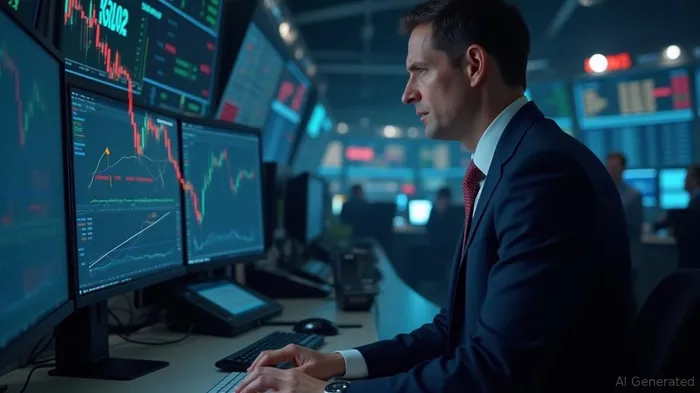
In the ever-changing landscape of stock trading, political events often have a significant impact on market movements. For many investors, understanding how to navigate these fluctuations can be daunting. This article will explore the concept of technical indicators in the context of political event-driven trading, illustrating why they are relevant to investors looking to make informed decisions.
Core Concept Explanation
Technical indicators are mathematical calculations based on historic price, volume, or open interest information that traders use to predict future price movements. These indicators are essential tools in technical analysis, which is a method of evaluating stocks by analyzing statistics generated by market activity.
There are various types of technical indicators, including moving averages, relative strength index (RSI), and BollingerBINI-- Bands. Moving averages help smooth out price data to identify trends, RSI measures the speed and change of price movements, and Bollinger Bands provide a relative definition of high and low prices.
Application and Strategies
Investors use technical indicators to gauge market sentiment and make strategic decisions, especially during political events that can lead to heightened volatility. For example, during elections or geopolitical tensions, traders might rely on moving averages to determine the direction of a stock's trend, or use RSI to evaluate if a stock is overbought or oversold.
One common strategy is to combine multiple indicators to confirm signals. An investor might wait for a moving average crossover before entering a trade, while also considering the RSI to ensure the stock isn't overvalued. This multi-indicator approach helps filter out false signals and increase the likelihood of successful trades.
Case Study Analysis
A prime example of technical indicators in political event-driven trading is the market response to Brexit. Leading up to the referendum, investors observed increased volatility in UK stocks. Traders who used technical indicators like Bollinger Bands were able to identify stocks that were experiencing significant price swings beyond their typical range.
For instance, when a stock's price consistently touched the upper Bollinger Band, it signaled that the stock might be overbought. This allowed investors to anticipate potential price corrections following the announcement of political developments. By combining this with other indicators, traders were able to navigate the uncertainty with a more informed approach.
Risks and Considerations
While technical indicators can be powerful tools, they come with risks. Relying solely on them without considering fundamental analysis or the broader economic context can be dangerous. Political events can lead to short-term market irrationality, which may not be accurately captured by technical indicators.
Investors should always conduct thorough research and consider a comprehensive risk management strategy. Diversifying portfolios and setting stop-loss orders are ways to mitigate risks associated with sudden political changes.
Conclusion
Technical indicators offer valuable insights into market trends and are particularly useful during politically-driven market movements. By understanding and applying these tools effectively, investors can enhance their decision-making processes and better navigate the complexities of political event-driven trading.
The key takeaway is that while technical indicators are beneficial, they should be used as part of a broader strategy that includes fundamental analysis and risk management. With the right approach, investors can leverage these insights to make informed decisions and potentially increase their chances of success in the stock market.

Stay ahead of the market.
Get curated U.S. market news, insights and key dates delivered to your inbox.


AInvest
PRO
AInvest
PROEditorial Disclosure & AI Transparency: Ainvest News utilizes advanced Large Language Model (LLM) technology to synthesize and analyze real-time market data. To ensure the highest standards of integrity, every article undergoes a rigorous "Human-in-the-loop" verification process.
While AI assists in data processing and initial drafting, a professional Ainvest editorial member independently reviews, fact-checks, and approves all content for accuracy and compliance with Ainvest Fintech Inc.’s editorial standards. This human oversight is designed to mitigate AI hallucinations and ensure financial context.
Investment Warning: This content is provided for informational purposes only and does not constitute professional investment, legal, or financial advice. Markets involve inherent risks. Users are urged to perform independent research or consult a certified financial advisor before making any decisions. Ainvest Fintech Inc. disclaims all liability for actions taken based on this information. Found an error?Report an Issue




Comments
No comments yet