
Understanding Structural Supply Deficits and Their Impact on Commodity Markets
 Aime Summary
Commodity markets, such as those for oil, copper, or wheat, can be shaped by a variety of factors. One of the most powerful — yet often overlooked — is a structural supply deficit. This article will explain what this term means, how it influences commodity prices, and what investors should know to make smarter investment decisions.
What is a Structural Supply Deficit?
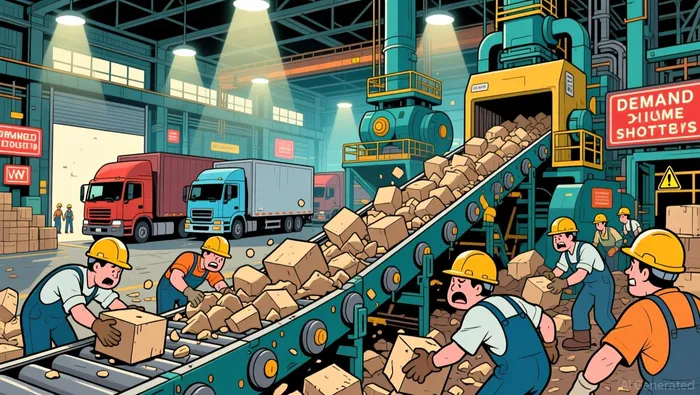
A structural supply deficit occurs when the supply of a commodity consistently falls short of demand over an extended period. This is not the same as a temporary shortage caused by a bad harvest or a production delay. Instead, it's a long-term imbalance that signals deeper issues in the production or supply chain.
Think of it this way: Imagine a world where more people need a particular resource than the current infrastructure or industry can provide. If production can't keep up with rising demand due to resource constraints, regulatory challenges, or technological limitations, the result is a structural supply deficit.
Why Structural Supply Deficits Matter to Investors
When a structural supply deficit exists, it often leads to sustained price increases. This is because the basic economic principle of supply and demand is at play — limited supply with strong demand pushes prices higher. Investors who recognize these trends early can position themselves to benefit from the resulting price momentum.
For example, if global demand for copper continues to rise due to the shift to electric vehicles and renewable energy, and the industry can't ramp up production quickly enough, copper prices are likely to rise. This creates opportunities for investors in mining companies or commodities ETFs that track copper prices.
Real-World Example: Lithium and the Energy Transition
Lithium is a key ingredient in electric vehicle (EV) batteries, and its demand has skyrocketed with the global shift toward clean energy. However, lithium production has struggled to keep up. This has led to a structural supply deficit — demand outpaces supply — and consequently, lithium prices have surged in recent years.
In 2022, lithium carbonate prices increased by over 400% compared to the previous year. Investors who recognized the long-term trend toward EVs and renewable energy — and the resulting strain on lithium supply — could have positioned themselves in lithium-producing companies or related funds to benefit from the price increase.
Risks and Considerations
While structural supply deficits can lead to strong price gains, they also come with risks. Prices can be volatile, especially if new production comes online or demand slows unexpectedly. For instance, a new mining project might start producing more lithium, reducing the deficit and causing prices to drop.
Investors should therefore: - Conduct thorough research into the fundamentals of the commodity in question. - Diversify their portfolio to avoid overexposure to a single commodity. - Consider hedging strategies or investing in ETFs that track a basket of commodities. - Stay informed about technological advances that could impact supply or demand.
Conclusion
Structural supply deficits are a powerful force in commodity markets. They reflect long-term imbalances that can drive significant price movements. By understanding these dynamics, investors can better position themselves to capitalize on emerging trends or avoid potential pitfalls. Whether you're investing in energy, agriculture, or industrial metals, keeping an eye on supply-demand fundamentals can help you make more informed and profitable decisions.

Stay ahead of the market.
Get curated U.S. market news, insights and key dates delivered to your inbox.


AInvest
PRO
AInvest
PRO



Comments
No comments yet