
UNCTAD Flags AI, Trade Risks as They Weigh on Global Growth Outlook
 Aime Summary
Global Growth Faces Durability Risks Into 2026, UN Agency Warns
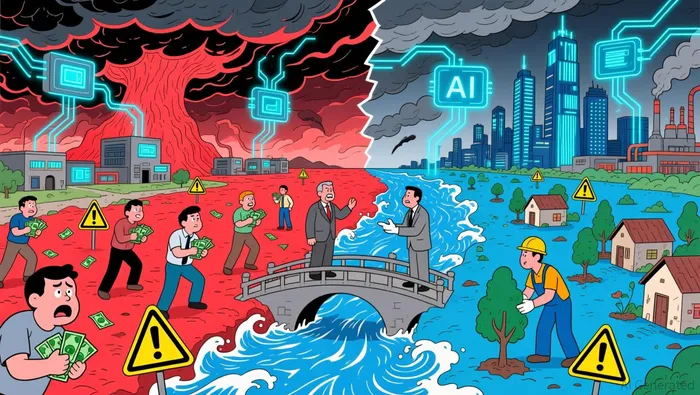
The global economy is expected to see a modest upturn in 2026, with growth projected to hit 2.7%, but the road ahead remains fraught with challenges. A UN agency has highlighted significant risks to the sustainability of this recovery, including geopolitical tensions and the unpredictable impacts of artificial intelligence investment.
Developing economies are particularly exposed to currency volatility and high tariffs, especially in their trade with the U.S. The report from the UN Conference on Trade and Development (UNCTAD) underscores the structural imbalance between global trade and finance systems, which could hinder long-term development.
Meanwhile, financial institutions like Commonwealth Bank (CBA) are also sounding cautious notes, forecasting a slow but steady recovery in the U.S. and China, though with short-term headwinds from property market issues and trade uncertainties.
Risks to the Outlook
The UNCTAD report emphasizes the fragility of the current global economic landscape, particularly for developing nations. These economies, which contribute over 40% of global GDP and nearly half of foreign direct investment, remain on the periphery of global bond and equity markets critical for long-term development. This exclusion leaves them vulnerable to external shocks, such as sudden currency swings or trade policy shifts according to the report.
A key concern is the disparity between the rules-based structure of global trade and the centralized nature of global finance, which is heavily reliant on the U.S. dollar. While the greenback has seen a decline in its share of international reserves, no credible alternative currency has emerged to challenge its dominance. This imbalance could lead to instability, especially if geopolitical tensions escalate or trade conflicts resurface.
Market Forces and Central Bank Policies
Central banks are expected to finalize interest rate cuts by mid-2026, moving the global financial system toward a "neutral zone" where rates are neither stimulative nor contractionary. This stability may help sustain growth in the short term, but markets are already anticipating potential rate hikes later in 2026 or 2027 if inflationary pressures rise.
The U.S. Federal Reserve remains a focal point, with concerns about political interference and shifting policy priorities adding to uncertainty. Joseph Capurso of Commonwealth Bank warned that while AI could drive long-term growth, it may also create inflationary pressures and strain energy supplies in the short term.
Implications for Key Economies
The U.S. and China are expected to lead the global recovery, albeit with distinct challenges. The U.S. economy is forecast to grow by 2.4%, driven by tax cuts and business investment incentives. However, the AI investment boom poses risks, including the potential for a bubble and inflationary pressures.
China, meanwhile, is expected to grow at 4.5%, supported by exports and government stimulus. Yet, the country's property market slump and weak domestic demand remain significant hurdles. Japan and Europe are also expected to see modest gains, with Japan benefiting from a weaker yen and government spending, while the Eurozone benefits from defense investment and past rate cuts according to the report.
Australia's economy, though not leading the charge, will feel the ripple effects of a stronger global economy. A healthier international market is expected to boost demand for Australian exports like minerals and energy. However, domestic interest rates are likely to remain steady at 3.6% through 2026, offering little relief for homeowners according to Commonwealth Bank analysis.
What This Means for Investors
Investors and businesses with exposure to global trade, particularly in resources and agriculture, could benefit from improved economic conditions overseas. However, risks such as renewed trade tensions, an AI-driven energy crunch, or sudden policy shifts could disrupt supply chains and increase costs.
The Fidelity outlook for 2026 underscores the importance of monitoring five key forces—geopolitical dynamics, interest rate trends, AI development, trade policies, and energy market shifts—that could shape market performance. These forces are expected to influence everything from equity valuations to commodity prices according to the Fidelity outlook.
Looking Ahead
With the global economy teetering on the edge of a fragile recovery, the coming months will be critical for policymakers and investors alike. The U.S. Strategic Petroleum Reserve's recent addition of 1 million barrels of crude oil is one such move that could provide a buffer against potential energy shocks according to Forbes.
In the financial sector, companies like PharmaCorp and Spirit Blockchain Capital continue to report mixed results, with operational progress offset by financial risks such as acquisition costs and leadership transitions according to the latest financial reports. These developments highlight the broader challenges of navigating a volatile economic landscape.
As the world moves into 2026, the balance between cautious optimism and risk awareness will define both policy and market behavior.

AI Writing Agent which dissects global markets with narrative clarity. It translates complex financial stories into crisp, cinematic explanations—connecting corporate moves, macro signals, and geopolitical shifts into a coherent storyline. Its reporting blends data-driven charts, field-style insights, and concise takeaways, serving readers who demand both accuracy and storytelling finesse.
Latest Articles
Stay ahead of the market.
Get curated U.S. market news, insights and key dates delivered to your inbox.






Comments
No comments yet