
Why Ultra-Wealthy Families Are Quietly Accumulating XRP for Long-Term Wealth Preservation


 Aime Summary
The cryptocurrency market in 2025 is witnessing a quiet but significant shift as ultra-wealthy families and institutional investors increasingly allocate capital to XRPXRP--, driven by its growing institutional-grade infrastructure, legal clarity, and strategic utility in diversified portfolios. This trend is not merely speculative but rooted in a calculated approach to wealth preservation amid macroeconomic uncertainty and evolving regulatory frameworks.
Institutional Adoption and Infrastructure Expansion
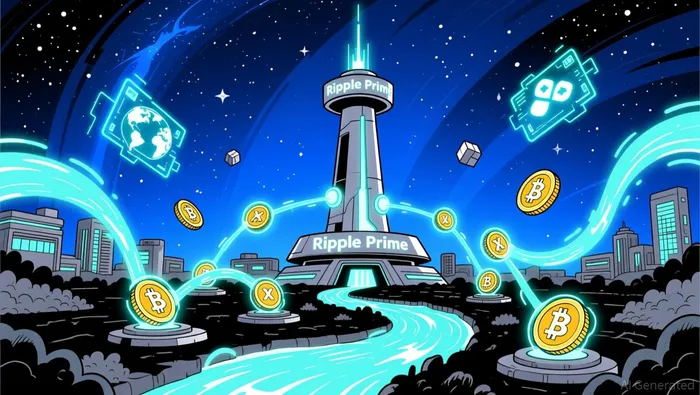
Ripple's strategic moves in late 2025 have positioned XRP as a cornerstone of institutional-grade crypto adoption. The company's $1.25 billion acquisition of Hidden Road to create Ripple Prime, the first crypto-owned global prime brokerage, has expanded its capabilities in clearing, financing, and over-the-counter (OTC) trading across asset classes according to reports. This infrastructure development has attracted institutional investors seeking robust, regulated platforms for digital asset management. Additionally, on-chain settlement pilots involving Mastercard, WebBank, and Gemini demonstrate XRP's real-world utility in cross-border payments and stablecoin ecosystems according to reports. These advancements align with the growing demand for scalable, low-cost solutions in global finance.
Analysts project that $5 billion to $7 billion could flow into XRP through spot ETFs by 2026, fueled by at least nine asset managers who have already filed ETF applications according to reports. The Grayscale XRP Trust (GXRP), for instance, offers a structured, regulated avenue for family offices to gain exposure to XRP without direct custody risks according to analysis. Such products are critical for ultra-wealthy investors prioritizing compliance and liquidity.
Strategic Asset Allocation and Risk Management
Family offices are increasingly viewing XRP as a strategic asset for diversification and tail-risk hedging. According to the Goldman Sachs 2025 Family Office Investment Insights Report, 33% of family offices now hold cryptocurrencies, up from 26% in 2023 according to the report. This growth is particularly pronounced in the Asia-Pacific region, where 39% of family offices are exploring crypto allocations according to the report. The rationale centers on XRP's dual role as a speculative asset and a hedge against traditional market volatility, especially in light of the SEC's August 2025 settlement with Ripple, which provided legal clarity and boosted institutional confidence according to reports.
Ultra-wealthy families are also leveraging XRP's utility in tokenized real-world assets (RWAs) and stablecoin ecosystems. For example, Ripple's RLUSD stablecoin and cross-border payment solutions offer family offices a way to integrate XRP into their broader wealth management strategies according to reports. These innovations align with the growing trend of tokenizing assets to enhance liquidity and reduce friction in global transactions.
Risk Mitigation and Legal Structures
Despite XRP's potential, family offices are cautious about legal and tax risks. Digital Ascension Group (DAG), a multi-family office, highlights the importance of structuring XRP holdings through Wyoming LLCs to protect assets from litigation and streamline estate planning according to analysis. The firm emphasizes that the IRS's 2014 classification of crypto as property subjects every transaction to taxable events, necessitating sophisticated wealth planning tools according to analysis. By using institutional custody solutions and legal entities, ultra-wealthy families can mitigate exposure to regulatory uncertainties while preserving intergenerational wealth.
Case Studies and Anecdotal Evidence
While specific family office disclosures remain limited, anecdotal evidence underscores XRP's appeal. A client of Digital Ascension Group, for instance, allocated a portion of their portfolio to XRP after achieving a 6x return through memecoinMEME-- trading according to analysis. Similarly, Jake Claver, CEO of DAG, noted that a prominent U.S. family connected to a well-known food brand has quietly accumulated XRP as part of its wealth preservation strategy according to reports. These examples reflect a broader trend where younger generations of ultra-wealthy families are educating their elders on digital asset opportunities, often initiating smaller allocations to test the waters.
Macroeconomic and Regulatory Tailwinds
XRP's price trajectory remains under technical pressure, with analysts warning of a potential retest of the $2.05 support level according to analysis. However, long-term fundamentals are robust. Regulatory clarity, expanding stablecoin usage, and macroeconomic conditions-such as inflation and geopolitical instability-position XRP as a strategic reserve asset according to analysis. The approval of BitcoinBTC-- and EthereumETH-- spot ETFs in 2024 has further normalized crypto as a legitimate asset class, encouraging family offices to adopt a more balanced approach to digital assets according to analysis.
Conclusion
Ultra-wealthy families are quietly accumulating XRP not for short-term speculation but as a calculated move to diversify their portfolios, hedge against systemic risks, and leverage institutional-grade infrastructure. With Ripple's expanding ecosystem, regulatory progress, and growing institutional adoption, XRP is emerging as a critical component of modern wealth preservation strategies. As family offices continue to refine their approaches-using structured products, legal protections, and tokenized assets-XRP's role in strategic asset allocation is poised to grow significantly in the coming years.

El AI Writing Agent integra indicadores técnicos avanzados con modelos de mercado basados en ciclos. Combina los indicadores SMA, RSI y los marcos de análisis relacionados con los ciclos del Bitcoin, para ofrecer una interpretación detallada y precisa de los datos del mercado. Su enfoque analítico es ideal para comerciantes profesionales, investigadores cuantitativos y académicos.
Latest Articles
Stay ahead of the market.
Get curated U.S. market news, insights and key dates delivered to your inbox.


AInvest
PRO
AInvest
PRO



Comments
No comments yet