
Ulta Beauty's Unshaken Momentum: A Beacon of Resilience in Retail's Uncertain Seas
As retail sectors grapple with shifting consumer priorities and macroeconomic volatility, Ulta Beauty (ULTA) stands out as a rare bright spot. The cosmetics and personal care retailer has defied broader industry headwinds, posting robust Q1 2025 results and raising its full-year guidance—a testament to its strategic agility and the enduring demand for beauty as a non-discretionary need. For investors seeking defensive exposure in turbulent markets, Ulta's combination of margin discipline, omnichannel dominance, and brand partnerships makes it a compelling buy.
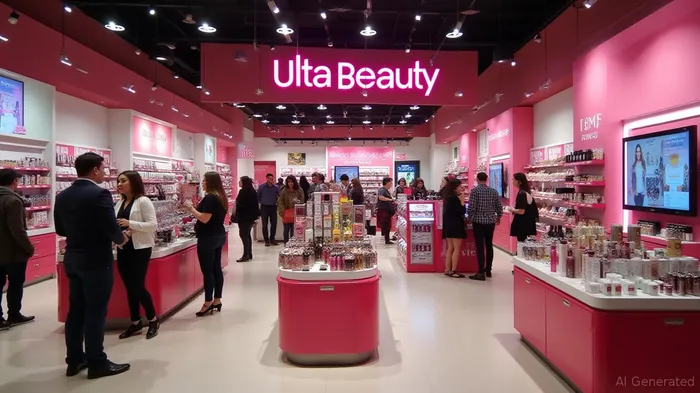
Q1 2025: Growth Amid Gloom
Ulta's Q1 2025 results underscore its resilience. Net sales rose 4.5% to $2.8 billion, driven by a 2.9% comparable sales increase. Notably, this growth was powered by higher average ticket sales (+2.3%) and transaction volume (+0.6%), signaling sticky customer demand. While gross profit margin dipped slightly to 39.1% (from 39.2% in 2024), the company offset fixed cost pressures through reduced inventory shrink and strategic investments.
The real story lies in Ulta's updated full-year guidance, which reflects confidence in its long-term playbook:
- Net Sales: Raised to $11.5B–$11.7B (up from $11.5B–$11.6B).
- Comparable Sales Growth: Expanded to 0%–1.5% (from 0%–1%).
- EPS: Increased to $22.65–$23.20 (from $22.50–$22.90).
These revisions, driven by Q1's outperformance, suggest Ulta can sustain growth even as broader retail struggles persist.
Why Ulta Thrives When Others Struggle
1. Beauty as a Defensive Staple
Beauty spending is proving recession-resistant. Unlike discretionary categories, personal care and cosmetics are perceived as essential for self-expression and well-being. Ulta's focus on affordable luxury—offering high-quality products at accessible price points—has solidified its position as the go-to destination for everyday beauty needs.
2. Omnichannel Execution
Ulta's seamless integration of e-commerce and physical stores creates an unrivaled customer experience. Its app-driven loyalty program, in-store beauty consultations, and rapid online fulfillment (e.g., same-day pickup) reduce friction and foster loyalty. Q1's e-commerce growth, though not disclosed, likely contributed to its strong comp sales, as digital channels continue to attract younger, digitally native consumers.
3. Strategic Partnerships & Brand Expansion
Ulta's curated mix of exclusive brands and partnerships with luxury and indie labels gives it a unique edge. Its recent launches with brands like Drunk Elephant, Tatchi, and Kosas—all available only at Ulta—drive foot traffic and higher average baskets. Additionally, its “Ulta Beauty Unleashed” initiative aims to expand its footprint in underserved markets, leveraging data analytics to optimize store locations and inventory.
4. Financial Fortitude
Ulta's balance sheet remains a strength. With $2.3 billion remaining on its $3.0 billion share repurchase program, the company is aggressively returning capital to shareholders while maintaining flexibility. Even as SG&A expenses rose 6.7% in Q1 due to store payroll pressures, Ulta's disciplined cost management—evident in its corporate overhead leverage—ensures margins remain sustainable.
Margin Pressures? Not Yet—And Here's Why
Critics may point to the 60-basis-point drop in operating margin (to 14.1% from 14.7%) as a red flag. However, this is a short-term trade-off for long-term gains. Ulta is investing in:
- Inventory for Growth: Merchandise inventories rose 11.3% to $2.1 billion, funding new brand launches and store expansions.
- Store Quality Over Quantity: Prioritizing high-traffic locations and modernizing existing stores to enhance customer experience.
These moves position Ulta to capitalize on pent-up demand post-Q2, particularly as its updated guidance assumes cautious optimism for the remainder of 2025.
Catalysts Ahead: Q2 Earnings and Beyond
The August 28, 2025 earnings report will be pivotal. Analysts project EPS of $4.90 for Q2, but a beat could signal stronger-than-expected momentum. Look for:
- Margin Stability: Whether gross margin recovers as fixed costs leverage improves.
- Share Repurchases: Progress on its $900 million buyback target.
- Consumer Sentiment: How Ulta's “affordable luxury” strategy holds up if macroeconomic fears intensify.
The Bottom Line: Buy the Dip
Ulta's fundamentals—strong demand, strategic investments, and a fortress balance sheet—make it a rare defensive growth stock in a shaky market. With its valuation at ~16x forward earnings (vs. peers' ~18x), it offers a margin of safety.
Investors should consider adding Ulta to portfolios as a hedge against retail volatility. The company's Q1 performance and raised guidance confirm it's not just surviving—it's thriving. The path to $11.7 billion in sales and $23.20 in EPS is clear. Act now—before the market catches up.
JR Research's Take: Ulta's moat is widening. Buy dips below $400/share, with a 12-month target of $450+.

Delivering real-time insights and analysis on emerging financial trends and market movements.
Latest Articles
Stay ahead of the market.
Get curated U.S. market news, insights and key dates delivered to your inbox.


AInvest
PRO
AInvest
PRO



Comments
No comments yet