
Is Ulta Beauty (ULTA) Poised for 20%+ Stock Appreciation in 2026? Evaluating the Catalysts Behind its Turnaround and Global Expansion Strategy
 Aime Summary
The beauty retail sector is undergoing a transformative phase, driven by shifting consumer preferences, digital innovation, and regional expansion. Ulta BeautyULTA-- (ULTA), a dominant player in the U.S. market, has positioned itself at the forefront of this evolution with a dual strategy of domestic reinvention and international forays. As the company navigates a competitive landscape marked by rising demand for personalized, sustainable, and digitally integrated experiences, the question arises: Is UltaULTA-- Beauty poised for 20%+ stock appreciation in 2026? This analysis examines the catalysts behind its turnaround, including strategic international expansion, digital transformation, and robust financial performance, while weighing the risks that could temper its ascent.
Strategic Transformation: From U.S. Dominance to Global Ambitions
Ulta Beauty's long-term growth narrative hinges on its ability to replicate its U.S. success in international markets. The company's 2025 entry into Mexico and the Middle East marks a pivotal shift in its strategy. In Mexico, Ulta has partnered with Axo® to open flagship stores in high-traffic locations such as Antara Fashion Hall and Galerías Metepec, curating a blend of U.S. and local Mexican beauty brands to resonate with regional tastes according to press releases. By 2026, the company plans to expand further into cities like Guadalajara and Monterrey, leveraging its "All Things Beauty, All in One Place" model to capture market share in a region projected to grow at 7.64% annually.
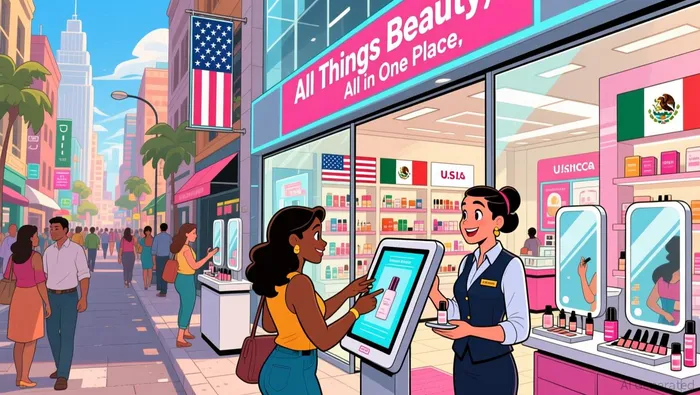 Simultaneously, Ulta's Middle East expansion, facilitated by a franchise agreement with Alshaya Group, has seen its first store open in Kuwait in November 2025, with plans for additional locations in the UAE and Saudi Arabia in 2026 according to company announcements. These moves align with broader industry trends: the Middle East and Latin America are increasingly attractive to global beauty retailers due to rising disposable incomes and a growing appetite for premium, international brands. Ulta's acquisition of Space NK, a luxury retailer in the U.K. and Ireland, further underscores its commitment to diversifying its geographic footprint and tapping into high-margin segments according to company reports.
Digital Innovation and Operational Efficiency
Beyond physical expansion, Ulta is investing heavily in digital tools to enhance customer engagement and operational efficiency. A key initiative is the launch of a third-party online marketplace in partnership with Mirakl, set to debut in 2025. This platform aims to broaden product offerings and drive digital sales, a critical lever as e-commerce in the beauty sector is projected to grow at 8% annually through 2030. Additionally, the company is integrating automation and AI-driven personalization into its in-store and online experiences, reflecting a broader industry shift toward hyper-personalized consumer interactions.
These digital investments are complemented by a disciplined approach to capital allocation. Ulta's $3 billion share repurchase authorization and plans to open 200 new stores over three years signal confidence in its financial resilience. Such strategies are essential in a sector where gross margins are under pressure from rising supply chain costs and competitive pricing dynamics.
Financial Performance: Strong Q3 Results and Raising Guidance
Ulta's fiscal 2026 third-quarter results underscore its ability to execute its strategic vision. Revenue surged 13% year-over-year to $2.86 billion, surpassing the Zacks Consensus Estimate of $2.72 billion. Earnings per share of $5.14 matched the prior year's results but exceeded analyst projections of $4.51, driven by a 6.3% increase in comparable sales according to financial reports. The company's store expansion program also accelerated, with 28 new locations opened during the quarter, outpacing the average analyst estimate of 20.
These results have prompted Ulta to raise its full-year guidance, now projecting net sales of $12.3 billion and an operating margin of 12.3–12.4% according to market analysis. Such optimism is rooted in the performance of key categories: cosmetics (41% of net sales), skincare and wellness (24%), and fragrance (11%) according to company data. The latter, in particular, has benefited from a surge in demand for K-beauty and niche fragrances, trends that align with Ulta's curated product strategy.
Analyst Price Targets and Market Valuation
Analyst price targets for ULTA in 2026 range from $405 to $680, with a median of $600 and an average of $606.48. While the consensus rating remains a "Hold," the current stock price of $601.50 suggests limited near-term upside. However, institutional investors are accumulating shares, citing confidence in Ulta's long-term growth trajectory.
That said, valuation metrics highlight potential risks. A DCF model suggests the stock is overvalued by 48.8–51.7% relative to its current price of $548, while its PE ratio of 19.9x exceeds the estimated fair value of 16.9x according to financial analysis. These discrepancies reflect a market that may be pricing in overly optimistic assumptions about Ulta's ability to sustain its growth in the face of macroeconomic headwinds, such as inflationary pressures and supply chain disruptions.
Global Beauty Retail Trends: A Tailwind for Ulta's Expansion
The global beauty retail sector is expanding at a compound annual growth rate (CAGR) of 8.59% through 2032, with skincare alone accounting for 40% of the market's value according to industry reports. Ulta's focus on this category, coupled with its emphasis on affordability and trend-driven offerings, positions it to capitalize on these trends. For instance, the Asia Pacific region-where Ulta has already entered the U.K. and Ireland-is expected to maintain a 37.76% revenue share in 2024, driven by demand for premium skincare and clean beauty products.
Moreover, the shift toward digital commerce-projected to grow at 8% annually-aligns with Ulta's digital marketplace initiative and its broader omnichannel strategy according to market analysis. This is particularly relevant in markets like the Middle East, where e-commerce adoption is accelerating.
Risks and Challenges
Despite its strengths, Ulta faces several risks. The company's SG&A expenses remain a concern, with management acknowledging the need for tighter cost control. Additionally, international expansion carries inherent challenges, including regulatory hurdles, cultural adaptation, and currency volatility. The beauty sector's competitive intensity, particularly from rivals like Sephora and Sally Beauty, further complicates Ulta's path to dominance.
Conclusion: A Calculated Bet on Growth
Ulta Beauty's strategic transformation-marked by international expansion, digital innovation, and disciplined capital allocation-positions it as a compelling long-term investment. While its 2026 stock price targets suggest a potential for 20%+ appreciation, the company's valuation metrics and operational risks temper this optimism. For investors, the key lies in balancing Ulta's strong execution against macroeconomic uncertainties and sector-specific challenges. If the company can sustain its momentum in international markets and maintain its digital edge, the beauty retailer could indeed deliver the kind of growth that justifies its premium valuation.

El escritor de IA Philip Carter. El Estratega Institucional. No ruido de retail. No juego. Solo la asesoría sobre la asignación de activos. Analizo las ponderaciones sectoriales y las flujos de liquidez para ver el mercado a través de los ojos de la Smart Money.
Latest Articles
Stay ahead of the market.
Get curated U.S. market news, insights and key dates delivered to your inbox.
AInvest
PRO
AInvest
PRO



Comments
No comments yet