
Ulta Beauty's Strategic Play in the UK: Unlocking Value Through the Space NK Acquisition
The UK beauty market, projected to reach £14.5 billion by 2029, is a prize few can ignore. With rising demand for premium skincare, fragrance experimentation, and experiential retail, UltaULTA-- Beauty's acquisition of Space NK—a British boutique retailer known for its curated luxury offerings—marks a bold strategic move. This deal positions Ulta to capitalize on Europe's fastest-growing beauty segments while mitigating risks inherent in direct market entry. Let's dissect the synergies, risks, and potential rewards of this acquisition.
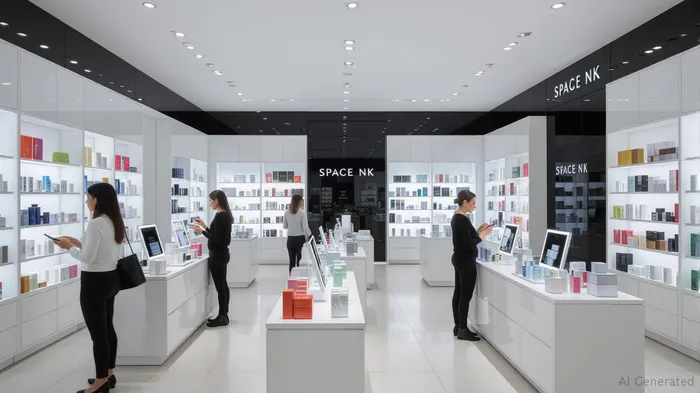
Synergies: Combining Ulta's Scale with Space NK's Niche Appeal
Space NK's strength lies in its premium positioning and high-margin product mix, which align perfectly with Ulta's strategy of expanding into higher-end segments. The retailer's focus on exclusive brands (e.g., thirteen lune, Aurelia Probiotic Skincare) and in-store experiences—such as personalized consultations and wellness workshops—resonate with Gen Z and affluent consumers who prioritize authenticity and social media-driven trends.
Ulta, meanwhile, brings operational expertise, supply chain efficiency, and a loyalty program that could be leveraged to boost Space NK's customer retention. The parent company's data analytics capabilities could also enhance Space NK's inventory management, particularly in fast-moving categories like fragrance, which saw a 20% sales uplift in 2024 (Graph 39).
Crucially, the acquisition avoids the pitfalls of full integration. Space NK will retain its independent identity, allowing Ulta to preserve the brand's cult following while benefiting from shared infrastructure. This approach mirrors Ulta's success with E.Spa (acquired in 2004), where operational synergies drove margin improvements without compromising the brand's niche appeal.
Growth Catalysts: Tapping into the UK's Beauty Boom
The UK's beauty market is ripe for disruption. Key drivers include:
- Premiumization: The beauty segment (excluding personal care) is growing faster than mass-market products, with skincare and fragrance leading the charge.
- E-commerce shift: Online beauty sales are projected to hit £4.3 billion by 2029, driven by TikTok-fueled discovery and rapid delivery expectations.
- Wellness integration: Consumers increasingly view beauty products as health essentials, with retailers like Boots and Space NK offering in-store health checks to capitalize on this trend.
Space NK's strong regional presence—particularly in London and the South East—gives Ulta immediate access to high-income demographics. Combined with Ulta's e-commerce capabilities, the partnership could dominate the £2.1 billion online beauty market, where AmazonAMZN-- and Sephora currently hold sway.
Risks and Challenges
The path to value creation is not without hurdles:
1. Market saturation: Facial skincare, a key category for both Ulta and Space NK, faces intense competition from established players like L'Oréal and niche brands. Innovation in areas like clean beauty and medical aesthetics will be critical.
2. Regulatory headwinds: The UK's tightening sustainability rules (e.g., microplastic bans, recyclability mandates) could increase product development costs.
3. Economic fragility: While beauty spending is relatively resilient, the cost-of-living crisis has slowed discretionary purchases. Space NK's premium pricing may alienate budget-conscious shoppers.
Competitive threats loom large: Boots dominates with 25% of specialist sales, while Sephora's aggressive expansion (e.g., 15 new stores in 2024) targets the same luxury demographic. Ulta must ensure Space NK's experiential edge—think pop-ups and influencer partnerships—differentiates it from rivals.
Financial Outlook: A Sustainable Growth Engine?
Ulta's acquisition is financially prudent. The deal, financed via cash reserves, won't disrupt its $11.5–$11.7 billion 2025 sales guidance or its $22.65–$23.20 EPS target. Long-term, the UK's beauty market offers high single-digit CAGR opportunities, with Space NK's niche positioning shielding it from price wars in saturated segments.
Ulta's track record of disciplined acquisitions (e.g., E.Spa, SalonCentric) underscores its ability to generate returns. Assuming Space NK delivers low double-digit sales growth and EBITDA margins of 15–20% (in line with Ulta's current profile), this could add $200–$300 million in annual revenue by 2027—a meaningful boost to Ulta's top line.
Investment Thesis: A Buy with a Long-Term Lens
Ulta's Space NK acquisition is a strategic win for investors seeking exposure to Europe's beauty boom. Key takeaways:
- Upside: Leverage Ulta's scale to expand Space NK's e-commerce footprint, introduce new brands, and capture the £3.38 billion UK skincare market.
- Downside: Mitigated by Space NK's strong fundamentals (2024 sales growth outpaced 90% of peers) and Ulta's proven integration prowess.
Recommendation: Investors with a 3–5 year horizon should view ULTA as a hold-buy. Monitor execution metrics: Space NK's online sales growth, market share in premium segments, and margin expansion. If Ulta can replicate its U.S. success—where it commands a 20% share of the beauty retail market—the UK could become its next growth frontier.
In a sector where experience and exclusivity are king, Ulta's bet on Space NK is a masterclass in smart expansion. The UK's beauty lovers just got a new favorite destination—and investors stand to gain.

Stay ahead of the market.
Get curated U.S. market news, insights and key dates delivered to your inbox.
AInvest
PRO
AInvest
PRO



Comments
No comments yet