
ULA Vulcan Rocket Launch Today Advances U.S. Space Force's National Security Capabilities
 Aime Summary
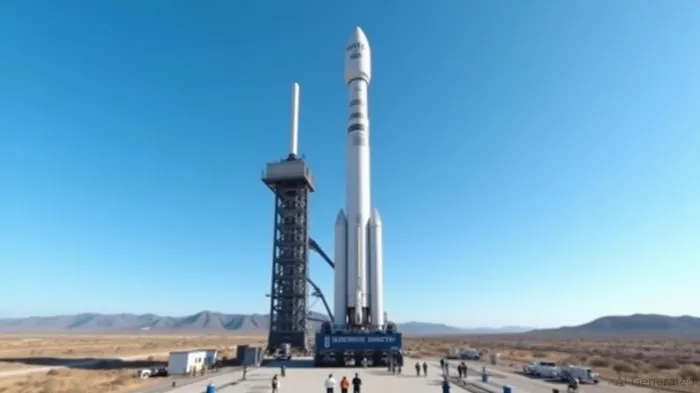
A United Launch Alliance Vulcan rocket has embarked on a significant national security mission, USSF-106, from Space Launch Complex 41 at Cape Canaveral Space Force Station. The Vulcan rocket, towering at 202 feet, is set to deliver a pair of satellites, including the Navigation Technology Satellite-3 (NTS-3), into geosynchronous orbit. This mission marks an important milestone for ULA, being their 101st national security space mission and the first since its certification to carry such payloads for the United States government.
Gary Wentz, Vice President of Government and Commercial Programs at ULA, expressed pride in ULA's role in deploying critical satellites for U.S. security. Designed for direct injection into geosynchronous orbit, this mission represents one of ULA's longest flights with a seven-hour journey. The flight path eastward from the launch pad aims to fulfill strategic needs of the Space Force by delivering payloads essential for navigation and communication.
The Vulcan rocket's journey to the launch pad from the Vertical Integration Facility was completed on Monday morning, a process that took a little over an hour. With a scheduled liftoff time of 7:59 p.m. EDT, the mission enjoys favorable weather forecasts, with an 80 percent chance of suitable conditions as analyzed by the 45th Weather Squadron.
ULA's Vulcan rocket, employing advanced technologies like the Blue Origin-built BE-4 engines for liftoff, represents a significant leap in ULA's technological capabilities. The BE-4 engines are groundbreaking, having cleared rigorous evaluations following a certification process complicated by a previous anomaly involving Northrop Grumman's solid rocket motors. This careful assessment underscores the meticulous attention to risk management and vehicle certification processes paramount to national security launches.
NTS-3, as the primary payload, is the first experimental navigation satellite launched by the U.S. military in nearly half a century. Developed with innovations in position, navigation, and timing technologies, NTS-3 is designed to test experimental capabilities to enhance GPS systems. With a $250 million investment, the satellite incorporates features such as a phased array antenna, which can beam signals to targeted regions, tackling challenges like GPS spoofing and ensuring reliable navigation data for military applications. The Air Force Research Laboratory has spearheaded efforts in not only deploying sophisticated enhancements but maintaining robust satellite reprogrammability post-launch.
The Vulcan rocket's deployment reflects ULA’s broader intentions to facilitate assured access to space, offering an alternative to existing launch providers like SpaceX. As part of an expansive agenda, ULA looks forward to conducting future missions in varied configurations. Their efforts highlight a significant pivot towards greater independence from Russian-made engines, reinforcing ULA's commitment to utilizing American-built technology.
The collaborative efforts of ULA, Space Force, and L3HarrisLHX-- Technologies in bringing NTS-3 to launch reflect a concerted drive towards innovation and experimentation that will potentially contribute to the next generation of GPS satellites. While NTS-3's deployment does not currently lead to operationalization, the satellite provides a formidable platform for ongoing tests that could influence future satellite design and national security satellite navigational strategies.
This mission further accentuates ULA's strategic partnership with the Space Force, underlined by their shared vision to bolster the United States' national security satellite launch capabilities and assure continued access to critical space services amid a rapidly evolving global security landscape.

Stay ahead of the market.
Get curated U.S. market news, insights and key dates delivered to your inbox.




Comments
No comments yet