
ULA's Strategic Ascendancy in the LEO Satellite Launch Market: Riding Project Kuiper's Wave
The race to dominate the low Earth orbit (LEO) satellite market is intensifying, and United Launch AllianceAENT-- (ULA) finds itself at a pivotal juncture. With Amazon's Project Kuiper advancing rapidly, ULA's role as a critical launch partner is solidifying its position in the space economy. This article explores ULA's strategic positioning, growth opportunities, and the investment implications of its involvement in one of the most ambitious LEO constellations to date.
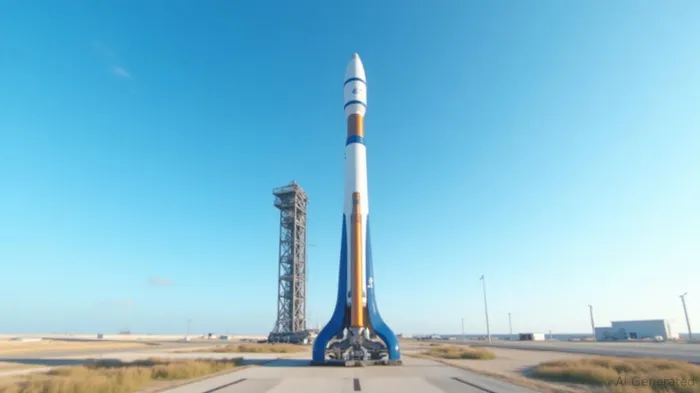
ULA's Pivotal Role in Project Kuiper
Project Kuiper's goal of deploying 3,200 satellites by 2030 has positioned ULAULE-- as a cornerstone launch provider. The company has secured contracts for 47 launches using its AtlasAESI-- V and Vulcan Centaur rockets, with over half of the constellation's satellites set to ride these vehicles. As of June 2025, two operational launches have already deployed 54 satellites, with the transition to the Vulcan Centaur—critical for scaling the launch cadence—well underway.
ULA's infrastructure investments, bolstered by a $2 billion infusion from Amazon, are enabling a 25-launch-per-year capacity at Cape Canaveral. This expansion, including a dedicated Vertical Integration Facility for Kuiper satellites, underscores ULA's commitment to meeting the FCC's 2026 deadline for deploying 1,616 satellites. While delays are expected, ULA's partnership with AmazonAMZN-- signals a long-term revenue stream, particularly as Project Kuiper competes with SpaceX's Starlink for global broadband dominance.
Strategic Positioning Amidst Fierce Competition
The LEO launch market is a battleground dominated by SpaceX, which commands ~60–70% market share through its Falcon 9's unmatched cost efficiency ($2,720/kg to LEO) and rapid cadenceCADE-- (170+ launches/year). ULA, however, is not competing head-on but carving a niche in high-stakes, government-backed missions.
- Cost and Reliability Trade-off: Vulcan Centaur's $4,044/kg LEO cost is 50% higher than SpaceX's, but its flawless 161-launch record since 2006 and specialized capabilities—such as geostationary (GEO) and high-energy orbit launches—are unmatched.
- Regulatory Safeguards: U.S. policies mandating two launch providers for national security payloads ensure ULA's relevance, even as SpaceX leads in commercial LEO launches.
- Diversified Revenue: Beyond Project Kuiper, ULA's $5.3 billion NSSL Phase 3 contracts (19 missions through 2032) secure its role in defense and intelligence launches, reducing reliance on volatile commercial markets.
Growth Opportunities: Vulcan's Evolution and Emerging Markets
ULA's future hinges on Vulcan's evolution. The rocket's 27.2-metric-ton LEO capacity and reusable first-stage development (targeting $100M/launch by 2030) could narrow the cost gap with SpaceX. Meanwhile, opportunities in emerging LEO segments—such as AST SpaceMobile's space-based cellular network or Logos Space's 3,960-satellite constellation—present additional revenue streams.
Key Growth Drivers:
1. Government Contracts: ULA's 40% stake in NSSL Phase 3 ensures steady income from defense and spy satellite launches.
2. International Partnerships: Collaborations with European and Asian telecom firms seeking non-U.S. launch alternatives could expand its reach.
3. Space Tourism and Lunar Missions: Blue Origin's lunar lander and NASA's Artemis program highlight a growing market for deep-space infrastructure, where ULA's expertise in heavy-lift and precision orbits is vital.
Risks and Investment Considerations
While ULA's strategic positioning is robust, risks persist:
- SpaceX's Overhang: Starship's projected $2–10 million/launch costs by 2030 could erode ULA's cost advantage.
- Blue Origin's Ascent: New Glenn's 45-metric-ton capacity and NASA contracts (e.g., Artemis V in 2029) pose long-term competition in Vulcan's sweet spot.
- Regulatory Uncertainty: FCC delays or shifts in U.S. space policy could disrupt launch timelines.
For investors, ULA represents a defensive play in the space economy. Its reliability and government ties offer stability, while Vulcan's potential cost reductions and niche markets provide upside. However, its non-public status limits direct investment, making indirect exposure via aerospace ETFs (e.g., PRXT) or contracts with ULA partners (e.g., Amazon's AMZN stock) viable alternatives.
Conclusion: ULA's Path to Long-Term Success
ULA's strategic focus on specialized missions, government contracts, and infrastructure scalability positions it as a critical player in LEO's evolving landscape. While SpaceX dominates in cost and scale, ULA's reliability and regulatory moat ensure its role as a trusted partner for high-risk, high-value launches. Investors should view ULA as a complementary bet to SpaceX, capitalizing on its niche strengths while monitoring Vulcan's cost trajectory and emerging LEO opportunities. In a sector racing toward saturation, ULA's ability to adapt—and its Amazon-backed momentum—could secure its place among the space economy's elite.
Final Note: For those seeking exposure to ULA's growth, track Vulcan's operational milestones and U.S. space policy updates. The company's success in the NSSL Phase 3 contracts and Project Kuiper's progress will be key indicators of its future trajectory.

Delivering real-time insights and analysis on emerging financial trends and market movements.
Latest Articles
Stay ahead of the market.
Get curated U.S. market news, insights and key dates delivered to your inbox.




Comments
No comments yet