
ULA to Launch First National Security Mission with Vulcan Rocket
ByAinvest
Tuesday, Aug 12, 2025 8:40 am ET2min read
AENT--
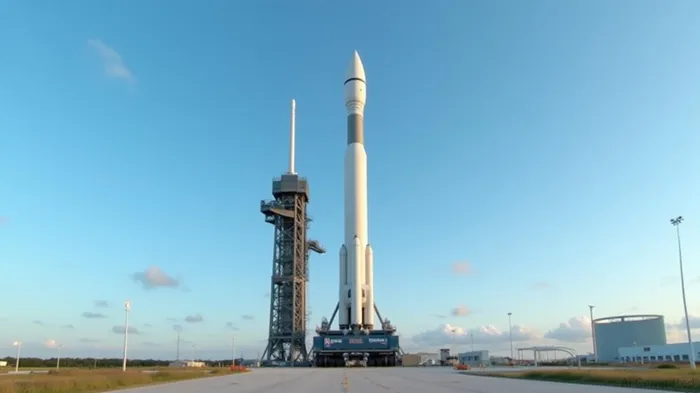
The mission is for the U.S. Space Force and will take off from Cape Canaveral, Florida. The Vulcan rocket will carry an experimental navigation satellite for the Space Force and other spacecraft directly into an orbit 22,000 miles (35,406 kilometers) above Earth, one of the longest missions the company has ever performed [1].
ULA is one of just three U.S. launch companies authorized to perform the most difficult and sensitive missions for the U.S. Department of Defense. The company once held a monopoly on launching national security satellites but now shares the responsibility with SpaceX and Blue Origin [1].
Unlike SpaceX and Blue Origin's rockets, Vulcan is not currently designed for reuse after launch, although ULA has plans to incorporate reusability into its design. This mission will allow ULA to showcase one of the rocket's main assets: its ability to launch heavy satellites into high orbits [1].
ULA's Chief Executive Officer, Tory Bruno, emphasized that Vulcan is specifically designed for these exotic orbits, making this particular mission a quintessential example of the rocket's capabilities. This is ULA's third Vulcan mission since debuting the rocket in January 2024. The Space Force required ULA to perform two missions before it would certify the rocket to launch military satellites [1].
The launch comes nearly five months after the U.S. Department of Defense certified ULA to perform national security launches with Vulcan. This certification was a key hurdle the company needed to clear to begin launching a backlog of dozens of missions it had been contracted to perform for the Pentagon [1].
Tuesday's mission will be ULA's third flight of 2025, following two missions of its Atlas V rocket, which is in the process of being retired. Originally, Bruno anticipated launching roughly a dozen missions in 2025, but now anticipates conducting only nine due to the time it took to resolve a booster problem that occurred during Vulcan's second flight in October [1].
References:
[1] https://www.bloomberg.com/news/articles/2025-08-12/ula-s-vulcan-rocket-to-launch-first-national-security-mission
FXNC--
VMC--
United Launch Alliance (ULA) is preparing to launch its first national security mission with the Vulcan rocket, marking a crucial test of the vehicle's ability to deploy satellites into high orbits. The mission, set for a launch window beginning at 7:59 a.m. EST on Nov. 14, will be ULA's first launch for the Pentagon and will demonstrate the Vulcan rocket's capability to meet the military's requirements for satellite launches.
United Launch Alliance (ULA) is set to perform its first national security mission with its newly developed Vulcan rocket, a critical test of the vehicle's ability to deploy satellites into high orbits. The mission, scheduled for a launch window beginning at 7:59 p.m. EST on Tuesday, November 14, will be ULA's first launch for the Pentagon and will demonstrate the Vulcan rocket's capability to meet the military's requirements for satellite launches [1].The mission is for the U.S. Space Force and will take off from Cape Canaveral, Florida. The Vulcan rocket will carry an experimental navigation satellite for the Space Force and other spacecraft directly into an orbit 22,000 miles (35,406 kilometers) above Earth, one of the longest missions the company has ever performed [1].
ULA is one of just three U.S. launch companies authorized to perform the most difficult and sensitive missions for the U.S. Department of Defense. The company once held a monopoly on launching national security satellites but now shares the responsibility with SpaceX and Blue Origin [1].
Unlike SpaceX and Blue Origin's rockets, Vulcan is not currently designed for reuse after launch, although ULA has plans to incorporate reusability into its design. This mission will allow ULA to showcase one of the rocket's main assets: its ability to launch heavy satellites into high orbits [1].
ULA's Chief Executive Officer, Tory Bruno, emphasized that Vulcan is specifically designed for these exotic orbits, making this particular mission a quintessential example of the rocket's capabilities. This is ULA's third Vulcan mission since debuting the rocket in January 2024. The Space Force required ULA to perform two missions before it would certify the rocket to launch military satellites [1].
The launch comes nearly five months after the U.S. Department of Defense certified ULA to perform national security launches with Vulcan. This certification was a key hurdle the company needed to clear to begin launching a backlog of dozens of missions it had been contracted to perform for the Pentagon [1].
Tuesday's mission will be ULA's third flight of 2025, following two missions of its Atlas V rocket, which is in the process of being retired. Originally, Bruno anticipated launching roughly a dozen missions in 2025, but now anticipates conducting only nine due to the time it took to resolve a booster problem that occurred during Vulcan's second flight in October [1].
References:
[1] https://www.bloomberg.com/news/articles/2025-08-12/ula-s-vulcan-rocket-to-launch-first-national-security-mission
Stay ahead of the market.
Get curated U.S. market news, insights and key dates delivered to your inbox.
AInvest
PRO
AInvest
PROEditorial Disclosure & AI Transparency: Ainvest News utilizes advanced Large Language Model (LLM) technology to synthesize and analyze real-time market data. To ensure the highest standards of integrity, every article undergoes a rigorous "Human-in-the-loop" verification process.
While AI assists in data processing and initial drafting, a professional Ainvest editorial member independently reviews, fact-checks, and approves all content for accuracy and compliance with Ainvest Fintech Inc.’s editorial standards. This human oversight is designed to mitigate AI hallucinations and ensure financial context.
Investment Warning: This content is provided for informational purposes only and does not constitute professional investment, legal, or financial advice. Markets involve inherent risks. Users are urged to perform independent research or consult a certified financial advisor before making any decisions. Ainvest Fintech Inc. disclaims all liability for actions taken based on this information. Found an error?Report an Issue




Comments
No comments yet